Ganga Jumps 63cm in a Day; Varanasi Readies Higher Sites for Cremation and Aarti
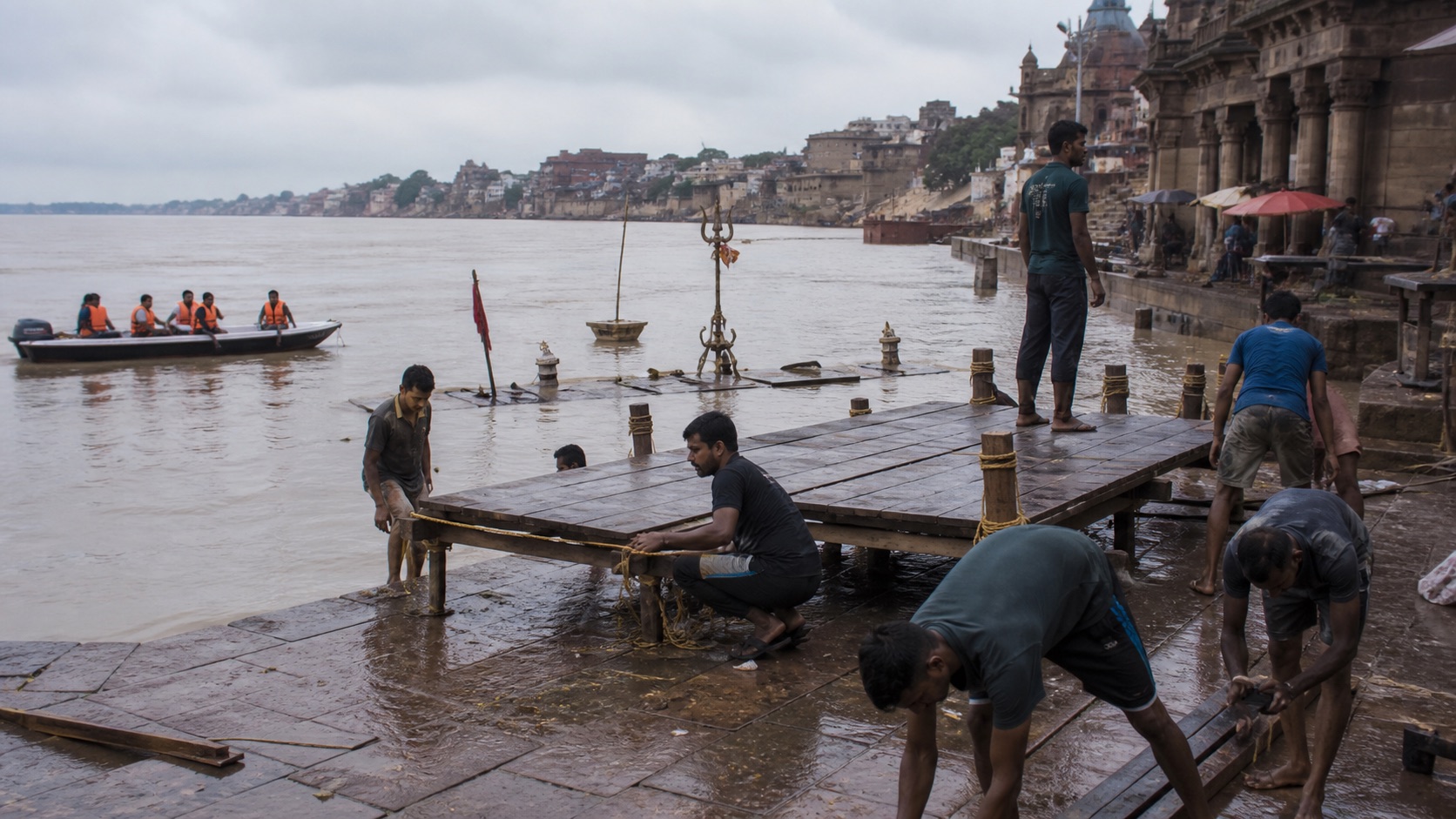
Varanasi: The Ganga rose 63 centimetres in 24 hours at Varanasi, reaching 62.66 metres by Thursday night and accelerating the seasonal rearrangement of life along the ghats. The increase prompted officials and organisers to prepare higher alternate locations for cremation at Manikarnika and for the evening aarti at Dashashwamedh and Rajendra Prasad ghats.
The Central Water Commission reading had stood at 62.03 metres on Wednesday. The river remained well below the official warning and danger marks, but those thresholds do not define when the riverfront becomes operationally difficult. Lower platforms, connecting steps and the bases of temples go under much earlier, narrowing the space used by pilgrims, workers and emergency teams.
At Manikarnika, the water was reported within roughly ten feet of the active cremation area. Ratneshwar Mahadev temple and many smaller structures near Balaji Ghat were already partly or largely submerged. If the rise continues, cremation activity will have to shift uphill so that the city’s round-the-clock funeral services can continue safely.
The evening aarti has its own risks. Moving a ceremony is not simply a question of carrying lamps to another step. Organisers must rethink the placement of platforms, electrical cables, crowd barriers, entry and exit routes, and the distance between performers and moving water. A compacted audience on wet stone can become hazardous even without a flood emergency.
Water police and National Disaster Response Force teams were placed on alert, and visitors were advised to avoid unnecessary movement close to the river. Boat passengers should follow local restrictions, insist on life jackets and avoid operators who overload vessels to compensate for a shortened landing area. Parents should keep children away from submerged steps whose edges are impossible to judge from above.
This is a newer and more consequential update than Thursday morning’s 44-centimetre rise. River reports should always be time-stamped because an apparently contradictory figure may simply reflect a later observation. The trend across readings—rather than a single number—is what tells residents whether the river is steady, accelerating or beginning to fall.
Municipal teams should also protect access beyond the visible ghats. Narrow approach lanes must remain clear for ambulances, fire vehicles and funeral processions. Temporary vendors, parked motorcycles and construction material can turn a manageable relocation into a choke point.
Varanasi is accustomed to adapting its rituals to the river, but familiarity should not become complacency. The Ganga is still below flood thresholds; it is already high enough to change how the city works. Calm, clearly communicated adjustments now can prevent rushed decisions after another night of rain upstream.
Sources and reporting
Based on Central Water Commission readings and local administrative preparations reported on 7 August 2026.
Related Stories
GMDA Plans Rs 20 Cr Dwarka Sector Road Works
Vigilance Raid at Cantt Unreserved Counters Finds ₹2,100 Excess Cash
Metro Phase-2 Tender Delay Puts 2029 at Risk
SC Flags IAF Depot Buffer Encroachments
Lalpur-Pandeypur Police Arrest Four in Alleged Auto Chain-Snatching Gang