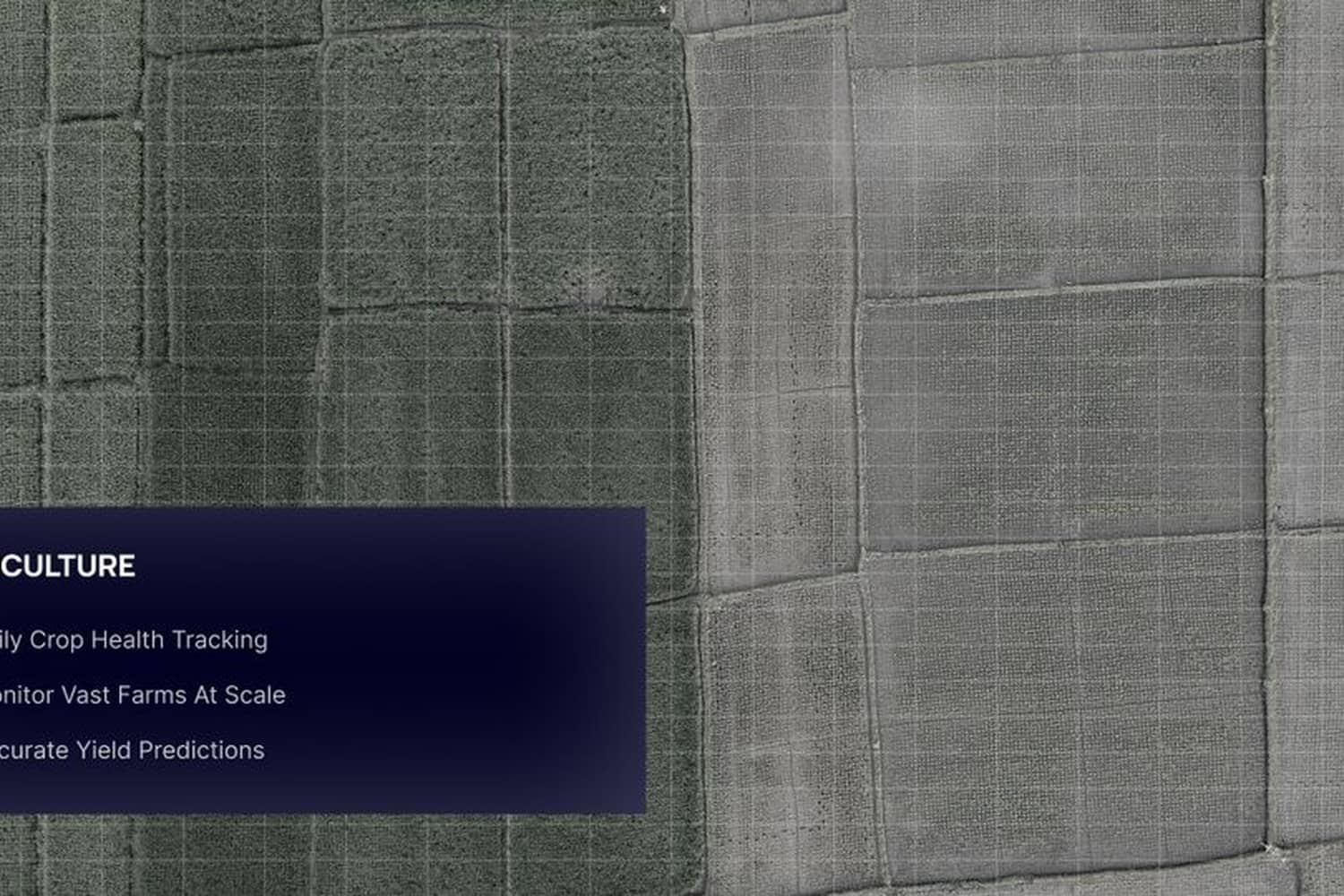
BENGALURU: GalaxEye, the Earth-observation start-up founded at IIT Madras in 2021, says it is building Mission Drishti, a satellite that fuses radar and optical sensors so users do not have to choose between clear pictures and all-weather coverage. The company's About page calls that combination OptoSAR and describes Drishti as India's largest privately built satellite, with the highest-resolution imagery among private players, on the company's own claim.
Optical satellites struggle with cloud, darkness and weather. Synthetic aperture radar works through cloud but is harder to read. GalaxEye's founding argument is that fusing both on one satellite, in real time, produces insights neither sensor gives alone. The page says the team has already generated its first SAR image, run Drishti sensor trials with the Indian Army's Northern Command, and completed a space tech demo on ISRO's POEM mission.
Funding and milestones the company lists
On its own timeline, GalaxEye raised a $3.5 million seed round and later closed a Series A of $10 million. It also says it won an iDEX-DIO challenge for satellite edge computing and has been named among Forbes Asia's Top 100 to Watch, the World Economic Forum Technology Pioneers, and the Gemini Founders Forum's global AI start-up list. Those honours are listed by the company; they are not independent product tests.
Mission Drishti is scheduled to launch on a SpaceX Transporter rideshare, according to the About page. No firm calendar date is printed in the section reviewed. Until the satellite is on orbit and returning data, OptoSAR remains a demonstrated sensor story plus a launch plan.
Who is building it
The founding team listed is Suyash Singh (CEO), Denil Chawda (CTO), Pranit Mehta, Kishan Thakkar and Rakshit Bhatt. Contact on the site's contact page is info@galaxeye.space. The vision line is to make every square kilometre of Earth observable regardless of weather, time or terrain.
Dalimss readers following Indian space hardware can compare this with Pixxel's hyperspectral Series C plans and Satleo Labs' thermal imaging work. GalaxEye's differentiator, if Drishti works as described, is fused radar-plus-optical on one bus rather than a single sensing mode.
What is still unproven in public
The About page does not publish customer contracts, pricing, or on-orbit performance metrics for a full Drishti satellite. Army trials and a POEM demo are useful steps, but commercial buyers will want revisit rates, resolution figures under cloud, and delivery latency once the constellation exists.
For now, GalaxEye is a deep-tech Earth-observation company with a clear technical thesis and a rideshare slot on the calendar. The next hard evidence will be downlink from Drishti itself.
Fused sensing is difficult in practice. Optical and radar payloads have different power, pointing and data-rate needs. Putting both on one satellite can raise mass and complexity. GalaxEye's public answer is SyncFusion and a single Mission Drishti platform designed from first principles for that mash-up. Until downlink arrives, outsiders have to take the architecture on trust plus the earlier POEM and trial milestones.
Customer sectors that care about all-weather imaging include defence, disaster response, insurance and infrastructure monitoring. Each wants different latency and resolution. A private Indian supplier that can sell both clarity and reliability would sit between pure optical players and pure SAR players. That is the commercial opening GalaxEye describes.
Launch slips are common on rideshare manifests. Readers should treat the SpaceX Transporter plan as a stated intention, not a countdown clock, until a specific mission ID and date are published. After launch, the first clear public artefact will be sample imagery with timestamps and weather conditions attached.
Talent and capital in Bengaluru's space cluster increasingly split between launch, sensors and analytics. GalaxEye is firmly on the sensor-and-insights side. Its About page talks about making imagery reliable, ubiquitous and actionable, language aimed at buyers who are tired of cloudy optical archives and hard-to-read radar scenes.
If Mission Drishti reaches orbit and returns fused products on a predictable schedule, GalaxEye becomes easier to compare with global Earth-observation incumbents on product rather than on narrative. Until then, the honest news story is architecture, team, disclosed funding milestones and a rideshare intention, which is what the company itself emphasises.