BENGALURU: Pixxel, the space company that began with hyperspectral imaging satellites, announced on 7 September 2026 that it has closed a $100 million Series C round, co-led by Temasek and Seraphim. The company's newsroom release says the round takes its total funding to $195 million. Here is what the company does and what it says the money is for.
What Pixxel builds
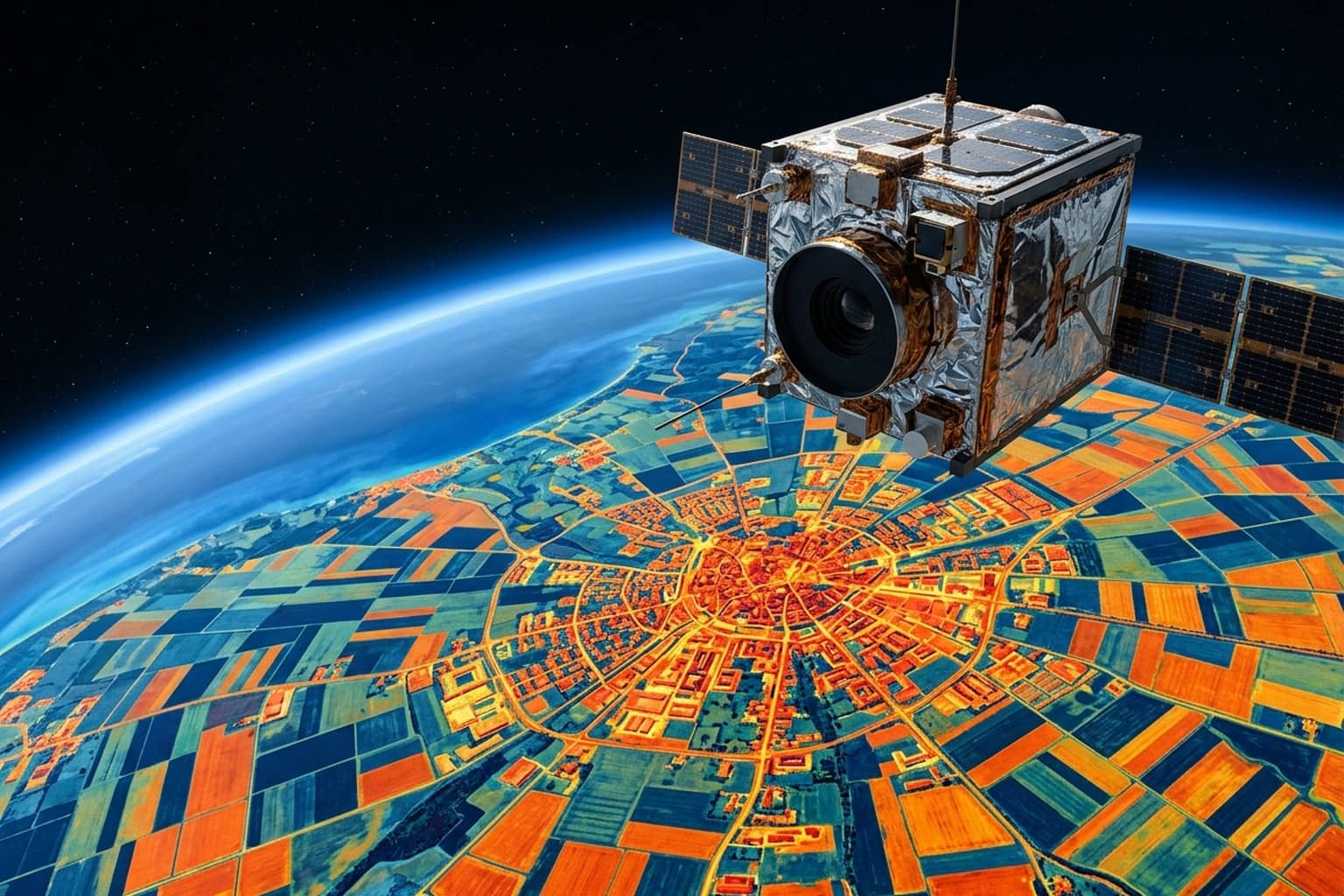
A normal camera in orbit records a few broad colour bands. A hyperspectral camera records many narrow ones, so each pixel carries a detailed signature of what the ground is made of. Pixxel says this lets it reveal information about the Earth's surface that conventional imagery cannot capture. Its customer areas, listed on its website, include agriculture, energy, environment, forestry, mining and government.
The business has three parts. The first is the satellites. Pixxel says it has deployed six Firefly satellites over the past two years, which it describes as the world's highest-resolution commercial hyperspectral constellation. The second is Aurora, its Earth intelligence software, which turns image data into what the company calls decision-ready insights. The third is satellite systems for commercial and sovereign missions, meaning work for governments across civil, defence and intelligence uses.
Founder and CEO Awais Ahmed said in the release that the company set out to build a "health monitor for the planet" and that the new funding gives it scale to turn that vision into planetary infrastructure.
Where the Series C money goes
The company names four priorities. The first is a next-generation constellation called Honeybee, which extends observation into shortwave infrared and adds synthetic aperture radar and ultra-high-resolution optical imaging. The first Honeybee satellite is expected to launch in 2027. The second is further development of Aurora. The third is sovereign Earth observation systems for government missions. The fourth is more manufacturing capacity in India and the US for high-rate satellite production.
Besides Temasek and Seraphim, the release lists 360 ONE Asset and IMM Investment as new investors, and Radical Ventures, growX ventures and M&G Catalyst among existing ones. Pixxel also calls this the single largest round raised by a space technology company in India, which is the company's own description.
Contracts and projects it cites
The release says Pixxel has contracts with NASA and the US National Reconnaissance Office (NRO), has won several iDEX challenges run by the Ministry of Defence, and was selected to lead India's first public-private Earth observation constellation of 12 satellites under IN-SPACe. The company's 4 May 2026 announcement adds a separate project: a 200 kg-class demonstrator called Pathfinder, built with the AI company Sarvam, which Pixxel says is meant to carry datacentre-class GPUs and run Sarvam's models in orbit.
Pathfinder is scheduled to reach orbit as early as the fourth quarter of 2026, according to that announcement. The idea is to analyse hyperspectral data on board and send down conclusions instead of large volumes of raw imagery, which the company says cuts the delay between capture and decision.
These are plans and claims published by the company. The release does not give revenue, customer numbers or launch dates beyond those mentioned above, and Dalimss News has not independently verified the performance of the satellites. Readers who want the full wording can read both announcements on the Pixxel newsroom.