Four-Hour Downpour Floods Varanasi Streets and Snarls Cross-City Travel
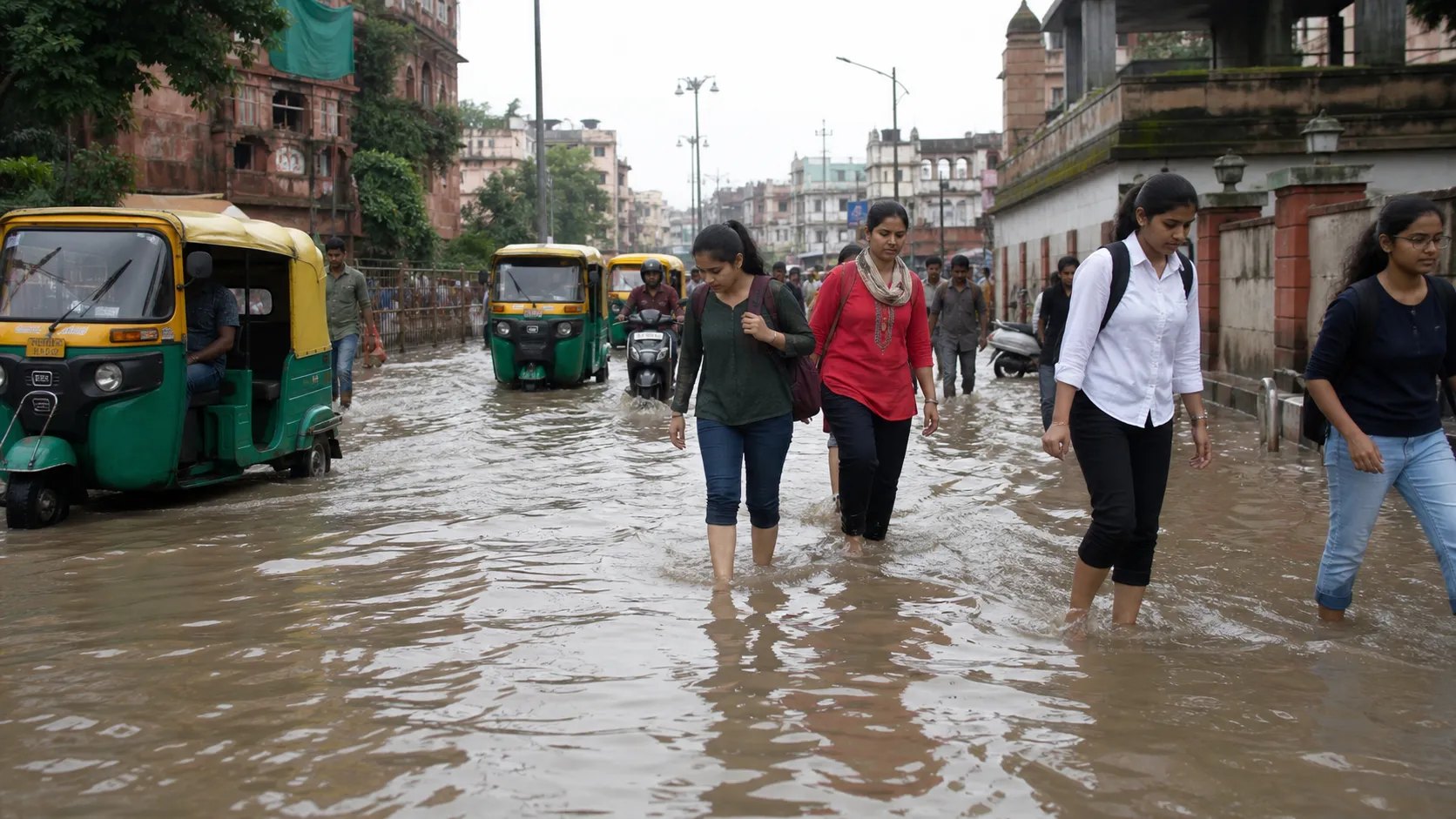
A concentrated four-hour spell of rain delivered about 51 millimetres over Varanasi on Wednesday, flooding roads and colonies, slowing traffic and disrupting electricity in parts of the district. The rain began shortly before 11 a.m. after a bright morning and continued, with varying intensity, until around 3 p.m. Winds briefly reached 25 to 30 kilometres an hour.
Water rose to roughly a foot in Mahmoorganj, Chandpur, parts of BHU, Lanka, Samne Ghat and the Azad Park area of Jaitpura. Waterlogging was also reported around the divisional railway manager’s office, Varanasi Cantt station, Banaras Locomotive Works, Rath Yatra, Kamachha, Andhrapul and Luxa. Godowlia and Girjaghar, notably, were reported to have avoided standing water on the main road.
The uneven map is important. It shows that rainfall alone does not determine which street floods. Drain capacity, blocked inlets, road level, recent digging and the speed at which water can reach a larger outfall all shape the result. A citywide number can be impressive while the lived emergency is intensely local—one lane remains passable and the next becomes a brown channel.
Commuters described a familiar monsoon penalty: a journey that normally takes about 30 minutes stretching to more than an hour. Two-wheelers were forced to slow through hidden potholes, autos bunched at narrower passages and pedestrians searched for a dry edge that often did not exist. Waterlogged access around BHU also made routine movement harder for students and hospital visitors.
In Rohania, a tree fell onto an electricity line, adding a safety and supply problem to the weather disruption. Residents should assume that any fallen wire may be live and keep away until the power utility confirms isolation. Moving branches or wading near a damaged pole can turn an inconvenience into a fatal accident.
The rain also brought a clear agricultural benefit. Paddy fields received needed water, and the city’s seasonal rainfall deficit fell from about 42 per cent to 30 per cent. Wednesday’s total amounted to roughly one-fifth of the rain recorded across the previous two months, a reminder of how abruptly the monsoon can rebalance statistics.
The maximum temperature settled around 31 degrees Celsius, about 2.5 degrees below normal, while the minimum was 26.4 degrees. Forecasters linked the spell to an active monsoon trough and circulation supporting stronger flow across the Gangetic plain.
For the municipal system, the morning after matters as much as the storm. Teams need to identify drains that failed, clear silt and plastic before the next burst and publish a map of recurring points. Varanasi cannot stop intense rain. It can, however, reduce the number of residents who must measure every monsoon shower by how high the water climbs inside their street.
Sources and reporting
Based on rainfall observations and field reports from Varanasi on 5–6 August 2026. The city recorded about 51 millimetres between late morning and mid-afternoon.
Related Stories
Court Issues Arrest Warrant for HSVP Brass
MCG Finalises Sohna Site for Fresh Waste

GMDA Seeks Station-Wise Metro Parking Plans

Thar Rams Rapido Cab After Sector 89 Quarrel

FDA Raids 3 Outlets Over Paneer Quality