
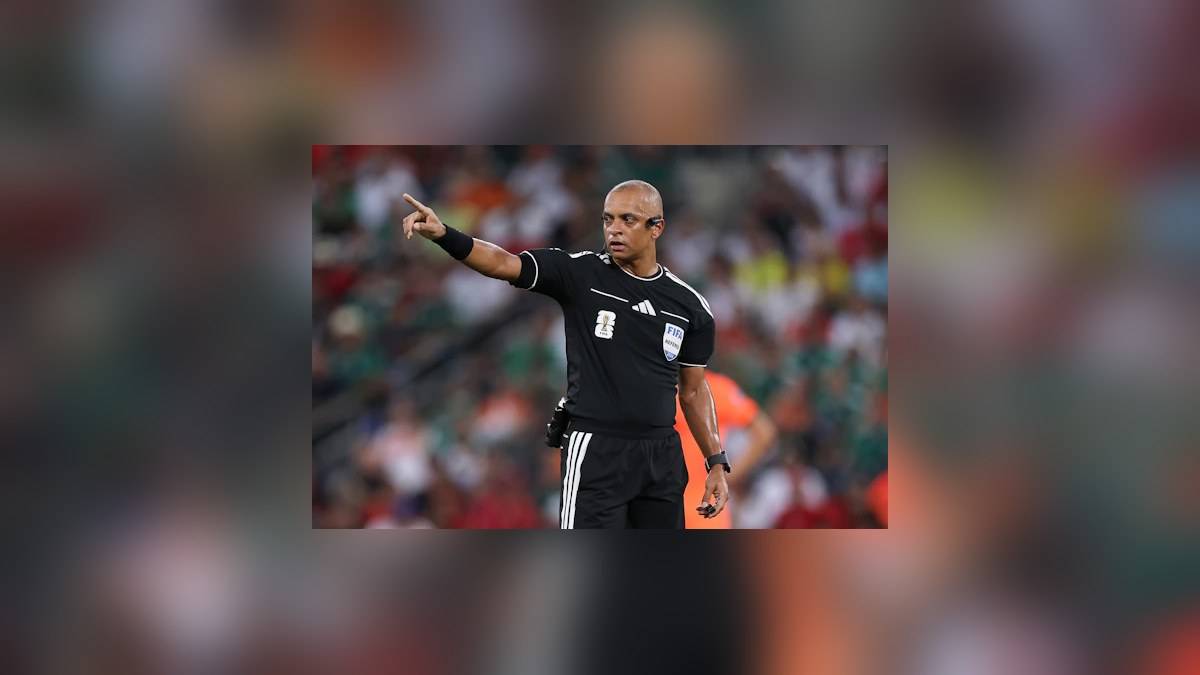
Football competitions can allow up to five substitutions under IFAB Law 3, but the five player allowance does not necessarily mean five separate stoppages. Where the specified senior competitions permit five substitutes, each team has three substitution opportunities, plus half time. The current rules also require an outgoing player to leave within ten seconds, subject to the referee's safety and injury exceptions.
| Issue | IFAB framework |
|---|---|
| Official competition allowance | Determined by the organiser, up to five |
| Opportunities where the five substitute framework applies | Three, with half time additional |
| Multiple changes in one stoppage | One opportunity |
| Outgoing player's exit | Within ten seconds, subject to exceptions |
The authority is IFAB Law 3, The Players, read here in its current 2026/27 framework. Competition rules remain essential: they specify the permitted allowance, the named bench and whether an additional substitute is available in extra time. The general law should not be read as an identical team sheet rule for every league or age group.
How do five substitutions and three windows work?
For the covered senior competitions using the five substitute allowance, a team can replace more than one player during the same stoppage while using only one opportunity. For example, two changes in one stoppage, two in another and one in a third use five substitutes across three opportunities. That is an illustration of the counting rule, rather than a prescribed tactical sequence.
Half time changes do not use one of those three opportunities. If a team makes a change at half time, it has used one player from its allowance while preserving its opportunities during play. The player count and the opportunity count therefore need to be tracked separately throughout the match.
When both teams make changes during the same stoppage, that counts as an opportunity for each team. One side cannot treat its change as free simply because its opponent requested the stoppage first. Multiple substitutions and requests by one team within that same stoppage count together as one opportunity.
How are substitutions made in football?
Substitutes must be named to the referee before the match. A substitute who was not named cannot simply be added later. Before a replacement takes place, the referee must be informed. The departing player normally leaves at the nearest boundary point unless the referee directs another exit, including for injury, safety or security reasons.
The incoming player enters during a stoppage, at the halfway line, after the outgoing player has left and after the referee's signal. Entry completes the substitution. From that moment the substitute becomes a player and may take a restart. Merely displaying a number or having somebody waiting beside the technical area does not complete the process.
What happens if a player takes more than ten seconds?
The official time limited substitution protocol starts the clock when the board is shown or, without a board, when the referee signals. If the referee checks the substitute's equipment at halfway, the period begins after the inspection is complete and the referee signals for the change.
If an outgoing outfield player exceeds the limit without an applicable exception, they must still leave. Play restarts, and the substitute can enter only with permission at the first stoppage after one minute has elapsed following the restart. That minute uses a running clock. The team cannot cancel the substitution or switch to a different incoming player to avoid the consequence.
A yellow card is reserved for an excessive delay, rather than being automatic whenever ten seconds are exceeded. Referees may make exceptions where injury clearly prevents a timely exit or the nearest boundary is unsafe. The protocol also permits entry when the player is very close to, or crossing, the boundary at the countdown's end. Law 3's goalkeeper FAQ allows an incoming goalkeeper to enter after the outgoing goalkeeper excessively delays, because a team must have a goalkeeper; the departing goalkeeper is cautioned.
Do extra time and red cards change the allowance?
Unused substitutes and opportunities carry into extra time. An additional substitute and opportunity are available only where competition rules permit them. Changes between full time and extra time, and at extra time's interval, do not use opportunities. Return substitutions are restricted to authorised youth, veterans, disability and grassroots football, rather than being a general senior option.
A player sent off after kick off cannot be replaced. Bringing on a goalkeeper after a dismissal may require another player to leave and still uses the applicable substitution process. Our yellow and red card guide explains disciplinary distinctions. For other decisions that interrupt a match, read the offside guide and handball rules explainer.