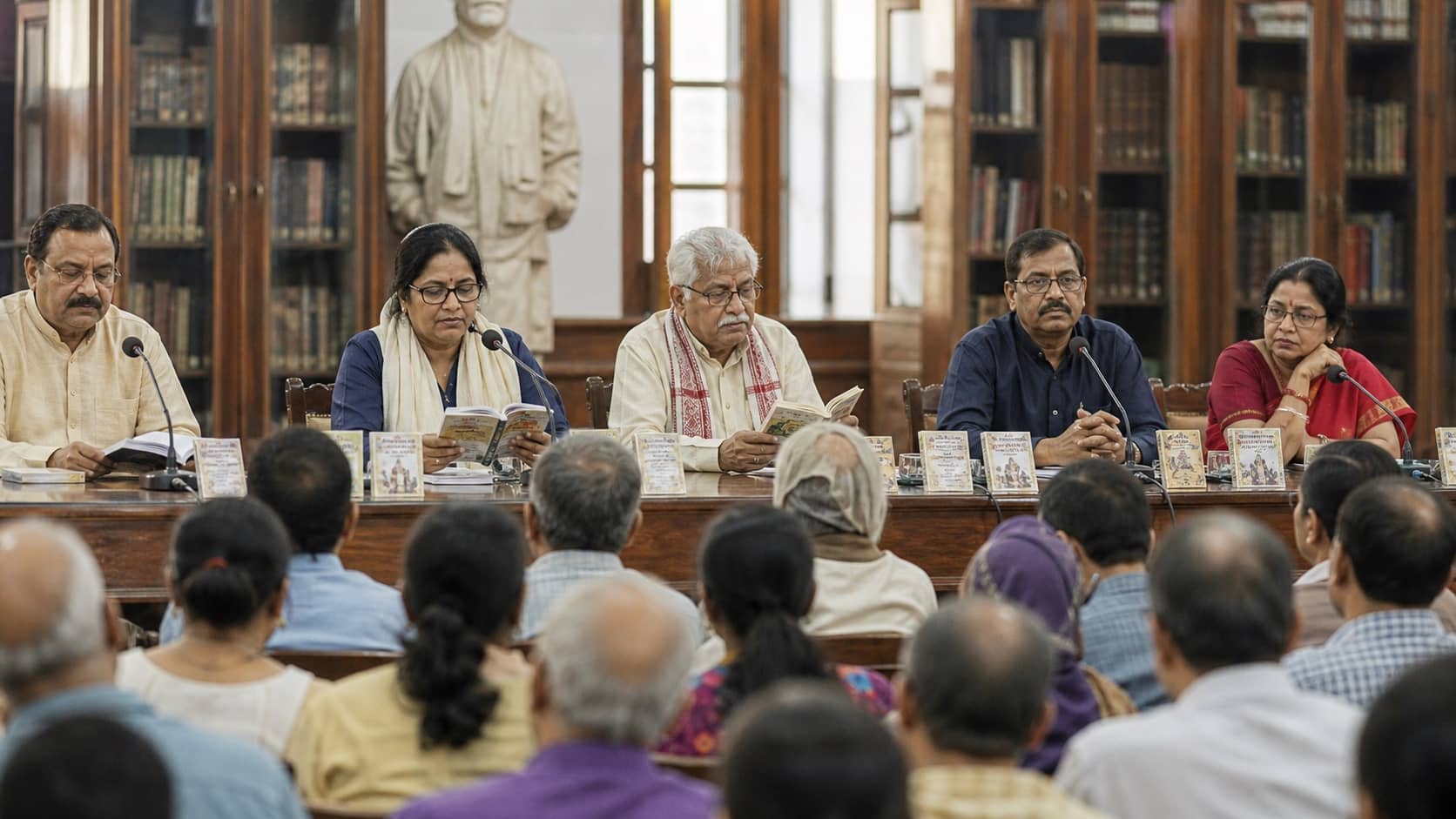
VARANASI: Five writers working for the preservation and growth of Bhojpuri language and literature were honoured at Mani Mahotsav on Thursday, in an evening that combined recognition, recitation and the launch of a book on one of Kashi’s best-known Bhojpuri voices.
The event was held at the Government Library in Ardali Bazar by the Pandit Hariram Dwivedi Bhojpuri Sahitya Shodh Nyas. Dr Manjari Pandey, Dr Dharmaprakash Mishra, Dr Ramresh “Naresh”, Akhlaq Khan Bharatiya and Rudranath Tripathi “Punj” received angavastrams and mementoes. The honoured writers also read representative pieces from their work, allowing the programme to move beyond a formal prize ceremony.
Organisers released “Anganaiya Mein Diyana Jaray Rakhiha”, a book based on the life of the late Pandit Hariram Dwivedi. Dr Ramsudhar Singh edited the volume. Dwivedi’s writing remains closely associated with everyday Banarasi speech, folk memory and a form of Bhojpuri that could sound intimate without losing literary weight. A biographical collection can be valuable when it preserves not only a list of works, but the circumstances in which a writer’s language developed.
Dr Sabita Bhardwaj attended as chief guest and Padma Shri Dr Kamalakar Tripathi presided. Dr Ajay Kumar Tiwari, Dr Jaiprakash Mishra and Dr Asha Yadav were among the special guests named in the programme report. The range of participants—from scholars to practising poets—reflected an important truth about Bhojpuri: its future depends on both academic documentation and writers who keep producing work for a living audience.
Bhojpuri is spoken across a wide region and by a large diaspora, yet its public image is often narrowed to popular music and entertainment. Literary gatherings in Varanasi offer a corrective. Poetry, memoir, criticism, theatre and oral history reveal a language capable of recording migration, neighbourhood humour, grief, labour and changing family life with unusual precision.
Preservation, however, cannot end with a commemorative event. Libraries and trusts can help by cataloguing manuscripts, recording senior writers, digitising out-of-print books and creating editions that younger readers can actually obtain. Schools and colleges can support reading circles without turning the language into a ceremonial subject heard only on an annual stage.
The presence of Akhlaq Khan Bharatiya among the five honourees also underlined the social breadth of a language shared across communities. Bhojpuri’s vocabulary and performance traditions have grown through markets, villages, shrines, workshops and homes rather than inside a single institution. That mixed inheritance is one of its strengths.
Mani Mahotsav gave five contemporary writers their moment, while the new volume returned attention to Hariram Dwivedi’s legacy. The more difficult work begins after the hall empties: making sure that books remain available, recordings are preserved and the next generation sees Bhojpuri not as a language left behind, but as one in which serious new work can still be written.