

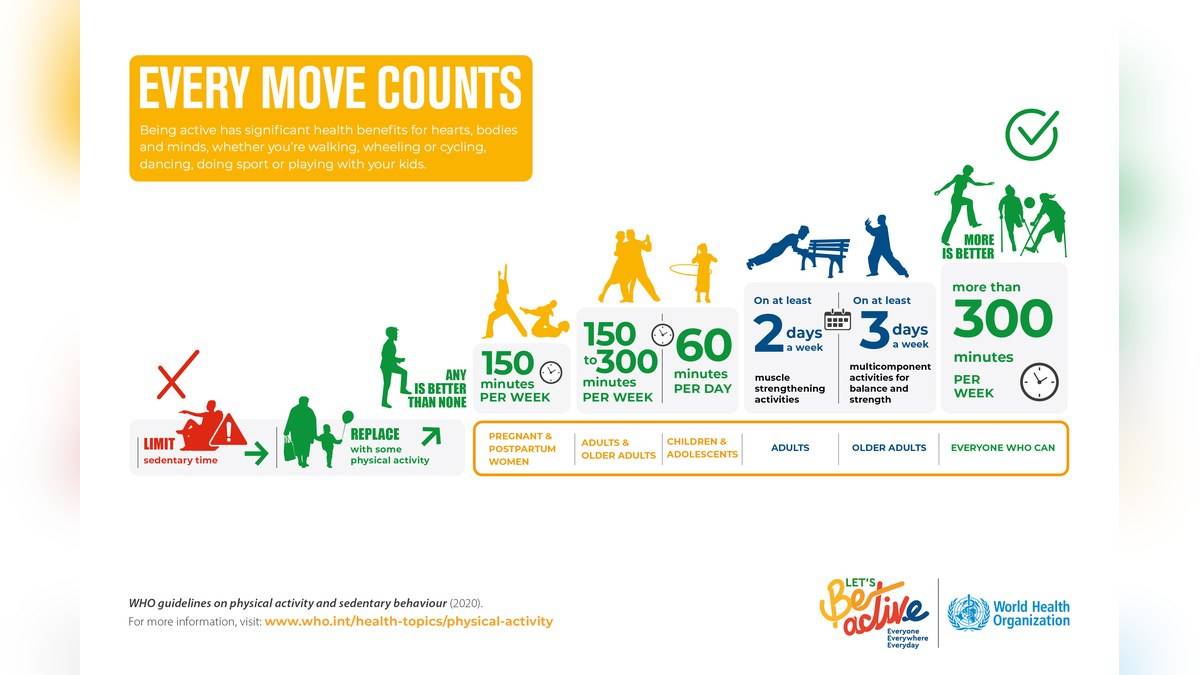
Exercise for older adults aged 65 and over should combine aerobic activity, muscle strengthening and balance work. Official guidance sets a weekly goal of at least 150 minutes of moderate aerobic activity, with strength activities on at least two days. Older people who cannot reach those amounts should stay as active as their abilities and health allow.
A morning walk can be part of that week, but it does not cover every part of the guidance. The useful question for an older person, or a family member helping them plan, is whether the week includes different kinds of movement and enough room to progress gradually.
| Part of the week | What official guidance says |
|---|---|
| Aerobic activity | At least 150 minutes at moderate intensity, or 75 minutes at vigorous intensity, or an equivalent mixture |
| Muscle strengthening | At least two days, covering the major muscle groups |
| Balance and strength together | WHO highlights varied activities on at least three days for older adults |
| Everyday movement | Be active daily and break up prolonged sitting |
How much exercise do adults over 65 need?
The CDC overview for adults aged 65 and older gives three routes for aerobic activity: 150 minutes at moderate intensity, 75 minutes at vigorous intensity, or an equivalent combination. Its moderate example is 30 minutes on five days of the week. These are weekly totals, so a missed morning does not make the whole week a failure.
Vigorous activity is an alternative for people able to do it safely. It is not a requirement for someone returning to movement after a long break. The NHS guidance for older adults specifically describes the vigorous option for people who are already active and says the intensity should suit their fitness.
The WHO activity infographic places adults and older adults in the 150 to 300 minute weekly band. Its separate older adult message calls for activities combining balance and strength on at least three days. That gives a fuller picture than simply adding up walking time.
What counts as moderate exercise for older adults?
The NHS describes moderate activity as movement that raises the heart rate, increases breathing and makes a person feel warmer. A practical check is being able to talk while finding singing difficult. Walking for health, water aerobics and dancing are among its examples. The effort involved matters when deciding how an activity fits the weekly total.
Light activity has a different place. The NHS includes slow walking, moving around the home, cleaning, dusting and making the bed. These movements help interrupt time spent sitting or lying down. They are worthwhile even when they do not reach the effort needed to count as moderate aerobic exercise.
For more on judging effort, our guide to moderate intensity exercise and the talk test explains the terms. Use that distinction when recording a week: time on your feet and moderate exercise time answer different questions.
Why include strength and balance as well as walking?
The CDC recommends strength activities that involve the legs, hips, back, abdomen, chest, shoulders and arms. Its example weeks add these activities on two or more days alongside aerobic activity, then include balance work. A walking total alone does not show whether those other elements are present.
The NHS notes that strength work can happen on the same days as aerobic exercise or on different days. It also cautions that muscle strengthening is not always aerobic activity. A session therefore needs to be understood by what it involves, rather than being counted automatically towards every target.
Our separate guides to beginner strength exercises and fall prevention at home explain those components. Anyone choosing a home routine should use beginner modifications, keep suitable support available and stop if there is pain. A target number of sessions is not a reason to attempt a movement that feels unsafe.
How to start if mobility or a health condition limits activity
In its practical advice on adding activity, the CDC suggests variety and finding activities that work for the individual. After an interruption caused by illness or travel, it advises restarting at a lower level and building back gradually. The previous routine need not become the first day's target.
If you have a medical condition, consult a qualified doctor about an activity plan that matches your abilities. The CDC also recommends discussing disability related needs with a doctor and seeking guidance from a professional experienced in physical activity and disability. The NHS advises speaking to a doctor if you have not exercised for some time or have concerns.
A useful weekly record can have three simple entries: aerobic minutes, strength days and balance activity. Add a note about what felt manageable and whether prolonged sitting was interrupted. This makes the guidance easier to discuss with a clinician, while leaving space for a plan to reflect the person's health, confidence and changing abilities.