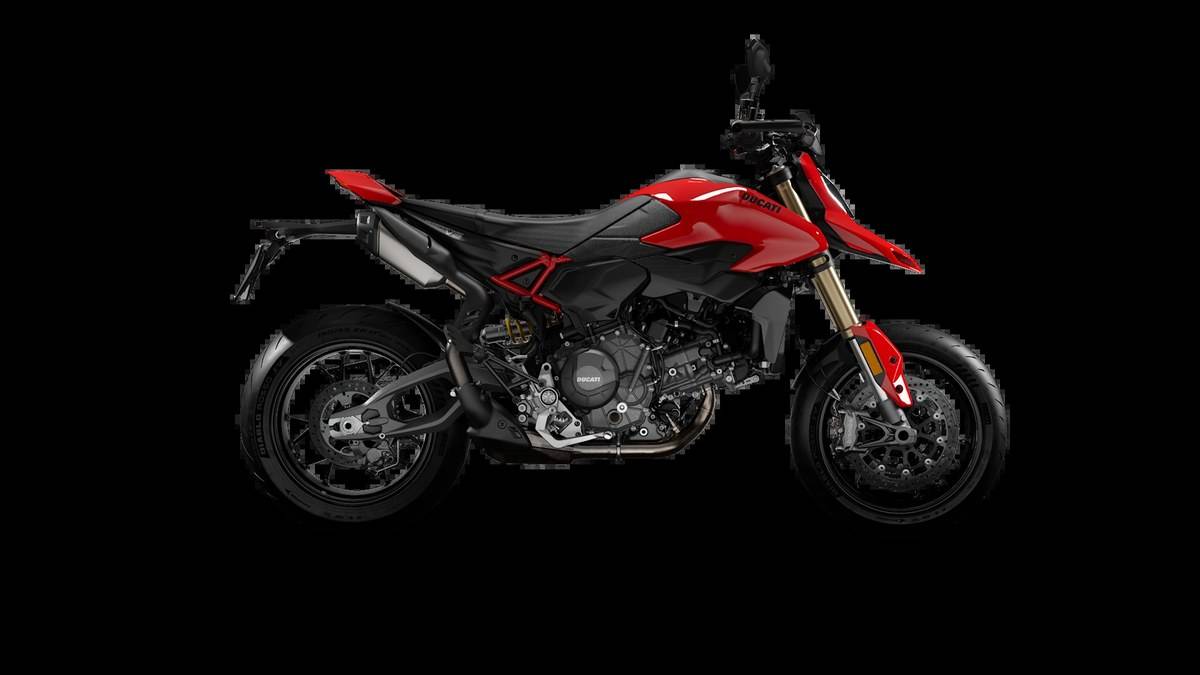
NEW DELHI: The Ducati Hypermotard V2 schedules a valve-clearance check at 45,000 km, while its oil service is listed at 15,000 km or 24 months and its annual service at 12 months. Those are separate entries in the official specification. The valve figure should not be read as the distance an owner can travel without servicing.
| Maintenance or model item | Official figure |
|---|---|
| Valve-clearance check | 45,000 km |
| Oil service | 15,000 km or 24 months |
| Annual service | 12 months |
| Engine displacement | 890 cc |
| Hypermotard V2 starting price | Rs 16,53,000, ex-showroom |
| Hypermotard V2 SP starting price | Rs 20,78,000, ex-showroom |
Price as of 13 November 2026, 23:28 IST. Ducati India's page supplies the starting prices and lists the same maintenance intervals for the standard V2 and V2 SP. The engine chapter separately confirms the oil-change schedule and connects the longer valve-check interval with the engine's coil-spring valve-return system.
The longest interval is not the whole schedule
The valve check is likely to attract attention because it is the largest distance in this maintenance summary. For ownership planning, however, the shorter time and distance entries are just as relevant. A motorcycle used mainly for occasional rides still has a calendar, even when its odometer advances slowly.
That makes the Hypermotard V2 a useful example of why a service discussion needs more than the headline engine interval. An owner should retain the annual-service entry alongside the oil-service entry, rather than replace both with a reminder for the valve check. Each label describes a different item in Ducati's published summary.
Build the record around the actual motorcycle
At delivery, keep the motorcycle identification, delivery paperwork and applicable maintenance documentation together. Ask the workshop to identify the schedule for the supplied motorcycle and record the next relevant visit. That is a practical record-keeping suggestion; the public specification alone does not establish the complete first-service checklist or every inspection that may be required.
After a service, retain the invoice and job sheet with both the date and odometer reading. Those two pieces of information make the history more useful than an isolated stamp or a vague memory of when the motorcycle last visited a workshop. They also help distinguish work actually completed from work merely discussed.
Low mileage does not erase the annual entry
For a weekend rider, the calendar can be the part of ownership that is easiest to overlook. The annual-service line remains present in Ducati's table even though the oil service has its own longer time allowance. Treating those entries separately avoids assuming that an oil-service time limit automatically postpones all scheduled attention.
If a workshop combines jobs into a visit, the owner still needs a record of what was performed. The useful question is not simply whether the motorcycle was serviced, but which scheduled tasks the invoice covers and which future items remain due. This is especially helpful when the bike's annual mileage changes from one year to the next.
The V2 and SP share this published timetable
The official comparison table places the standard and SP versions alongside each other and repeats the maintenance figures for both. Choosing the SP therefore does not change these particular published intervals. It also does not make every other ownership cost identical; the opened pages do not provide a complete service tariff or an all-inclusive maintenance quotation.
Before agreeing to a service package, ask which scheduled visits and consumables it includes. Keep the answer tied to the actual plan documents rather than estimating ownership costs from the motorcycle's ex-showroom price. No oil-service charge, valve-check bill or labour total has been verified for this article, so no such figure is supplied.
Who should keep these distinctions in view
This guide is most relevant to a new Hypermotard V2 owner organising the first ownership file, or a prospective owner evaluating the maintenance timetable. It is also useful when reviewing a used motorcycle's records: a low odometer reading does not, by itself, establish that the calendar-based entries were followed.
The model-specific point is the combination of a coil-spring valve-return engine with a long valve-check interval and separate routine-service entries. That combination deserves to be recorded accurately, rather than compressed into a claim that the motorcycle only needs attention at the largest number. The handbook and documented workshop schedule remain the basis for actual maintenance.
For related coverage, see our Hypermotard V2 variant price guide, Hypermotard 698 Mono price list and Multistrada V4 valve-check explainer. Their model names matter: a service interval from another Ducati engine should not be substituted here.
Official sources: Ducati India Hypermotard V2 technical specifications and the official engine explanation.