
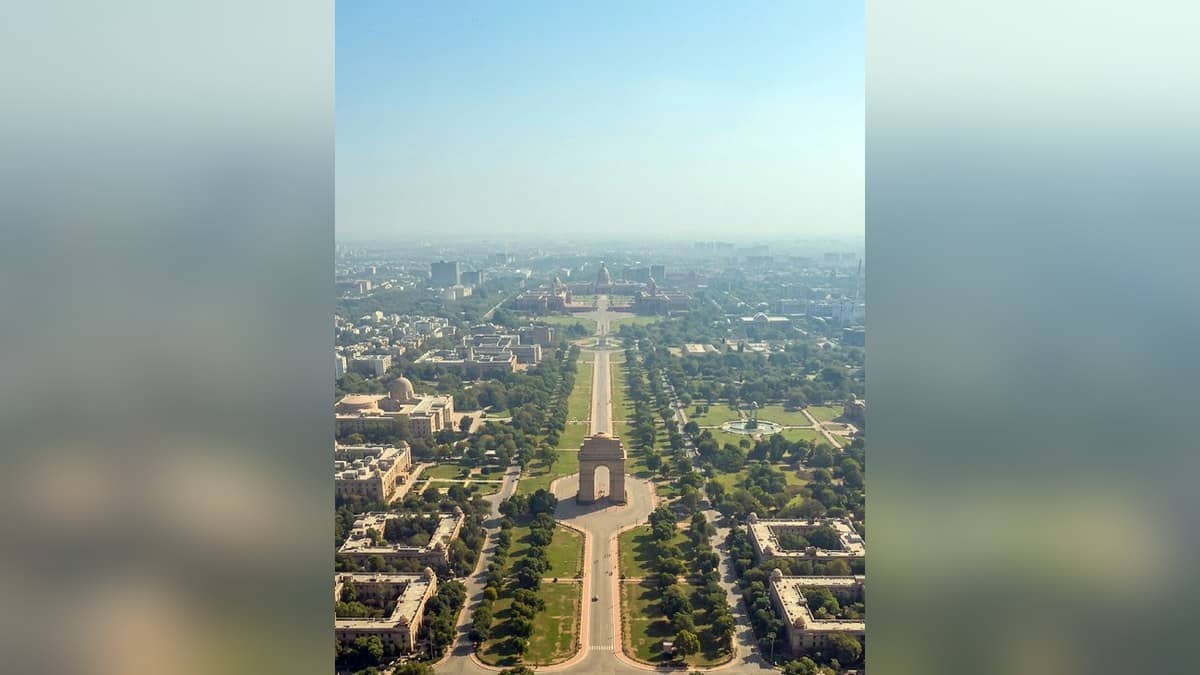
NEW DELHI: Delhi's Air Quality Index was 261, in the Poor category, in the Central Pollution Control Board's bulletin for 4 pm IST on 1 November 2026. PM2.5 was the prominent pollutant listed for the city. The bulletin used data from 57 of 59 stations and describes the reading as an average of the preceding 24 hours, rather than an instantaneous reading for every neighbourhood.
The figure answers the question of Delhi's reported daily air quality, but its timestamp matters. A person checking a monitoring station later in the evening may see another value. The CPCB bulletin for 1 November is a dated city summary. It should not be relabelled as a continuously updating live figure.
| Measure | Official observation |
|---|---|
| City | Delhi |
| Bulletin timestamp | 1 November 2026, 4 pm IST |
| AQI | 261 |
| Category | Poor |
| Prominent pollutant | PM2.5 |
| Participating stations | 57 out of 59 |
What does Delhi AQI 261 mean?
CPCB places readings from 201 to 300 in the Poor category. Its health statement for this band is that prolonged exposure can cause breathing discomfort to most people. A reading of 261 therefore falls within Poor, rather than Moderate or Very Poor. The category is a communication tool for the reported air conditions, not a diagnosis of an individual's health.
The bulletin lists the next band, Very Poor, at 301 to 400, with respiratory illness possible on prolonged exposure. Moderate covers 101 to 200. These boundaries explain why a modest numerical movement near a cutoff can change the category name. They also make it important to compare the number and the label together.
PM2.5 being the prominent pollutant does not mean that 261 is its concentration. The table presents an index and separately names the pollutant. It would be incorrect to copy the AQI number into a particulate concentration field or give it a concentration unit. Nor does that entry, by itself, establish which source contributed the largest share of the pollution.
Why your locality's AQI may differ
CPCB explicitly warns that air quality varies across monitoring locations. For cities with several locations, it uses an average value to give a simple city indication, while acknowledging the limitations of averaging. Delhi's 57 participating stations therefore provide a broad summary, not a claim that conditions beside each school, park or workplace were identical.
The two stations outside the participating count should not be assumed to have clean air or any particular reading. The table gives a coverage count, not an explanation of each missing station. Someone making a local plan should check the location, time and available pollutants in the official monitoring record rather than substitute the city average for a street-level measurement.
There is also a difference between the daily bulletin and an hourly display. Comparing one station's latest value with yesterday's citywide daily average can create an apparent change that reflects the choice of measurement as well as the air itself. Use matching timestamps and the same geographical basis when comparing readings.
What IMD forecasts for 2 to 4 November
The IMD Air Quality and Weather Bulletin for Delhi, issued at 1 pm IST on 1 November 2026, forecast Poor air quality on 1 November and from 2 to 3 November. It forecast Very Poor air quality on 4 November. These are forecasts issued before the later CPCB observation, not additional measured AQI values.
That IMD bulletin records the previous day's CPCB AQI as 117, Moderate, at 4 pm on 31 October. The later 1 November CPCB reading of 261 is higher. The two dated observations show a change in the reported city index; they do not, without further evidence, identify a single cause or establish how much each pollution source contributed.
For 2 November, IMD forecast mainly clear skies, a maximum temperature range of 28 to 30 degrees Celsius and a minimum of 16 to 18 degrees. It expected northwesterly surface winds of up to 10 kmph in the morning, increasing to 15 kmph in the afternoon before easing to 10 kmph in the evening and night. Clear skies should not be read as a declaration of clean air: the same bulletin forecasts a Poor air quality category.
How to use the update for daily planning
The practical message from CPCB's category statement is to take prolonged exposure seriously and keep checking official updates when arranging extended outdoor activity. A daily city reading cannot determine an individual's symptoms or replace personalised medical guidance. Schools, employers and families should also check any current instructions from the responsible local authorities rather than infer an automatic closure from an AQI category.
For the latest bulletin and observation links, use the official Delhi Air Quality Early Warning System and the IMD bulletin page. The page's forecasts and the CPCB daily observations serve different purposes. This article's confirmed daily figure remains the 4 pm IST reading on 1 November, even if those live pages subsequently update.
For related daily planning, see our guides to walking and weekly activity, beginner exercise at home and November's central office holiday list. These general guides do not establish the air quality at a particular location. Check the latest local official reading and applicable instructions when planning outdoor time.