
NEW DELHI: Delhi recorded an Air Quality Index of 224, in the Poor category, in the Central Pollution Control Board's bulletin for 26 November 2026 at 4 pm IST. The figure represents the average of the previous 24 hours. PM2.5 was the prominent pollutant, and 54 of the city's 59 monitoring stations participated in the bulletin.
For residents searching for Delhi AQI today, the distinction matters: 224 is the dated city figure in this bulletin. It does not describe every neighbourhood or replace a later reading from a nearby monitoring station. The Poor category carries a warning about breathing discomfort for most people on prolonged exposure.
| Measure | CPCB bulletin |
|---|---|
| City AQI | 224 |
| Category | Poor |
| Reporting period | Average of the past 24 hours |
| Prominent pollutant | PM2.5 |
| Stations participating | 54 out of 59 |
What does Delhi's AQI of 224 mean?
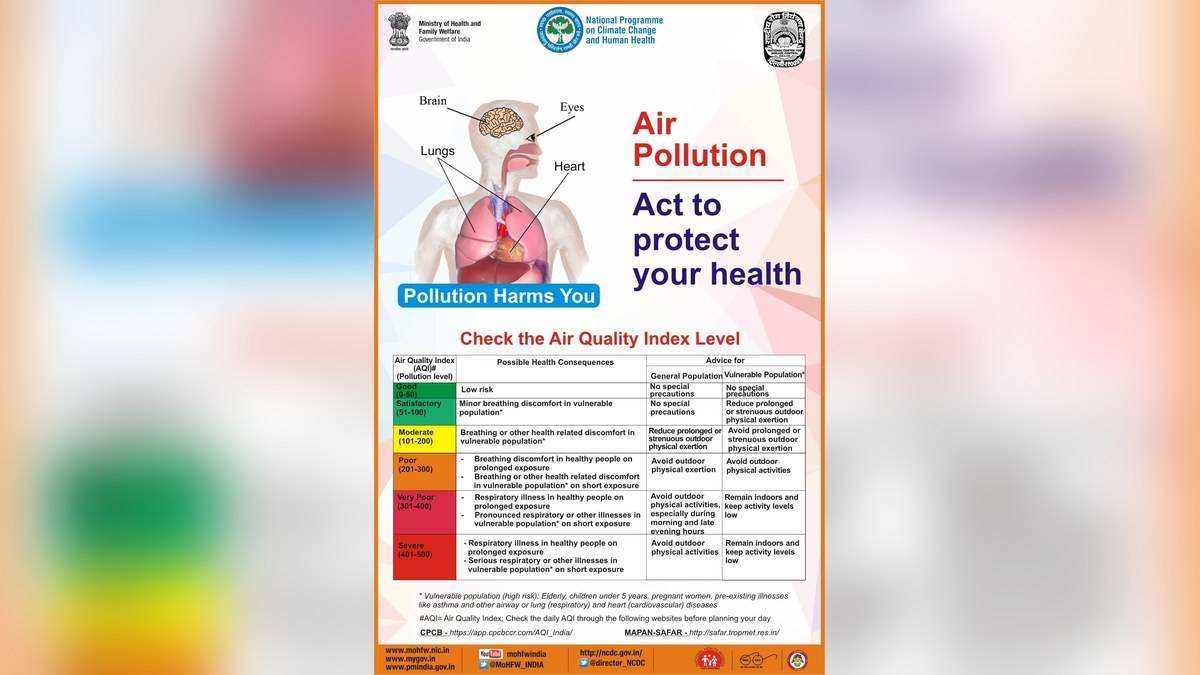
The official CPCB bulletin places readings from 201 to 300 in the Poor band. Moderate covers 101 to 200, while Very Poor starts at 301 and extends to 400. Severe covers 401 to 500. Delhi's reported city value therefore belongs to Poor, rather than either of the two higher pollution categories.
An AQI number is an index, not a direct statement of the concentration of PM2.5. The bulletin's separate prominent pollutant column identifies PM2.5 for Delhi. Reading the two columns together gives the category and the pollutant associated with it, without treating 224 as a concentration measured in micrograms per cubic metre.
Why can a nearby monitoring station show a different AQI?
CPCB explicitly cautions that air quality can vary across locations. For a city with several monitoring locations, its bulletin uses an average to indicate air quality. The board says this averaging is followed for simplicity, while warning that it is not a scientifically sound way to represent variation across those locations.
The station count is another useful detail. Participation by 54 out of 59 stations means the bulletin should not be read as a complete reading from every listed Delhi station. The count alone does not explain why the other stations did not participate. It also cannot establish which locality had the worst air.
CPCB's explanation of AQI calculation says individual pollutant subindices are calculated from average concentrations, and the worst subindex determines AQI at a monitoring location. Most use 24 hourly average concentrations; carbon monoxide and ozone use eight hourly averages.
The same explanation sets minimum data conditions. An overall AQI needs data for at least three pollutants, including either PM2.5 or PM10. At least 16 hours of data are needed to calculate a subindex. These requirements help explain why a displayed index needs both a location and a reporting period to be understood properly.
What does official health advice say for Poor air quality?
The National Centre for Disease Control's 2025 air pollution health advisory advises the general population to avoid outdoor physical exertion in the Poor band. For vulnerable people, the advice is to avoid outdoor physical activities. Those instructions are relevant to Delhi's 224 reading, even though it has not entered the Very Poor band.
The official health material identifies older people, young children, pregnant women and people with existing heart or respiratory conditions as groups requiring particular care. Families planning strenuous outdoor activity should use the category as a practical exposure warning, rather than waiting for the city figure to reach Severe.
For days with AQI above 200, the advisory's public messages recommend avoiding outdoor morning and late evening walks, jogging, running and other exertional activity. They also advise rescheduling outdoor activities according to air quality. These are exposure reduction measures; a city AQI reading cannot determine an individual's diagnosis or treatment.
Indoor sources also matter. The advisory recommends wet mopping instead of sweeping and avoiding the burning of leaves, waste or other materials that add smoke. It asks people with underlying conditions to follow their doctor's instructions and keep prescribed medicines available. Worsening symptoms need medical advice; breathlessness, chest discomfort or pain are among the symptoms for which it advises consulting a doctor.
How to check the next Delhi AQI update
Open CPCB's AQI bulletin archive, choose the required date and read the Delhi row with its time, category and station count. For a local reading, check the monitoring location and its displayed update time. The 4 pm bulletin is a completed reporting window, not a forecast for the night or the following day.
For earlier context, see our reports on Delhi's 1 November CPCB reading and the 7 November station readings. Our 17 November GRAP order report explains that separate dated decision. Those older reports provide background and should not be substituted for the 26 November bulletin.