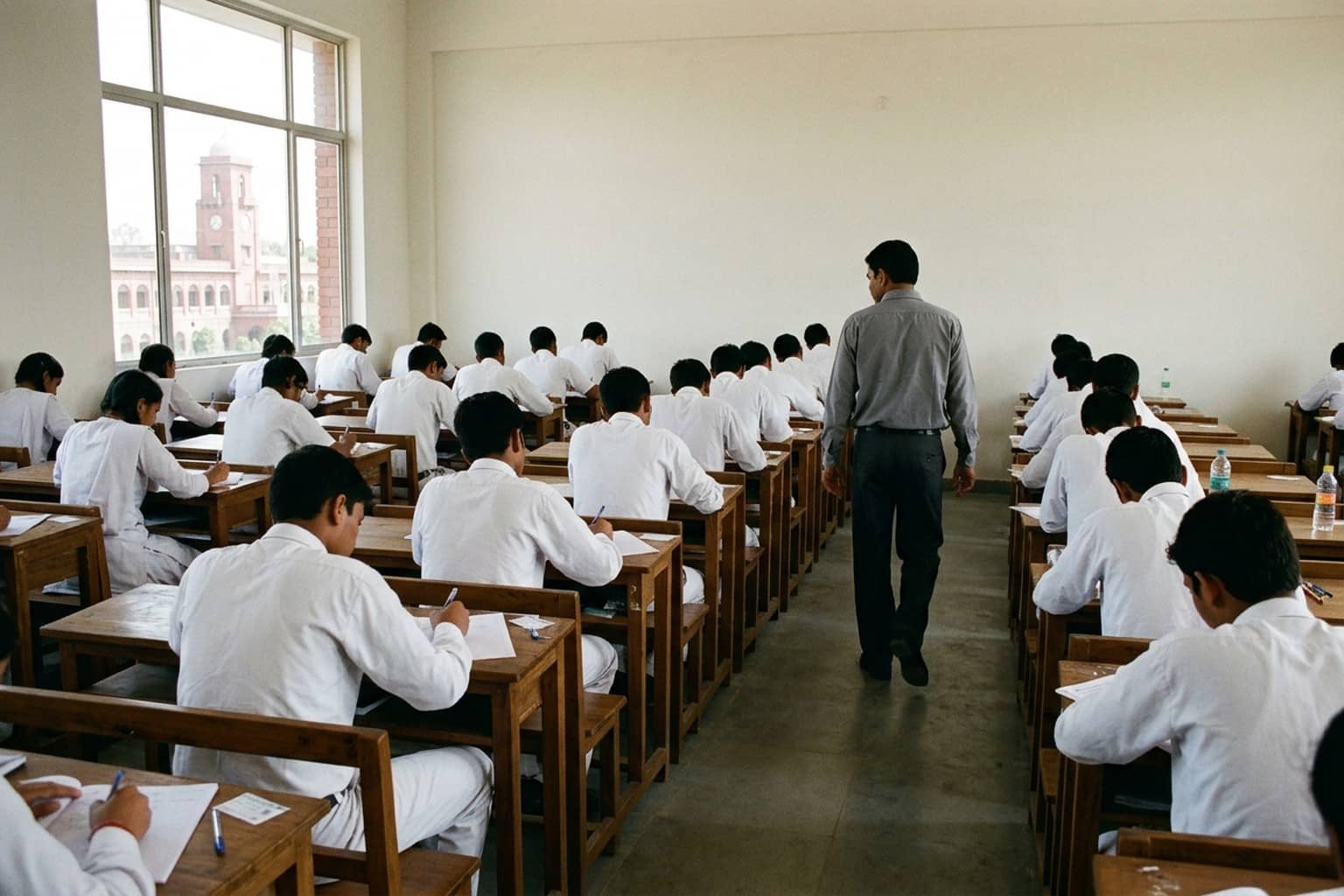
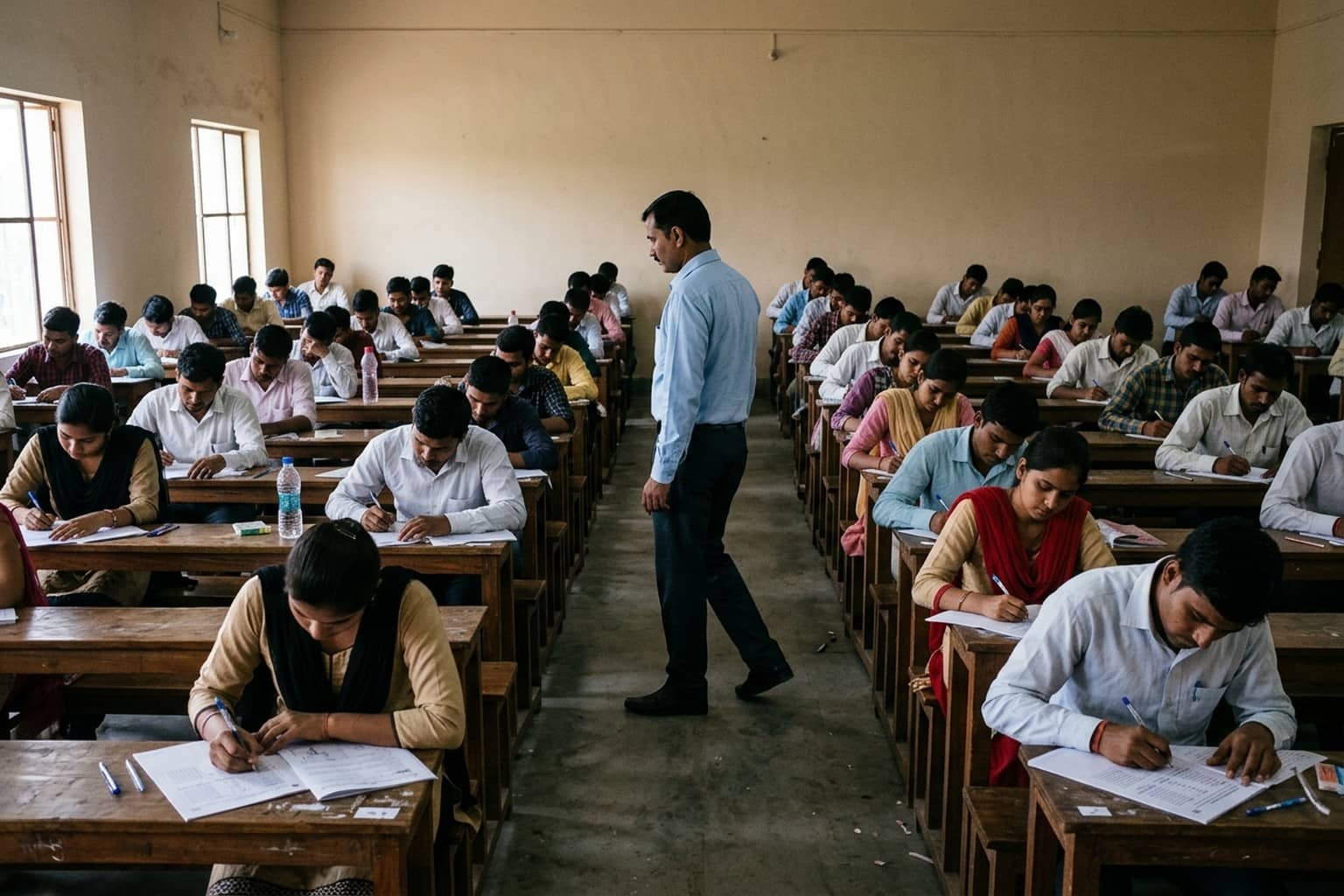
The Central Board of Secondary Education (CBSE) will hold the 22nd edition of the Central Teacher Eligibility Test (CTET) on 12 and 13 December 2026. The date was fixed in a public notice of 14 September 2026 signed by the Director (CTET), after the September exam was pushed back.
This guide sets out what the notices say, in order, and what a candidate should do between now and the exam. It uses only the notices and the information bulletin that CBSE has put on ctet.nic.in.
Why December and not September
The exam was first planned for 6 September 2026, with applications from 11 May to 10 June. On 25 August, CBSE issued a public notice reopening the portal from 25 August to 1 September. It cited a Supreme Court judgment in a review petition that stressed giving eligible teachers a reasonable chance to get the prescribed TET qualification.
The notice said candidates who had already applied successfully did not need to apply again, and that the revised exam date would come after the portal closed. The 14 September notice then set the two days in December. A correction window was also held until 10 September.
City slip and admit card
Per the 14 September notice, the examination city and the date given to each candidate will appear on the CTET portal 15 days before the exam. That puts the city slip at about 27 or 28 November, though CBSE has not named a day.
The admit card, which shows the exam centre, can be downloaded two days before the exam. For a candidate whose paper is on 12 December, that is about 10 December.
Candidates will not get a choice of day. The notice says the date is allotted to each candidate, so someone who needs leave from a school must plan around both days until the slip is out.
Papers and pattern
The information bulletin issued for the September cycle, which is the one on the portal, describes two papers. Paper I is for those who want to teach classes 1 to 5, and Paper II for classes 6 to 8. A person who wants to teach both levels must take both.
Every question is multiple choice with four options, worth one mark, and there is no negative marking. Each paper has 150 questions and 150 marks, with two and a half hours. Paper I has five sections of 30 questions: Child Development and Pedagogy, Mathematics, Environmental Studies, Language I and Language II. The question paper is bilingual in Hindi and English.
Paper II, for classes 6 to 8, also has 150 questions. Child Development and Pedagogy has 30, Language I 30 and Language II 30. The remaining 60 are either Mathematics and Science, for those who will teach those subjects, or Social Studies and Social Science. Teachers of other subjects can pick either.
Candidates choose two languages when applying, with Language II being different from Language I. The bulletin lists 27 languages with codes. Questions follow the NCERT syllabus for the stage, though the bulletin says the difficulty can go up to the secondary level.
Eligibility
The bulletin says the minimum qualifications are those notified by the National Council for Teacher Education, and that candidates must check them on ncte.gov.in before applying. It adds that being allowed to sit the test does not mean eligibility has been verified; that is done finally by the recruiting authority.
Reserved-category candidates get a relaxation of up to 5 per cent in the qualifying marks in the minimum educational qualification, as notified by NCTE.
Pass mark, fee and validity
A candidate who scores 60 per cent or more is considered TET pass, citing the National Council for Teacher Education notification of 11 February 2011. School managements can consider concessions for SC, ST, OBC and disabled candidates under their own reservation policies.
The bulletin says a CTET certificate is valid for life for all categories. There is no limit on attempts, and a person who has qualified may sit again to improve the score. Qualifying does not give any right to a job; it is one of the conditions for recruitment.
The fee in the bulletin was Rs 1,000 for one paper and Rs 1,200 for both for general and OBC (non-creamy layer) candidates, and Rs 500 and Rs 600 for SC, ST and disabled candidates. The application window is now closed, so these figures matter only to those who already applied.
What to do now
First, log in to ctet.nic.in with your existing credentials and confirm that your application and fee show as complete. Second, check that your name, photograph, signature and category match your documents, since the correction window is closed. Third, keep an eye on the CTET public notices page for the city slip.
Fourth, read the bulletin's rules on what to carry. The portal lists the September 2026 information bulletin, and its rules on conduct and documents are the ones to read. Finally, treat any message that offers admit cards or answers for a fee as a fraud; official updates are only on ctet.nic.in and cbse.gov.in.
Keep the printout of your confirmation page, which names the two languages you chose, because the bulletin advises candidates to retain a hard copy of the application for future reference.
School staff may also see our report on the second cycle of NISHTHA courses for teachers and our Haryana board dates and HTET 2026 guide.