Court-Directed FIR Alleges Dowry Abuse, Forced Miscarriage and Digital Blackmail
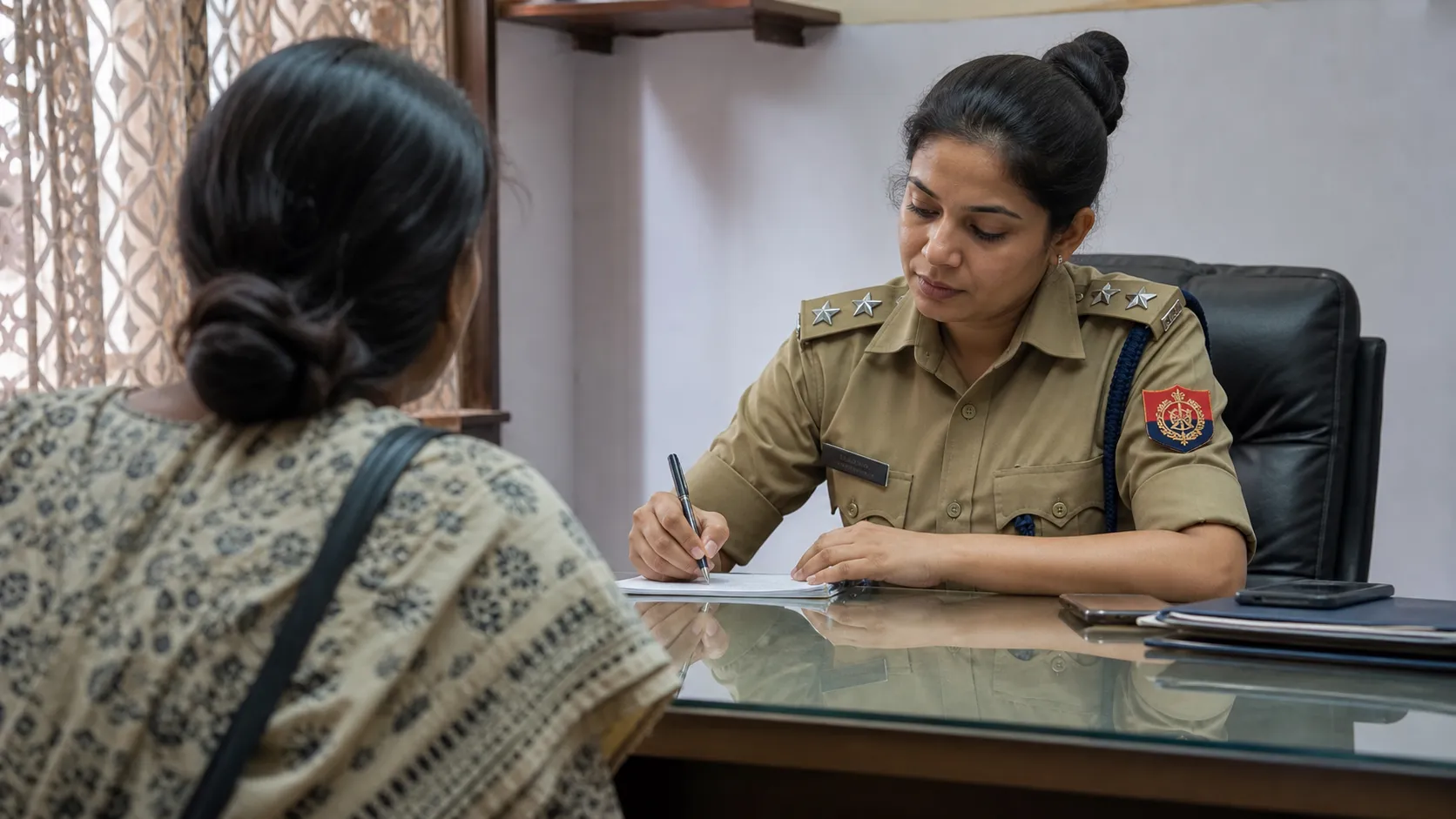
Cantt police have registered an FIR against a woman’s husband and several members of his family after she alleged dowry harassment, repeated assault, an attempted forced miscarriage and blackmail using private photographs and videos. The case was recorded on the direction of the chief judicial magistrate.
The complainant, a resident of the Cantt police-station area, said she married Jia Shahid of Lucknow on December 1, 2010. She alleged that demands for cash began around the marriage and that mistreatment continued over several years. Her identity is being withheld because the complaint includes sexual privacy and reproductive harm.
According to the application before the court, she first approached police in 2015. A settlement followed in 2016, after which she returned to the marital home. She alleges that the abuse resumed. In 2023, while pregnant, she says she was beaten and thrown to the ground, resulting in a miscarriage.
The complaint also accuses her husband of hacking or accessing her phone and using private images and videos to blackmail her. She further alleges that she was assaulted again in 2026, that gold jewellery was taken and that the accused retained stridhan valued at about ₹8 lakh.
Every allegation must now be tested. Police should obtain medical records where available, the earlier complaint and settlement file, phone and account evidence, and a complete inventory of claimed stridhan. Digital material must be collected through lawful forensic methods; circulating intimate files in the name of investigation would deepen the alleged harm.
The accused are entitled to present their version and remain presumed innocent unless a court finds otherwise. At the same time, the length of the account shows why a past compromise cannot automatically be treated as proof that danger ended. Women may return to a household because of financial pressure, children, family persuasion or lack of a safe alternative.
Police and support services should also assess immediate safety. An FIR is not a protection plan. The complainant may need information about shelter, medical care, counselling, legal aid and measures restricting contact if a competent authority considers them necessary.
The phone allegations highlight a modern layer of domestic control. Password theft, covert access and threats to publish private media can isolate a victim as effectively as physical violence. Investigators need to preserve device logs, cloud-account notices and message metadata before evidence disappears.
Station house officer Rajkishore Pandey said the case had been registered and was under investigation. The court-directed action now places a duty on police to examine the full timeline rather than reduce it to one recent incident.
The case will ultimately turn on evidence and due process. For the complainant, however, the immediate measure of the system is simpler: whether she can participate without being exposed, pressured into another informal settlement or forced to repeat her most private allegations at every desk.
Sources and reporting
Based on a Cantt police FIR registered on the chief judicial magistrate’s direction and reported on 6 August 2026. The survivor is not identified.
Related Stories
Bike With 113 Challans Impounded at MDI Chowk

Cops Override Smart Signals in Rush Hours

BHU Opens Bharat Innovation Conclave 2.0 at Swatantrata Bhawan

Audit Flags 525 Unsafe Rooms in Govt Schools

GRP Cantt Arrests Woman With 72 Quarters of Alleged Illegal Liquor