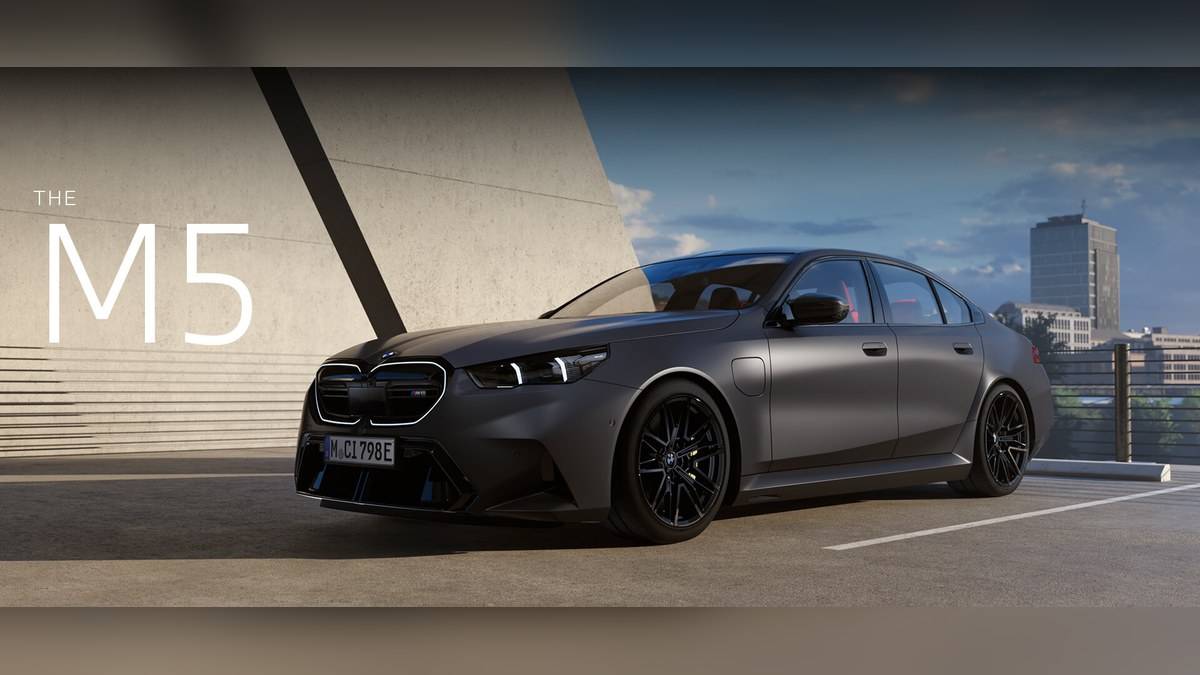
NEW DELHI: BMW lists the M5's M Hybrid system at 727 hp and 1,000 Nm. Those are the combined-system ratings to use when reading the car's specification. The separately published V8 and electric-motor outputs describe individual parts of the powertrain, and should not be added together to create a different headline figure.
| Published rating | Power | Torque |
|---|---|---|
| M Hybrid system | 535 kW / 727 hp | 1,000 Nm |
| Combustion engine | 430 kW / 585 hp | 750 Nm |
| Electric drive | Up to 145 kW / 197 hp | 280 Nm |
Keep component ratings separate from the system result
The figures above come from BMW's official Indian announcement, while the current India model page repeats the combined output. Read each row with its label intact. The first describes the complete hybrid powertrain; the others identify its contributors. They are not alternative versions of the car.
Our reading of those published specifications is that the manufacturer's system rating is the relevant figure for comparing total advertised output with another car. Adding component maxima would replace that defined rating with an unsupported calculation. The same care applies to torque: retain BMW's system value rather than making a new total from the individual entries.
The current product page also says electric-drive output depends on battery charge. That qualification belongs beside any discussion of the motor's contribution. The existence of an electric motor does not mean its maximum assistance should be assumed to be available in every driving condition.
What the hybrid hardware changes
The India announcement identifies a V8 petrol engine working with an electric drive, an eight-speed M Steptronic transmission and M xDrive all-wheel drive. This is a plug-in hybrid performance saloon. Its specification therefore needs to be read as an account of interacting systems, rather than as a petrol-engine rating with an accessory bolted onto the table.
For someone moving from a conventional performance car, that changes the questions worth asking during handover. Ask how the car displays battery status, which hybrid mode is selected and what the owner's manual says about preparing the car for the intended use. Those questions reveal more about daily operation than memorising the largest number in a brochure.
A useful demonstration would begin with the car stationary. Ask the product specialist to identify the relevant controls and displays before setting off. During the drive, concentrate on the car's normal responses and discuss any unfamiliar indication afterwards. Learning the controls does not require testing advertised performance on a public road.
Understand the purpose of each hybrid setting
BMW's Indian announcement describes HYBRID as coordinating the engine and electric motor according to the situation. ELECTRIC prioritises electric operation, with the engine brought in by kickdown or use of the gearshift paddles. It also describes eCONTROL as supporting recuperation and maintaining battery charge.
These descriptions explain why choosing ELECTRIC should not be understood as selecting the full combined-system output for silent driving. It changes how the powertrain is being used. Ask the demonstrator to show the actual indication for the selected mode, rather than relying on the sound of the engine to decide what the car is doing.
BMW also describes additional modes under the optional M Drive Professional package. Keep optional equipment separate from the standard hybrid controls when reviewing a quotation. A feature shown in a launch demonstration or an international video should be checked against the particular Indian car's equipment list.
Read performance claims with their conditions
The current India page gives a claimed acceleration time of 3.5 seconds from rest to 100 km/h. It associates the advertised 305 km/h maximum speed with the M Driver's Package. Preserve that package qualification when taking notes; a bare speed figure loses information that matters to the specification.
The same model page describes M1 and M2 keys for saved vehicle settings. At delivery, ask which settings are stored and how the display confirms them. Treat a saved setup as something to understand and review, especially before another household member drives the car.
For an Indian owner using the M5 as an everyday saloon, the useful distinction is between its published capability and the operating choices made on an ordinary journey. The combined rating answers the output question. Battery status, hybrid-mode selection and the supplied equipment determine what the driver needs to understand at the controls.
Related reading: our BMW M5 and M4 comparison, M340i drivetrain explainer and M440i Convertible guide cover other parts of BMW's performance range.
Official sources: BMW M5 India model page and official India M5 announcement, rechecked on 14 November 2026.