
BLW and Varanasi Municipal Corporation Sign ₹45.03 Crore Drainage Agreement
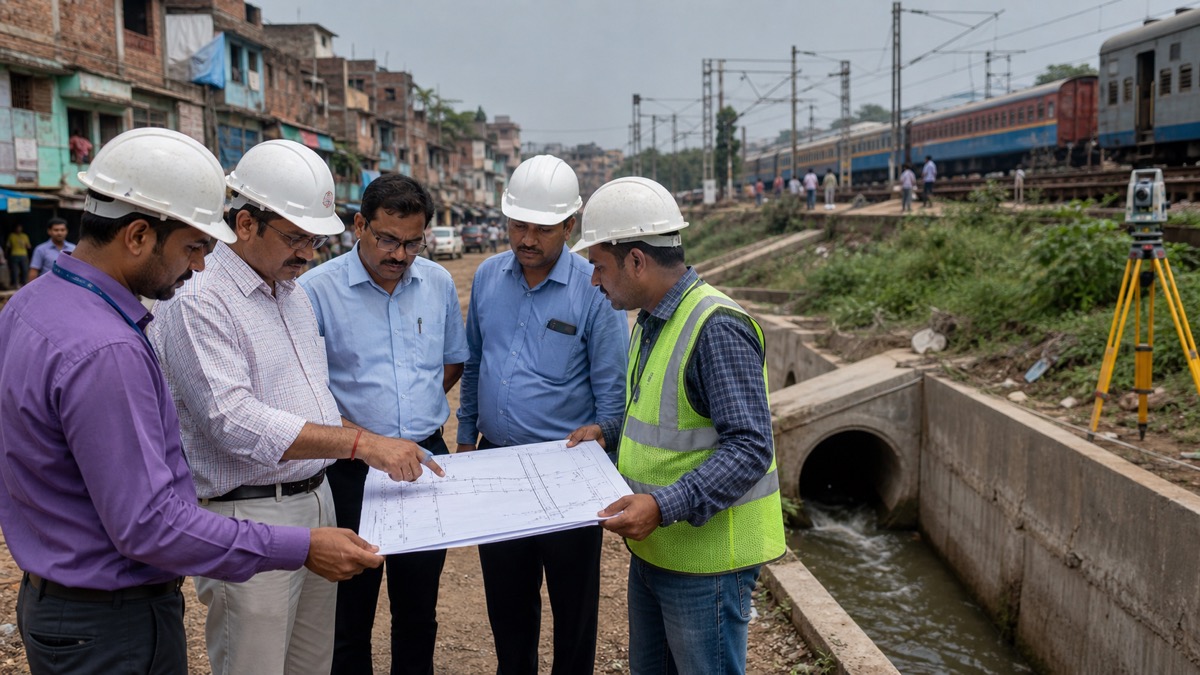
Varanasi: Banaras Locomotive Works and the Varanasi Municipal Corporation have entered into an agreement for a ₹45.03 crore stormwater drainage project intended to tackle chronic waterlogging in neighbourhoods around the railway production unit. The civic intervention is expected to benefit nearly 1.5 lakh people, according to details released with the agreement.
The plan matters because water does not respect institutional boundaries. Rain falling inside the BLW estate eventually moves toward municipal drains, while runoff from surrounding colonies can place additional pressure on the same outlets. For years, residents in several low-lying pockets have dealt with flooded lanes, overflowing drains and slow-moving traffic after intense spells of rain. The proposed network is designed to treat the problem as one connected drainage basin instead of a series of isolated complaints.
Under the arrangement, the two public bodies are expected to coordinate on engineering, land access and execution. The ₹45.03 crore allocation is meant for a system capable of carrying stormwater away more efficiently, with new or improved drains linked to suitable outfalls. The exact construction schedule, road-cutting plan and ward-wise sequence will be important for residents because large underground projects can themselves disrupt movement before they begin to deliver relief.
The beneficiary estimate of about 1.5 lakh people gives the project a scale beyond the BLW campus. Colonies around Manduadih and adjoining southern parts of Varanasi have grown rapidly, but local drainage has often struggled to keep pace with new buildings and paved surfaces. Every additional concrete stretch reduces the amount of rain that can soak into the ground. That turns a short downpour into a sudden surge of water rushing toward drains that may already be narrowed by silt or solid waste.
Good construction alone, however, will not settle the issue. A functioning stormwater system needs routine desilting, protection from sewage connections and strict checks against dumping. Engineers will also have to ensure that water is not simply pushed from one flooded locality into another. Publishing maps, milestones and maintenance responsibilities would help the public track whether the agreement translates into durable work on the ground.
For Varanasi, where monsoon showers regularly expose weak links in urban infrastructure, the BLW–municipal partnership offers a practical model: institutions sharing geography must also share responsibility. The immediate test will be transparent tendering and timely execution. The more meaningful test will arrive with the next heavy rain, when residents can see whether water clears faster from the streets they use every day.
Residents will be watching three details as work advances: where excavation begins, how traffic is diverted and which agency clears blockages after completion. A helpline linked to mapped construction zones would allow problems to be reported before they grow. The agreement creates shared authority; it must also create a single, visible line of accountability for the public.
Sources and reporting
Based on local reporting published on 14 August 2026 about the memorandum signed by Banaras Locomotive Works and Varanasi Municipal Corporation. Project figures and the stated beneficiary estimate are attributed to that announcement; implementation outcomes remain to be assessed.
Related Stories

Ramnagar Day Three Follows Vishwamitra Into the Forest and Mithila
Shivpur Ramlila Stages Narad Moh and Kshirsagar Tableau Through Rain
VMC Puts City on Alert for Navratri and Durga Puja Civic Arrangements
Chowk Becomes Varanasi's First Police Station With ISO 9001 Certificate
World Tourism Day: Guides Welcome Visitors; Namami Gange Cleans Namo Ghat