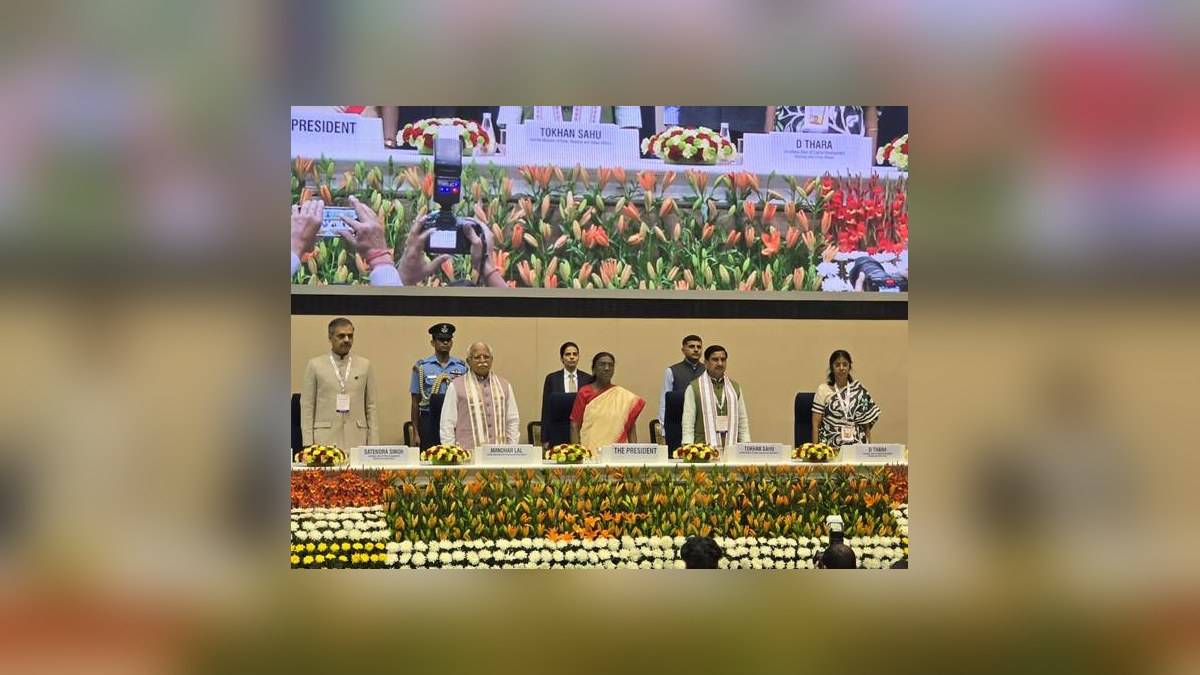
VARANASI: Varanasi received third place in the Swachh River Front Town category at the national sanitation awards on Wednesday, November 11, 2026. The recognition concerns the municipal management of the Ganga riverfront, including the ghats used by residents around Assi, Dashashwamedh and Rajghat. President Droupadi Murmu presented the honour at Vigyan Bhawan in New Delhi.
For residents, the services behind the award are everyday ones: removing rubbish from steps, collecting discarded worship material, maintaining drains and keeping sewage out of the river. Problems with these services can be reported to Varanasi Nagar Nigam on 1533, the civic complaint number displayed on its official website. Give the nearest ghat, lane or landmark when reporting a specific problem.
The result is a sanitation assessment, rather than a new public access order. It does not announce a closure, a change in ghat opening hours or a new household charge. Residents can use the award's stated assessment areas to understand which services the corporation is responsible for, while continuing to report faults at the location where they occur.
What the riverfront award covers
The Union Ministry of Housing and Urban Affairs listed Rewa first, Bilaspur second and Varanasi third in its November 11 awards release, issued at 8.31 pm IST. The riverfront category is separate from the population based city awards and the Super Swachh League. Varanasi's position should therefore be described within this category, rather than as an overall third place among all Indian cities.
Uttar Pradesh Urban Development Minister A K Sharma, Mayor Ashok Kumar Tiwari and Municipal Commissioner Himanshu Nagpal received the honour. Additional Municipal Commissioner Durgesh Mishra was also present. Municipal officials and sanitation workers watched a live relay of the ceremony at the corporation's headquarters in Sigra, where employees and councillors joined the gathering.
According to the ministry, the wider survey assessed urban local bodies using 43 indicators across 10 domains. These included waste collection, visible cleanliness, access to sanitation, used water management, sanitation workers' welfare and grievance redressal. More than 3,000 assessors took part in field evaluations nationally. These are details of the survey framework, rather than separate scores awarded to Varanasi.
Municipal officials described three parts of the riverfront assessment: checking documents, examining conditions on the ground and seeking feedback from residents and visitors. Documents covered sewage treatment plants, the interception of drains and solid waste management. Field checks examined the ghats, riverbanks and nearby neighbourhoods. The feedback component meant that users' experience of the public spaces formed part of the exercise alongside the corporation's own records.
Cleaning, drainage and water checks
Officials linked the city's performance to cleaning arrangements along more than 84 ghats, from Assi towards Namo Ghat. They described cleaning and rubbish removal in three shifts. Other work cited included intercepting drains so that wastewater could be taken towards treatment plants, and using trash skimmers to collect floating waste from the river.
The handling of worship material was another part of the municipal account. Flowers and other offerings are collected separately instead of being allowed to join the river's floating rubbish. Officials described their use in compost and incense production. This concerns a particular stream of waste from the ghats, alongside the collection and disposal of ordinary litter.
Officials also described water sampling at upstream, central and downstream locations, including Assi, Dashashwamedh and Rajghat. The checks covered dissolved oxygen, biochemical oxygen demand, faecal coliform and pH. The accounts reviewed describe the tests used in the assessment, but do not provide a new set of numerical laboratory results for each Varanasi sampling point.
What residents should do
Use the corporation's official contact information when a drain is blocked or rubbish remains on a public ghat. A useful complaint identifies the exact steps or access lane, the nearest landmark and the service that needs attention. Keep a record of the complaint so that a later enquiry can refer to the same location and problem.
- Award date: November 11, 2026.
- Category: Swachh River Front Town, third place.
- Responsible local body: Varanasi Nagar Nigam.
- Civic complaints: 1533.
For local background, earlier reports examine silt removal and access to the ghats, the revised civic budget and sewage treatment responsibilities, and the reclamation of dumping sites in Jagatganj and Chetganj. Those reports explain separate pieces of the city's sanitation work.
Municipal Commissioner Himanshu Nagpal said the corporation would continue working on ghat cleanliness with public participation. The next practical test for residents remains the condition of the riverfront they use and the response to complaints about it.