BLW Builds Record 65 Electric Locomotives in July, Its Best-Ever Monthly Output
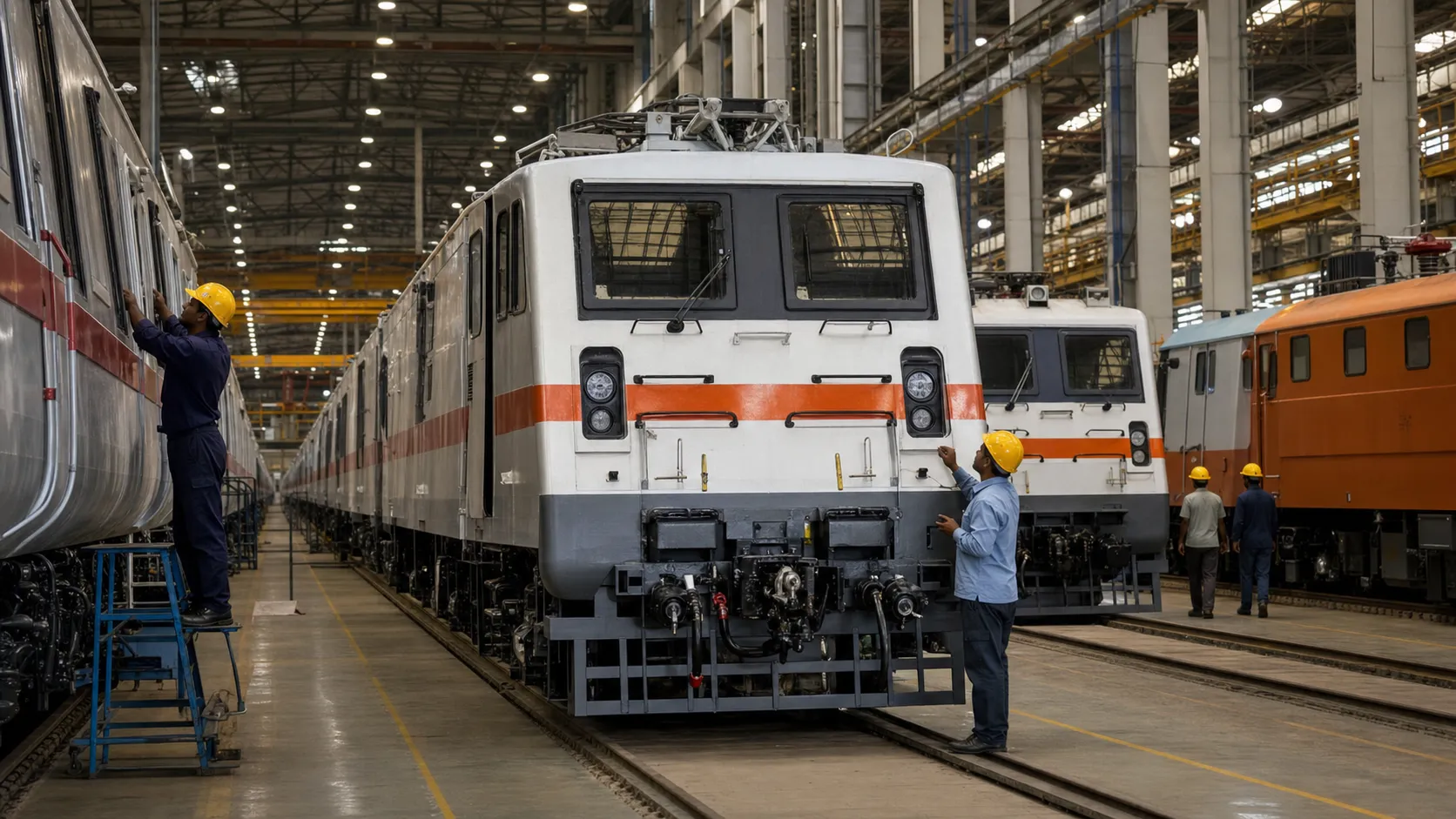
Inside Banaras Locomotive Works, July ended with a number that workers will remember: 65. That is how many electric locomotives the Varanasi factory produced during the month, its highest monthly output since the organisation began building engines.
The production mix was not a single-model sprint. BLW manufactured 44 WAG-9HC electric freight locomotives, 13 WAP-7 passenger locomotives and eight electric locomotives for Amrit Bharat services. Together, the 65 units moved the factory past its previous monthly record of 61, set in March 2025.
For a heavy-engineering plant, a four-locomotive improvement is not a small change on a spreadsheet. Every engine moves through fabrication, assembly, electrical integration, testing and inspection. A higher monthly total requires components to arrive on schedule and multiple shop floors to work in sequence; one delayed subsystem can hold up an otherwise complete locomotive.
The WAG-9HC formed the biggest part of July’s output. Built for freight operations, the high-horsepower locomotive supports the railway’s effort to move heavier loads through electrified corridors. The WAP-7 remains a familiar workhorse for long-distance passenger trains, while the Amrit Bharat locomotives are designed for a newer service pattern with a locomotive at each end.
The record also speaks to BLW’s continuing transition. Varanasi’s locomotive factory was historically identified with diesel engines, an identity embedded in the old DLW name still used by many residents. As the national network electrified, the plant retooled for electric production. July’s output shows how far that industrial change has travelled from policy decision to shop-floor routine.
There is a local economic layer too. BLW is not an isolated campus. Its production cycle supports suppliers, transporters, contract workers and neighbourhood businesses across the city. A stable order book and predictable manufacturing rhythm ripple beyond the factory gates, even if the final locomotive eventually hauls a train hundreds of kilometres away.
Production records, however, are only meaningful when quality keeps pace. Each unit must clear prescribed tests before dispatch, and reliability is judged over years in service rather than at the factory gate. The achievement therefore sets a fresh benchmark for the teams that must repeat the volume without allowing inspection standards to slip.
For Varanasi, the July figure offers a useful counterpoint to the city’s usual temple-and-tourism image. Kashi is also a place where complex machines are built at scale—and in July, they rolled out faster than ever before. The next record will matter only if the engines dispatched this month earn the same confidence out on the network.
Sources and reporting
Based on Banaras Locomotive Works' production statement for July 2026. The total and model-wise output were checked against BLW's previous monthly record.
Related Stories
Railways Orders Weekly Puja Special 09465 via Varanasi Through November
Hindi Diwas Marked Across BHU, Sanskrit University and Kashi Vidyapith

Lohta Police Register FIR After Bhitari Villager Alleges Hostage Beating
Baragaon Police Book Named Youths After Kazisaray Tea-Stall Assault and ₹1,900 Loot
Mayor Announces Stricter MCG Drive Against Stray Cattle