BHU Secures Patent for Low-Cost Environmental Simulation Research Device
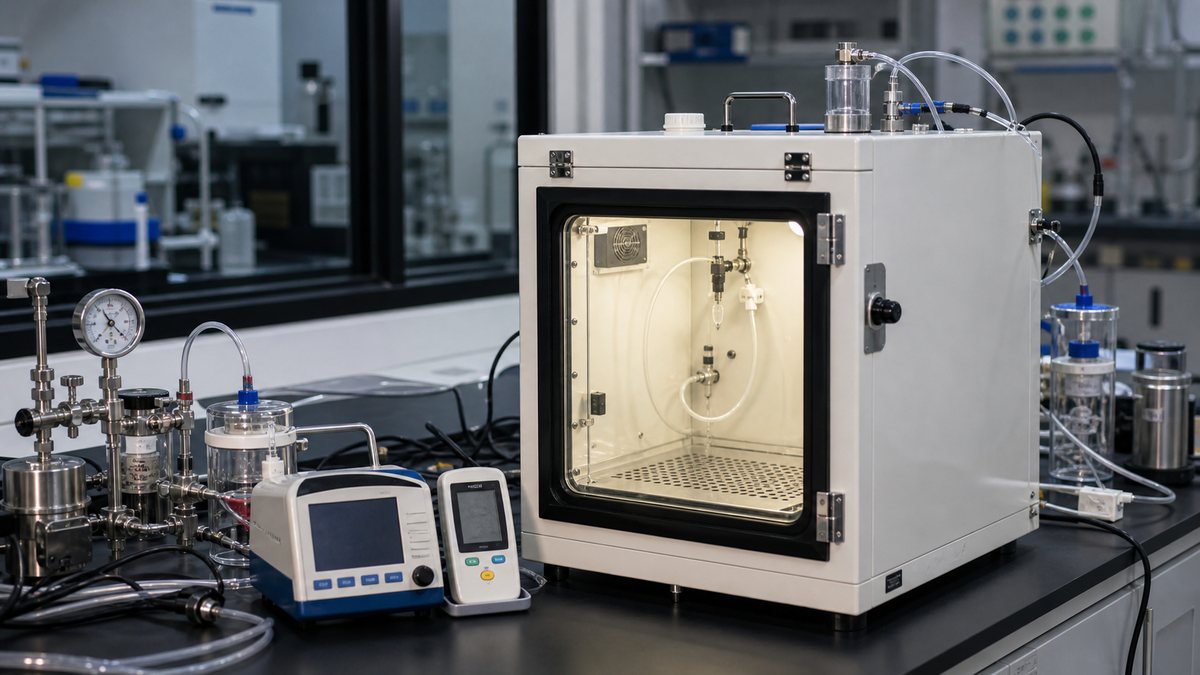
Varanasi, June 29, 2026: Banaras Hindu University has reportedly secured an Indian patent for a low-cost, portable device designed to simulate multiple environmental conditions for research on small laboratory animals.
The invention was developed by Anil Kumar Yadav during his PhD research under Kumar Sarvottam, Associate Professor, Department of Physiology, Institute of Medical Sciences, BHU.
The patented device is titled "A Low-Cost and Portable, Small Animals' Device for Simulation of Differing Environmental Conditions." It is intended to provide an affordable alternative to bulky and expensive systems used in biomedical and physiology research.
Low-Cost Portable Research Device
Existing environmental simulation systems can be costly, large and limited in the number of variables they control. The BHU device has been described as a compact system that can bring several environmental controls into a single platform.
For universities and laboratories with limited resources, portability and cost can determine whether certain experiments are possible. A lower-cost device could help researchers design studies without depending on imported or high-end equipment.
Multiple Environmental Conditions in One System
The device reportedly allows regulation of atmospheric pressure, oxygen concentration, carbon dioxide levels, air quality, temperature, humidity and light. These conditions are relevant in experiments involving respiratory physiology, high-altitude exposure, pollution exposure and controlled environmental stress.
Reports said the chamber can recreate conditions such as hypobaric hypoxia, normobaric hypoxia, hyperoxia, hyperbaric hyperoxia, pollution exposure, temperature fluctuations, humidity changes and controlled lighting.
Applications in Biomedical and Environmental Research
The invention could support research in biomedical science, physiology, pharmacology, toxicology, environmental health and aerospace medicine. Such devices are used to study how organisms respond to changes in oxygen, pressure, pollution, humidity or other environmental variables.
Dalimss News is not making medical or laboratory-use claims beyond the reported patent description. Any deployment of the system would depend on institutional ethics approvals, laboratory protocols and scientific validation by researchers.
Why the Patent Matters
Patents from university research show how doctoral work can move from academic study toward usable technology. For BHU's research ecosystem, the development points to innovation emerging from IMS-BHU's physiology department.
If the device is adopted by more laboratories, it could help widen access to environmental simulation studies in India. The next important steps would include peer-reviewed validation, user testing, manufacturing plans and possible institutional collaborations.
Related Stories
Seva First Innovation Challenge opens for southern states; student entries until 24 October
Tamil Nadu adds more doctors to Super Speciality provisional rank list

NBEMS opens DNB Final December 2026 applications till 12 October
NBEMS posts FNB mop-up allotment; allotted doctors must join by 1 October
NBEMS declares NEET-PG 2026 result; scorecards from 1 October