
PMKVY 4.0 Certified About a Tenth of Its 2025–26 Target, Ministry Data Shows
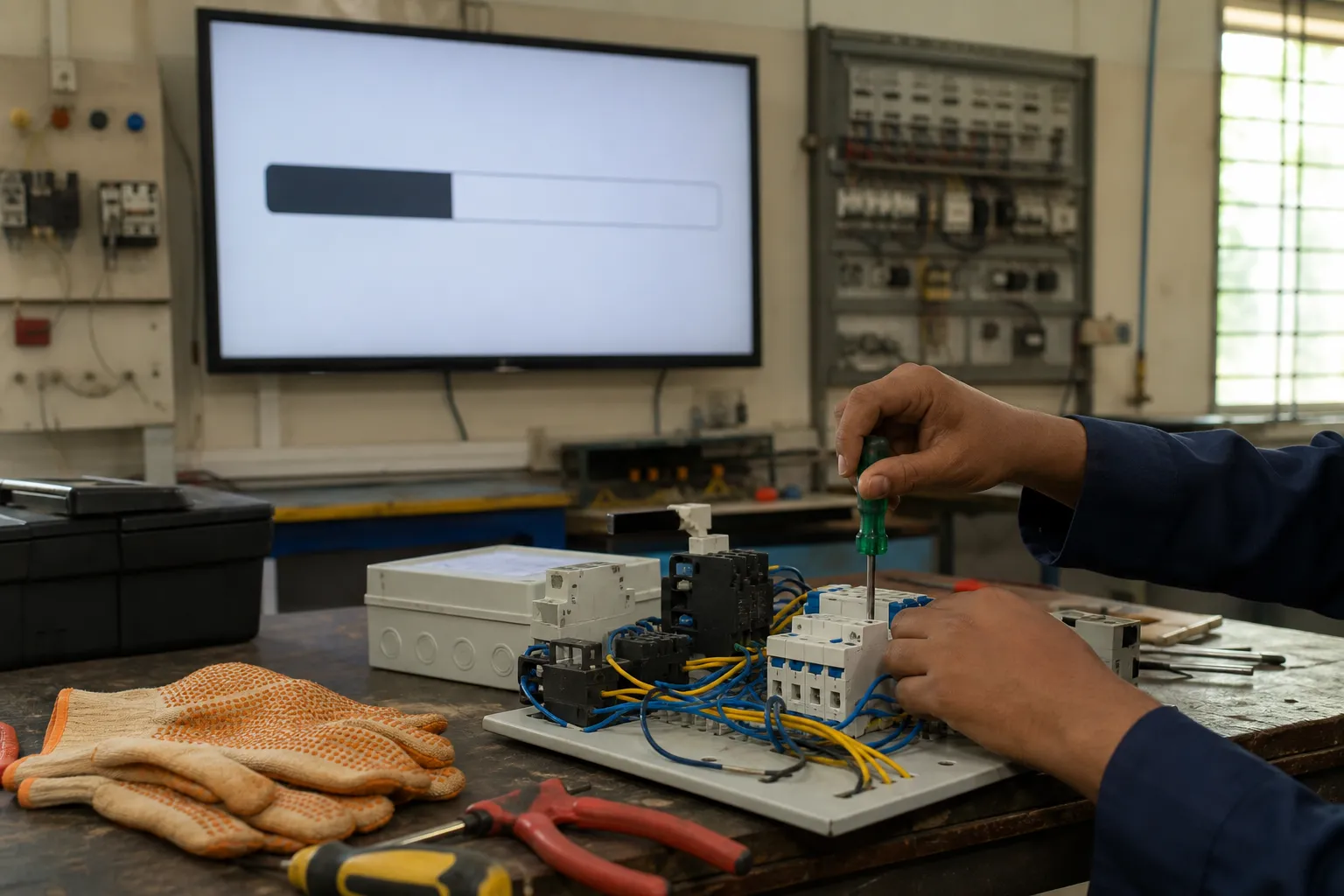
The fourth phase of the Pradhan Mantri Kaushal Vikas Yojana certified roughly 3.04 lakh candidates in 2025–26 against a physical target of 30 lakh, according to Ministry of Skill Development and Entrepreneurship data supplied to Parliament.
The same disclosure shows a sharp funding gap. PMKVY 4.0 began the financial year with a budget estimate of Rs 1,915 crore, later revised to Rs 1,100 crore. Funds released were reported at Rs 265.57 crore—about 24% of the revised estimate and less than 14% of the original budget.
These figures require careful reading. A certification count is not identical to new enrolment or training completed in the same year; assessments and certificates can spill across financial periods. The ministry's table reports 1.53 lakh trained and 3.04 lakh certified in 2025–26, which suggests that at least some certifications related to earlier training. It would therefore be misleading to subtract one number from the other as if both described the same cohort.
The target gap remains substantial even with that caveat. PMKVY 4.0 is the current version of a scheme launched in 2015 under the Skill India Mission. It supports short-term training, upskilling, reskilling and recognition of prior learning, with the National Skill Development Corporation serving as an implementing agency.
The current phase has emphasised areas such as artificial intelligence, semiconductors, electronics, green energy, electric vehicles, drones, cybersecurity and robotics. Those labels can attract learners, but course relevance depends on equipment, trainer competence, assessment quality and a credible route to work—not simply the presence of an emerging-technology name in a catalogue.
Across 2023–24 to 2025–26, the reported figures show repeated reductions between original budget estimates and final releases. The three-year table lists budget estimates totalling Rs 5,411.3 crore for those years and releases of Rs 2,313.09 crore. The pattern raises questions about planning: whether targets were unrealistic, demand was weaker than expected, implementation capacity was insufficient or funds were held back for other reasons.
The minister told Parliament that PMKVY 4.0 is demand-driven and does not provide state-wise allocations. That design can allow training to respond to local uptake, but it also makes transparent state and sector data essential. Without it, a national total can hide places where centres are active, places where equipment is idle and trades where certificates do not lead to employment.
For learners, the immediate lesson is not that every PMKVY course lacks value. It is that enrolment should follow basic checks. Candidates should confirm the training provider's authorisation, course duration, assessment body, facilities, certification process and any placement claim. A promise of a guaranteed job should be treated with caution unless the terms are written and verifiable.
For policymakers, certification alone is an incomplete success measure. The scheme needs cohort-level reporting on completion, assessment, employment, wages, retention and progression into further learning. It should also show how many candidates leave before assessment and why.
Parliamentary and audit scrutiny has previously raised concerns about utilisation, beneficiary records and oversight. The latest numbers add a simpler problem: the distance between announced scale and delivered certification. That gap cannot be closed by lowering a revised estimate after the year has begun; it needs a credible account of which operational constraints prevented delivery.
PMKVY 4.0 is scheduled to run through 2026, while discussion has begun around a successor phase. Before expanding the label, the government should publish a plain-language performance review of the current one. Students deciding whether to invest their time deserve evidence about training quality and outcomes, not only a target printed at the start of a financial year.
Sources and reporting
Based on Ministry of Skill Development and Entrepreneurship data supplied to Parliament and reported on 11 August 2026; no original interviews were conducted.
Related Stories

Festive Special to Gorakhpur Gets Gurugram Halt
Fifth Accused Held in Rs 25 Lakh Sector 47 Robbery

Courier Staffer Booked Over 105 Missing One8 Returns

HC Sets Rs 50 Lakh Costs for Accused's Return to India

Gurugram Swimmer, 20, Crosses English Channel