
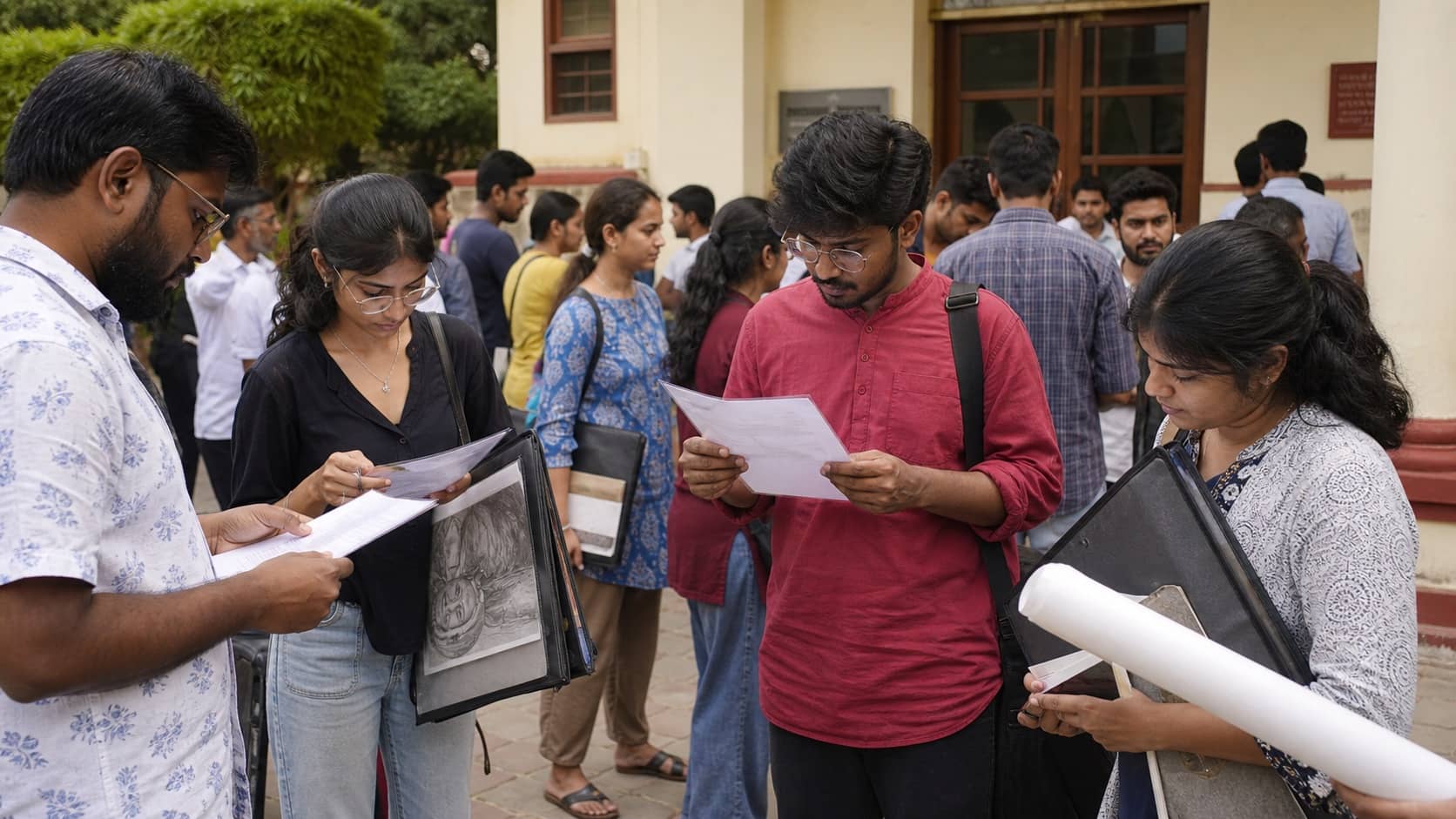
VARANASI: Banaras Hindu University has formed an inquiry committee after applicants to the Bachelor of Fine Arts programme protested at the central office and questioned the relationship between written and practical-test scores. The candidates are seeking a transparent review of the merit list and the criteria used to assess practical work.
Protesters alleged that some applicants with lower written scores received unusually high marks in the practical component, changing their position in the final ranking. A difference between written and practical performance is not evidence of wrongdoing by itself—fine-arts aptitude is precisely what the practical test is designed to measure—but candidates say the scale of variation deserves examination.
The university’s decision to create a committee acknowledges the dispute. Applicants, however, said the step was not sufficient without a deadline and access to the underlying criteria. They gave the administration until Monday to act and warned that they could begin an indefinite sit-in if their concerns were not addressed.
Fine-arts admission is unusually sensitive because evaluation contains professional judgment. Composition, observation, technique and originality cannot be reduced to a single objective answer. That makes a published rubric, multiple evaluators and recorded marks essential. Transparency should explain the process without exposing individual artwork or personal data unnecessarily.
A credible review would first verify that scores were entered against the correct roll numbers and that every candidate’s sheets were complete. It could then examine whether evaluators applied the same range across batches, whether conflicts of interest were declared and whether moderation was used when marks diverged sharply.
Candidates should also receive a clear distinction between scrutiny and re-evaluation. Scrutiny checks clerical accuracy; re-evaluation revisits academic judgment. Universities often allow one but not the other, and confusion between them fuels unrealistic expectations. BHU can reduce tension by stating exactly what the committee is authorised to review.
The protesters’ allegations remain unproven. No applicant should be portrayed as having benefited improperly merely because a practical score is high. The purpose of an inquiry is to test the process, identify any error and protect both unsuccessful candidates and those whose admissions were fairly earned.
Time matters because admission calendars move quickly and students may hold offers elsewhere. A short, reasoned report—along with corrections if required—would be more effective than an open-ended assurance. Publishing a firm review date would be a useful first step. For an arts faculty, confidence in the selection process begins with showing that subjective evaluation can still be disciplined, documented and fair.