Nearly 31 Lakh Fish Seed Released Into 208 Amrit Sarovars Across Varanasi Division
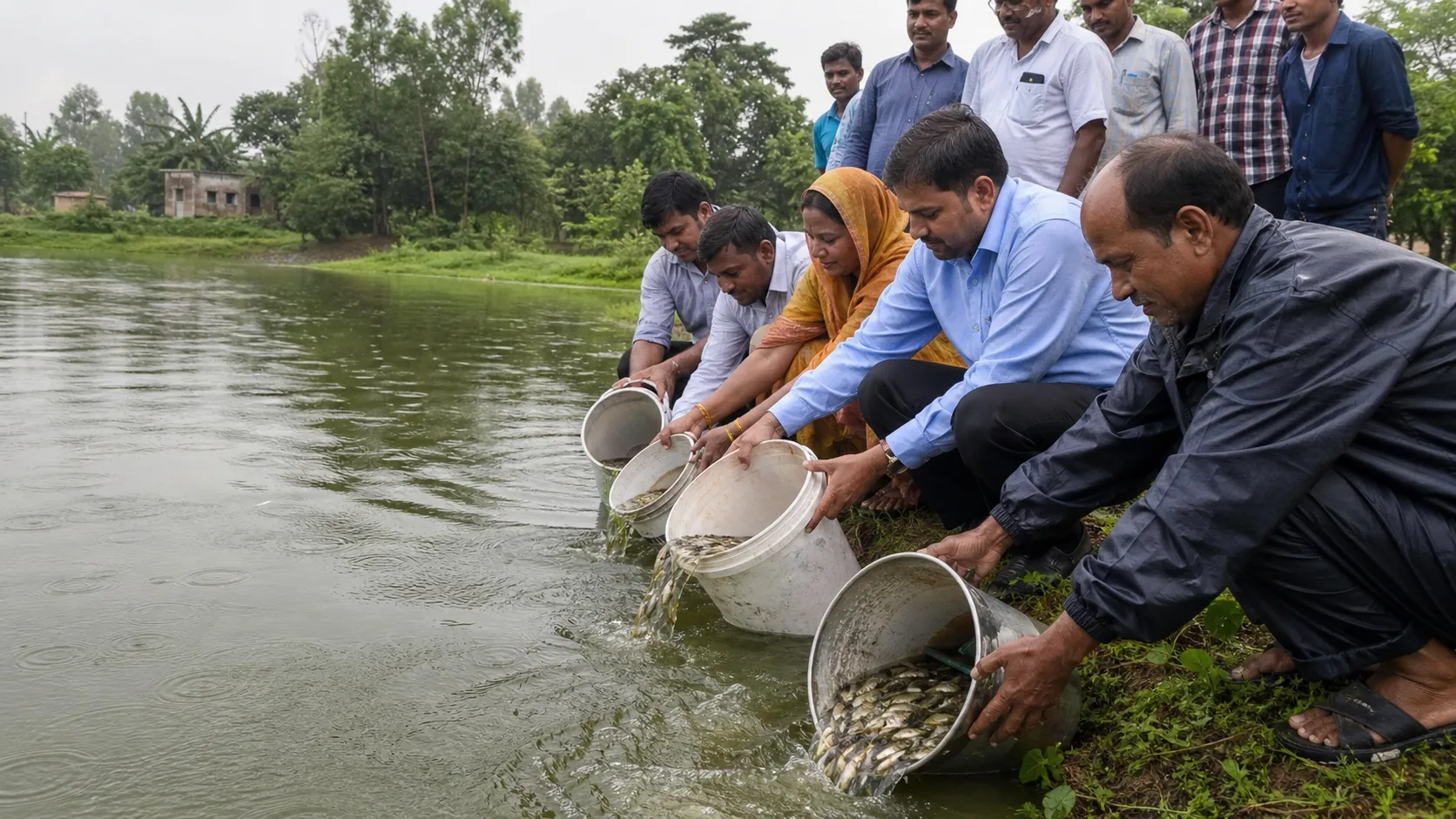
The fisheries department has released 30.96 lakh fish seed into 208 Amrit Sarovars across the Varanasi division, using restored village ponds for both water conservation and income generation. The stocked water bodies cover 236.68 hectares and have been leased for fisheries, according to deputy director Suresh Kumar.
The district distribution includes 90 ponds in Chandauli, 47 in Ghazipur, 41 in Varanasi and 30 in Jaunpur. The programme attempts to give the public investment in pond revival an economic life after excavation and beautification work are complete.
Stocking is the easy, visible moment. Survival depends on what happens next. Fish seed must suit the pond’s depth, temperature and water quality; stocking density must match available oxygen and feed; and the leaseholder needs a practical plan for guarding, harvesting and sharing revenue. A photograph of seed entering water is not proof of a productive fishery.
Amrit Sarovars were created or revived primarily as water-conservation assets. Fisheries can strengthen maintenance because a working pond has users who care about water retention and illegal dumping. It can also create tension if access for livestock, community rituals or irrigation is restricted without a locally accepted agreement.
The department should publish species, stocking density and survival checks for each pond. Mixed carp culture can be productive when species use different feeding zones, but introducing unsuitable stock or allowing escape into connected natural waterways may create ecological problems. Disease surveillance is equally important when seed comes from multiple hatcheries.
Leaseholders need more than fish seed. Training in feeding, dissolved-oxygen management, record keeping and market timing can prevent avoidable losses. Small aeration systems or emergency pumps may be necessary during hot, cloudy spells when oxygen drops suddenly. Insurance and access to veterinary advice should also be explained before a mortality event.
For village governments, revenue and responsibility must be transparent. Residents should know who holds the lease, its duration, the fee paid and which agency handles damaged embankments or polluted inflow. If the pond was revived with public money, basic conservation goals cannot disappear behind a private gate.
The scale—nearly 31 lakh seed across four districts—offers a chance to measure outcomes properly. Officials can compare survival, harvest weight, lease income and employment rather than count only the number released. Ponds that fail can then be studied for silt, contamination, poor stocking or weak management.
Varanasi division’s drive has a sensible premise: a pond that stores rain and supports livelihoods is more likely to remain valued. The result, however, will be visible months from now, when leaseholders draw their nets. Healthy fish, stable water and accessible records would show that the sarovars are functioning as ecosystems and rural assets, not merely entries in a scheme dashboard.
Sources and reporting
Based on figures released by deputy director of fisheries Suresh Kumar in July 2026 for the Varanasi division.
Related Stories
Bike With 113 Challans Impounded at MDI Chowk
Cops Override Smart Signals in Rush Hours

BHU Opens Bharat Innovation Conclave 2.0 at Swatantrata Bhawan

Audit Flags 525 Unsafe Rooms in Govt Schools
GRP Cantt Arrests Woman With 72 Quarters of Alleged Illegal Liquor