
Varuna Zone Steps Up Foot Patrols and Vehicle Checks Ahead of Shravan Crowds
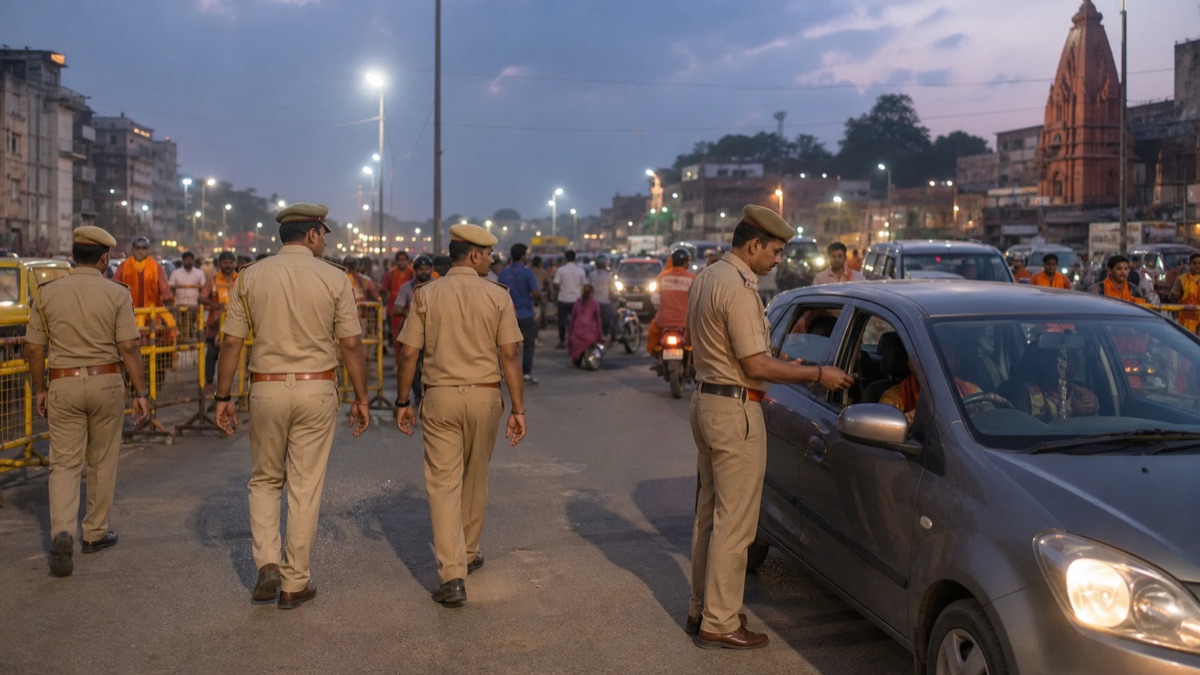
Police teams across Varanasi’s Varuna Zone carried out foot patrols and intensified checks of suspicious people, objects and vehicles as Shravan gatherings added pressure to public spaces. The zone described the exercise as a preventive deployment intended to maintain peace and security across several police-station areas rather than a response to one specific incident.
Foot patrols can do something a passing vehicle cannot: place officers at shopfronts, crossings and narrow approaches where residents can speak to them. Their effectiveness, however, depends on conduct. Checks should be based on observable risk and documented rules, not appearance or identity, and officers should be able to explain why a vehicle or bag is being inspected.
Festival policing in Varanasi is an exercise in overlap. Pilgrims share roads with school traffic, freight, neighbourhood errands and emergency services. A patrol therefore needs current information about diversions, lost persons, crowd density and weather. Static deployment at one famous point can leave smaller junctions exposed to congestion or conflict.
The zone did not publish the number of teams, checkpoints or violations detected in this round. Those figures would help residents judge scale and avoid confusing routine checks with a new restriction. Police should also coordinate with traffic and municipal staff so that barricades, lighting and waste collection support rather than undermine the security plan.
A special deployment can reduce immediate risk, but the quality of public safety is visible in small details: a clear walking lane, a junction that does not choke, an officer who can explain a diversion and an emergency vehicle that can still pass. Varanasi’s pilgrimage routes combine religious movement with everyday commerce, so enforcement has to be firm without becoming confusing or needlessly punitive for residents and traders.
Numbers such as seizures, challans or patrols show the scale of action, not automatically its fairness or success. Authorities should publish the rules being enforced, provide a practical route map and maintain a process to correct mistaken penalties. Pilgrims also carry responsibility: staying inside marked corridors, following traffic instructions and avoiding risky stops protects both the procession and people who live along the route.
The coming hours will test whether the arrangement holds during peak movement and changing weather. Police should keep diversion information current and coordinate with medical, fire and municipal teams. Residents should rely on official traffic advisories and call emergency services for immediate danger rather than crowding an incident scene. The report will update only when new figures or verified route changes are issued.
Sources and reporting
Reported on 9 August 2026 from the official DCP Varuna Zone preventive-patrol update.
Related Stories

VMC Launches Doorstep E-Waste Pickup With On-the-Spot Payment

Family Alleges Youths Chased Car, Assaulted Women and Children Near V-2 Mall in Lanka

Sigra-Trained Shooter Kamaljeet Wins Asian Games Gold in Mixed Air Pistol

Sarnath Police Arrest Three Over Locked-House Burglaries, Claim ₹7 Lakh Recovery

NER Varanasi Division Runs 2,915 Chlorine Tests on Station and Colony Water