Varanasi’s Rooftop Solar Push Brings Zero Bills to 17,698 Households, Officials Say
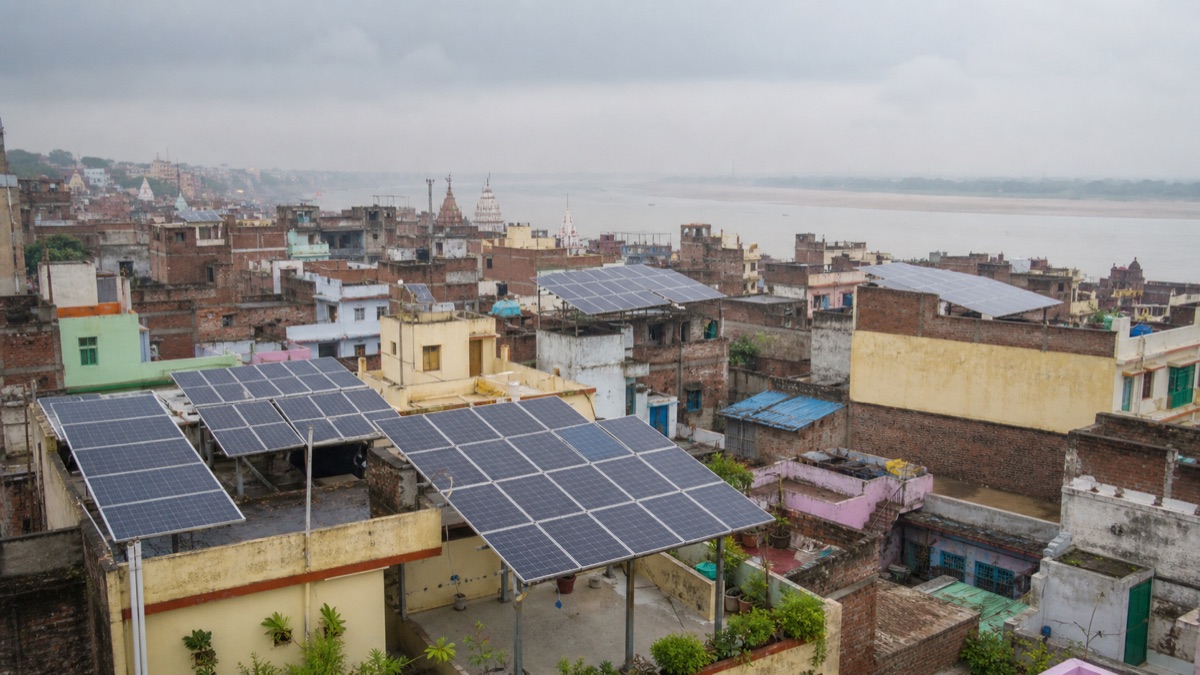
The most striking number in Varanasi’s rooftop-solar expansion is not the megawatt count but the electricity bill: local officials say 17,698 households have recorded zero payable consumption bills after installing systems. More than 50,000 homes in the district are now reported to have rooftop panels, placing the city among Uttar Pradesh’s most active urban markets for distributed solar power.
Chief Development Officer Prakhar Kumar Singh said the district had received 76,218 applications, while installed rooftop capacity had crossed 150 megawatts. Officials estimate the combined systems can produce roughly 750,000 units of clean electricity a day, with a notional daily value above ₹51 lakh. Those figures describe aggregate capacity and expected generation; output at an individual home will vary by system size, shade, weather and consumption.
The appeal is easy to understand in a city where summer cooling and water-pumping loads can push household bills sharply upward. A correctly sized system can offset daytime use and send surplus power through an approved net meter. Residents cited by officials in Daniyalpur and Nathupur described substantial savings, but the longer test will be whether those savings persist through monsoon months, equipment servicing and changes in household demand.
The application count also shows that demand is moving faster than completed installation. That makes approval time, subsidy processing and installer quality central to the next phase. Applicants need a clear view of who is responsible at every stage, from structural assessment and vendor selection to meter replacement and the first corrected bill. A large programme can lose public trust quickly if customers are left between the utility and an installer when something goes wrong.
Solar capacity is only the first half of the story. Households and public institutions also need dependable metering, safe installation, maintenance support and clear billing. A panel can be visible from the street while its financial benefit remains difficult to verify, so generation figures and claimed savings should be read alongside actual bills over several cycles. Transparent grievance handling is especially important when a subsidy, loan or net-metering approval is involved.
Varanasi’s dense urban form makes the transition technically interesting. Roof sizes vary, old buildings may need structural checks, and shade or wiring constraints can reduce output. At the same time, high daytime demand creates a strong case for distributed generation. The best results will come from installations matched to real consumption, not from chasing a headline capacity number. Fire safety, certified equipment and trained installers should remain non-negotiable.
The useful follow-up will be public data on functioning systems, monthly generation, complaint resolution and savings achieved after maintenance costs. Residents considering rooftop solar should verify installer credentials and obtain written clarity on warranties, approvals and expected output. This report reflects the latest figures attributed to local officials; it does not treat projected performance as guaranteed, and it will require subsequent billing and generation records to confirm the longer-term impact.
Sources and reporting
Reported on 9 August 2026 from current local-official figures attributed to the CDO and UPNEDA project office.
Related Stories
Railway Police Arrest Rohit Tiwari From Varanasi Over Alleged Train Robberies
‘Kashi Flow’ Four-Day International Art Camp Planned on Ganga Theme in December
JCB Hits Underground 11 kV Line in Dalmandi; Ward 69 Faces Daytime Outage
Two-Hour Feeder Shutdown on 24 Sep for PWD Road-Widening Cable Shift
Rohania Constable Suspended After Alleged Misbehaviour at Pandeypur Outpost