Varanasi Archivists Move to Preserve Rare Religion and Sanskrit Research Papers
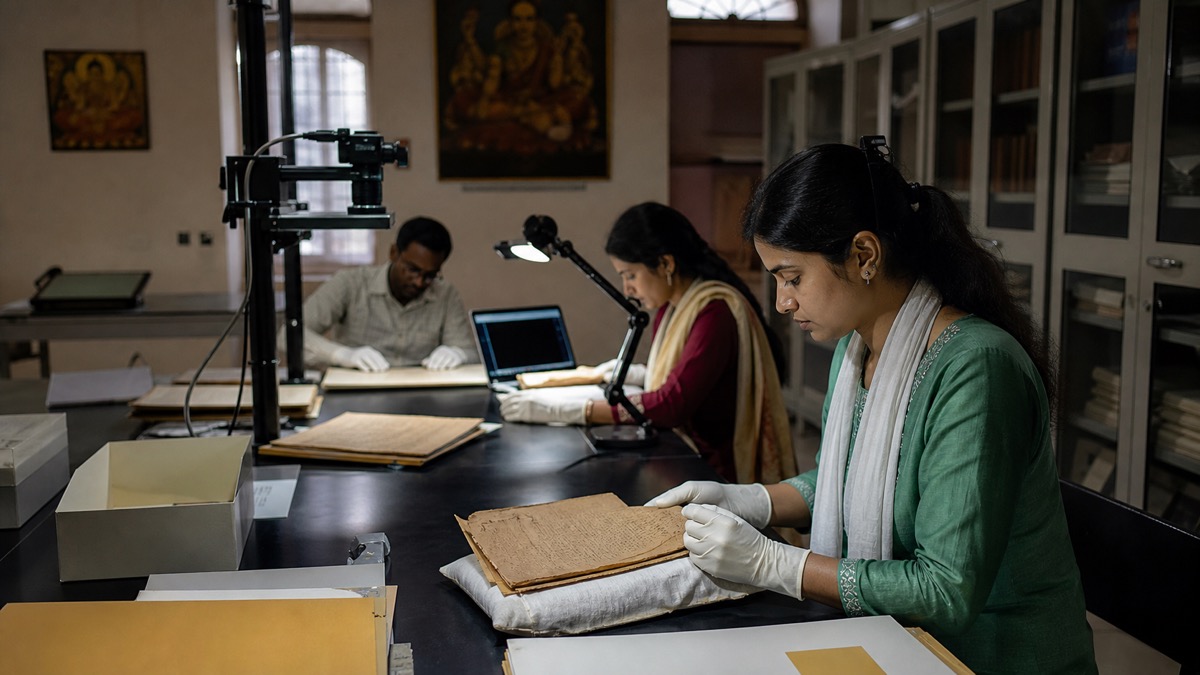
Varanasi: A preservation initiative in Kashi is working to protect rare research papers connected with religion and Sanskrit scholarship, material that can be lost as easily to humidity and insects as to public neglect. The effort brings attention to documents that may not be ancient manuscripts but are still essential records of how modern scholars studied, edited and debated India’s intellectual traditions.
Research notes, correspondence, annotated proofs and out-of-print journals often sit between library categories. They may be too recent for a manuscript vault and too fragile for open shelves. Yet they can show how a text was interpreted, which sources were consulted and how academic networks linked Varanasi with institutions across India and abroad.
Preservation begins with careful assessment. Paper must be checked for brittleness, fungus, water damage and harmful adhesives. Pages are cleaned and placed in acid-free enclosures, while temperature and humidity are controlled as far as local conditions allow. Digitisation can reduce handling, but scanning a damaged sheet without conservation may tear it or flatten important physical details.
Good digital archives also require more than photographs. Each file needs a title, date, author, subject description and rights information so a researcher can find and cite it. Optical character recognition is difficult for older Devanagari typefaces and handwritten Sanskrit, making human cataloguing especially valuable. Without metadata, thousands of scans can become a second form of invisibility.
Access is the next ethical question. Private papers may contain personal correspondence, while some religious material is held under community protocols. Archivists must balance scholarship with privacy and custodial agreements. A transparent access policy can explain what is open, what is restricted and when closed material may be reviewed.
Varanasi’s reputation as a centre of learning rests not only on celebrated institutions but on small collections accumulated by teachers and families. Many are at risk when a scholar dies and heirs do not know what the papers contain. A citywide survey, conservation advice and a trusted donation process could rescue more material before deterioration becomes irreversible. Preserving these papers is not nostalgia; it protects the evidence future generations will use to understand how knowledge was made in Kashi.
The project should also plan for digital preservation itself. Files need backups in separate locations, routine integrity checks and formats that can be migrated when software changes. A scan stored on one ageing hard drive is not a preserved archive. Long-term stewardship requires budgets, trained staff and an institution that remains responsible after the initial digitisation campaign ends.
Sources and reporting
Based on cultural-heritage reporting published on 14 August 2026 about preservation of rare religion and Sanskrit research material in Kashi. Technical conservation context is general and does not claim a specific collection size without confirmation.
Related Stories
Ramnagar Day Three Follows Vishwamitra Into the Forest and Mithila
Shivpur Ramlila Stages Narad Moh and Kshirsagar Tableau Through Rain
VMC Puts City on Alert for Navratri and Durga Puja Civic Arrangements
Chowk Becomes Varanasi's First Police Station With ISO 9001 Certificate
World Tourism Day: Guides Welcome Visitors; Namami Gange Cleans Namo Ghat