
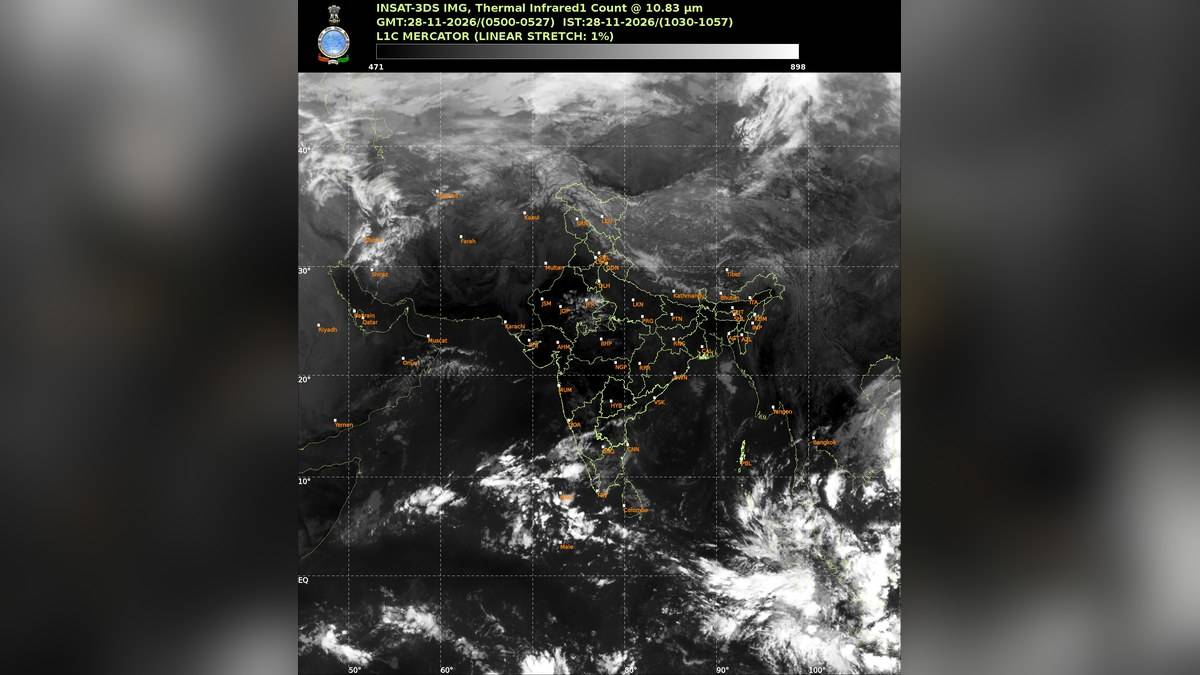
VARANASI: The India Meteorological Department's city forecast dated Saturday, November 28, 2026, now lists minimum temperatures of 10C for December 2 and 3. This extends the cooling outlook for residents making early journeys towards Babatpur or the ghats. It updates the later 12C nights as reported earlier on dalimss.news.
People arranging morning departures should read the city forecast alongside the regional fog warning. The city table carries no warning, while the November 27 state bulletin forecasts isolated dense fog in eastern Uttar Pradesh on November 28. Neither document announces a Varanasi transport cancellation or a road closure.
The practical distinction is between a forecast for the city and a warning covering a wider region. Leave time to check conditions on the actual route before starting an early trip, particularly when travelling beyond the city. A regional warning does not establish the visibility at every junction or at the airport.
What the new city forecast shows
The official Varanasi forecast lists fog or mist in the early morning throughout the six dated entries available, from November 28 to December 3. The table below gives the forecast values, which are predictions rather than temperatures already measured.
| Date in 2026 | Minimum | Maximum |
|---|---|---|
| November 28 | 11C | 26C |
| November 29 | 11C | 26C |
| November 30 | 11C | 25C |
| December 1 | 11C | 25C |
| December 2 | 10C | 25C |
| December 3 | 10C | 25C |
The maximum and minimum observation fields on that page were marked unavailable when checked. They should not be filled with the forecast values. The new 10C entries indicate conditions expected next week, rather than proof that Varanasi has already recorded that minimum.
How the regional bulletin changes the travel picture
The state forecast issued at 3 pm IST on November 27 describes dry weather across eastern and western Uttar Pradesh. Its warning table includes isolated dense fog for November 28 in both regions. From November 29 to December 3, it lists no regional warning, although shallow to moderate morning fog remains in the forecast.
The bulletin defines each forecast day as the period from 8:30 am IST on that date to 8:30 am IST the following day. For anyone checking an overnight journey, that validity period matters: the label on a row should be read with its start and end time, rather than treated as a midnight boundary.
The city's early morning fog or mist wording and the region's isolated dense fog warning cover different geographical scales. Read together, they justify checking local visibility before departure without claiming that every part of Varanasi will experience dense fog. No specific airport visibility figure is supplied by the city forecast.
What was observed, and what remains a prediction
The separate November 27 daily weather report, also issued at 3 pm IST, summarises observations up to 8:30 am IST. It records shallow to moderate morning fog at isolated places in both parts of the state and dense fog at isolated places in eastern Uttar Pradesh. Its lowest reported state visibility was 100 metres at Azamgarh.
That observation is useful regional context, but cannot be substituted for conditions at Babatpur. The report also describes the previous 24 hours as dry across both meteorological divisions. These are observations from the reporting period; they do not turn the following week's dry forecast into a guarantee.
What residents should do
For a station pickup, hospital visit or other time sensitive morning journey, check the forecast date and then obtain the service's current operating information. The weather tables alone cannot confirm a delayed departure. Earlier reporting on airport visibility on November 23 concerns a different observation period and should not be used as a live update.
IMD's background guide to fog information explains why transport users need location specific updates. The department monitors surface visibility and runway visual range at airports, supplements station observations with satellite information, and distributes warnings to aviation, railway, highway and disaster management authorities. A city temperature prediction answers a different question from an airport visibility observation.
The guide identifies aviation, railway and highway transport, as well as river and coastal ferry services, among activities affected by dense fog. For Varanasi residents arranging onward travel, checking the actual service remains the useful next step. The guide explains the hazard; the dated city and regional bulletins establish this run's forecast.
Keep the observation date separate from the forecast date when sharing temperatures with relatives. The earlier report on the November 25 minimum provides background, while the November 28 city table is the source for the new December outlook. Residents planning those later journeys should revisit the official page as the dates approach.