
Varanasi Plans Four Lakh Two-Bin Kits for Two Lakh Households
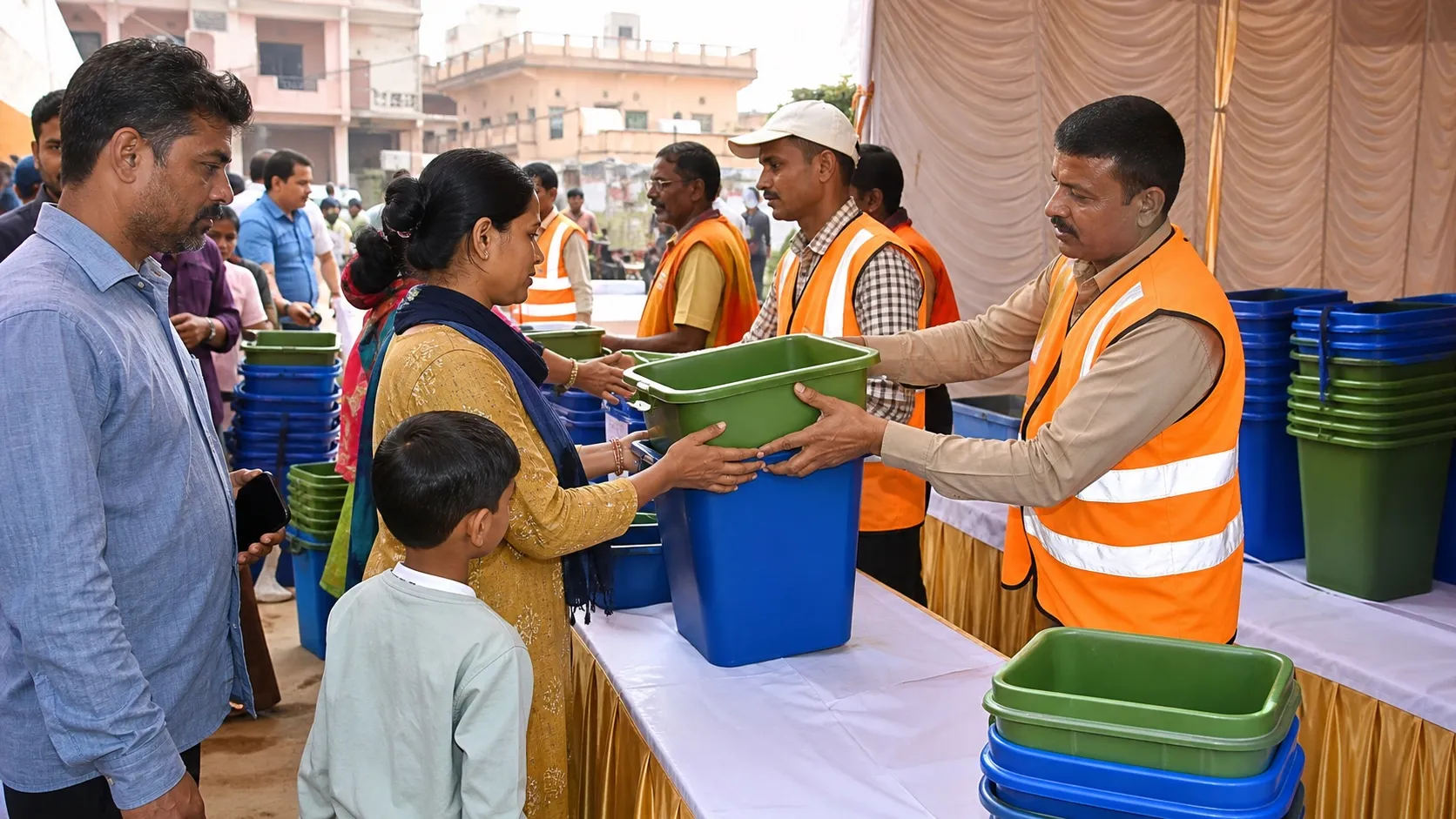
Varanasi Municipal Corporation plans to distribute four lakh waste bins to two lakh households in a citywide push for segregation at source. The campaign is scheduled to begin on September 17, with each participating home receiving a green bin for wet waste and a blue bin for dry waste. The civic body links the exercise to its effort to improve cleanliness and its standing in Swachh Survekshan.
The colour code is simple. Food scraps, fruit and vegetable peels, leaves and similar biodegradable material belong in the green bin. Paper, plastic bottles, wrappers, glass and other dry recyclable items go in the blue bin. The household step matters because once wet and dry waste are mixed in the same vehicle, recovering recyclable material becomes harder and compostable waste is more likely to end up in a dump.
Bins alone, however, do not create segregation. Collection workers need separate compartments or clearly sequenced rounds, and transfer stations must preserve the separation. If residents watch both bins being emptied into one truck, participation will collapse. VMC therefore needs to publish the collection design, ward schedule and destination of each waste stream before the distribution begins.
Two lakh households represent a large operation, but not every Varanasi home has the same space or collection arrangement. Dense lanes, rented rooms, apartment buildings and street-facing shops will need locally workable instructions. Ward teams should identify shared points where door-to-door vehicles cannot reach and prevent those points from turning into mixed-waste piles.
The programme also affects sanitation workers and waste pickers. Gloves, safe handling and predictable sorting infrastructure are essential, especially for broken glass, sanitary waste and household hazardous material that does not fit neatly into a two-bin message. Recyclers who already recover value from the city’s waste should be included rather than displaced by an opaque contract.
A launch on the Prime Minister’s birthday will draw attention, but the meaningful date comes later—when bins are still used correctly after the photographs and speeches are over. VMC should measure contamination rates, missed collections and the amount composted or recycled, ward by ward. If the collection chain remains honest, the four-lakh-bin investment can change daily behaviour. If it does not, the city will simply have distributed plastic containers.
Residents should receive more than two containers. A concise doorstep explanation, a collection calendar and a number for missed pickups would make the system usable from day one. Schools and resident groups can reinforce the habit, but the municipality must keep its side of the bargain. Segregation is a shared service relationship, not a cleanliness test imposed only on households.
Sources and reporting
Based on the civic programme details verified by the Dalimss News Banaras team on August 5, 2026. Operational schedules should be confirmed by VMC before distribution.
Related Stories

Festive Special to Gorakhpur Gets Gurugram Halt
Fifth Accused Held in Rs 25 Lakh Sector 47 Robbery

Courier Staffer Booked Over 105 Missing One8 Returns

HC Sets Rs 50 Lakh Costs for Accused's Return to India

Gurugram Swimmer, 20, Crosses English Channel