
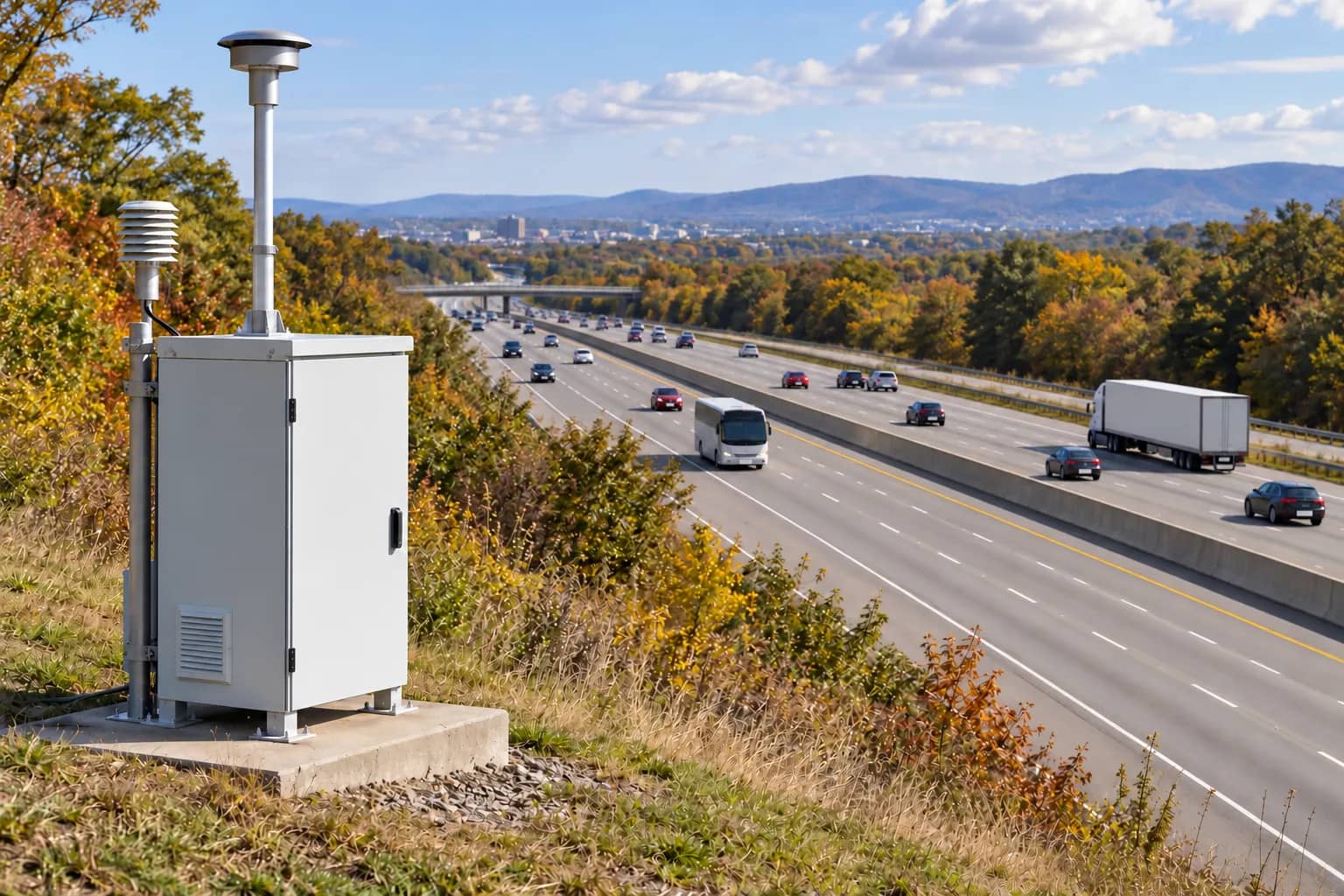
The US Environmental Protection Agency has started a two-year transition to MOVES6, its latest model for estimating vehicle pollution, in transport-planning assessments outside California. A notice effective on October 27 sets October 27, 2028, as the end of the transition, after which new transportation conformity analyses must use the updated model.
The change also has an immediate consequence for agencies starting new assessments with older software. They cannot keep using the older national assumptions about future electric-vehicle shares unchanged. EPA says those projections must be updated, or the analysis must use MOVES6 instead.
The Federal Register notice affects state and local air-quality and transport agencies, metropolitan planning organisations, and federal bodies that approve or fund highway and transit projects. California uses a separate model, EMFAC, for on-road regulatory estimates and is outside this MOVES6 transition.
Different assumptions about future vehicle fleets
MOVES estimates pollutants from cars, trucks, buses and motorcycles. Its calculations cover exhaust and evaporative emissions, as well as particles from brake and tyre wear. The new version still does not estimate dust lifted back into the air from roads. Agencies must use the approved methods for that separate source.
EPA says the update reflects changes to federal vehicle policy, including the February 2026 repeal of greenhouse-gas standards for on-highway vehicles and engines. It also incorporates reduced incentives for electric vehicles and charging infrastructure, and congressional disapproval of the waiver for California's Advanced Clean Trucks regulations.
As a result, the model assumes smaller electric-vehicle shares in future years than MOVES5 and MOVES4 generally did. Electric vehicles remain part of the projected fleet. The revision changes the assumptions used to estimate emissions rather than reporting a measured change in pollution across the country.
Other updates include energy-consumption rates for model years 2017 to 2024, based on real-world data in EPA's Automotive Trends Report. Vehicle populations and distance travelled have also been revised, including information on school and transit buses. EPA has corrected emission-rate errors and updated gasoline properties in some counties.
The agency cautions that the combined effect on calculated emissions depends on the area being modelled and the inputs used. A new version therefore does not produce one uniform increase or reduction everywhere. The software interface has not changed from MOVES5.
Air-quality plans have a different timetable
The two-year transition applies to transportation conformity, the process for checking that federally funded or approved highway and transit activity fits the purpose of a state's air-quality plan. These assessments must ensure projects do not create or worsen air-quality violations or delay compliance with the relevant standards.
State Implementation Plans, usually called SIPs, follow a different approach. EPA says there is no MOVES6 grace period for developing these plans. States outside California should use the latest model as soon as practicable, particularly when work is only beginning or has not yet started.
Agencies that had already completed substantial work with MOVES5 or MOVES4 can, in some circumstances, continue with that version. EPA directs them to its guidance on adjusting electric-vehicle projections. It does not require states to rewrite submitted or already approved plans simply because a newer emissions model is available.
Earlier deadlines and ongoing projects still matter
The new transition does not extend the previous MOVES5 grace period, which still ends on December 11, 2026. Agencies cannot treat the October 2028 date as a blanket extension for every older model. New analyses using earlier versions must also meet the requirements for current planning assumptions.
Some areas may have to move sooner. If a state revises its motor-vehicle emissions budget using MOVES6 and EPA approves it or finds it adequate before October 2028, a new regional analysis for that pollutant must use MOVES6. That ensures the assessment uses the same model as the budget against which it is checked.
Transportation conformity analyses begun before MOVES6's release can retain the older assumptions where there is no significant delay. Project-level hot-spot assessments also have transition provisions: an earlier model can be retained for work begun before the grace period ends if the final environmental document follows the draft within three years. EPA calls for consultation between the agencies involved to establish the appropriate model, assumptions and timing.
Related coverage: the EU's proposed climate-resilience law and the US proposal on power banks aboard aircraft.