
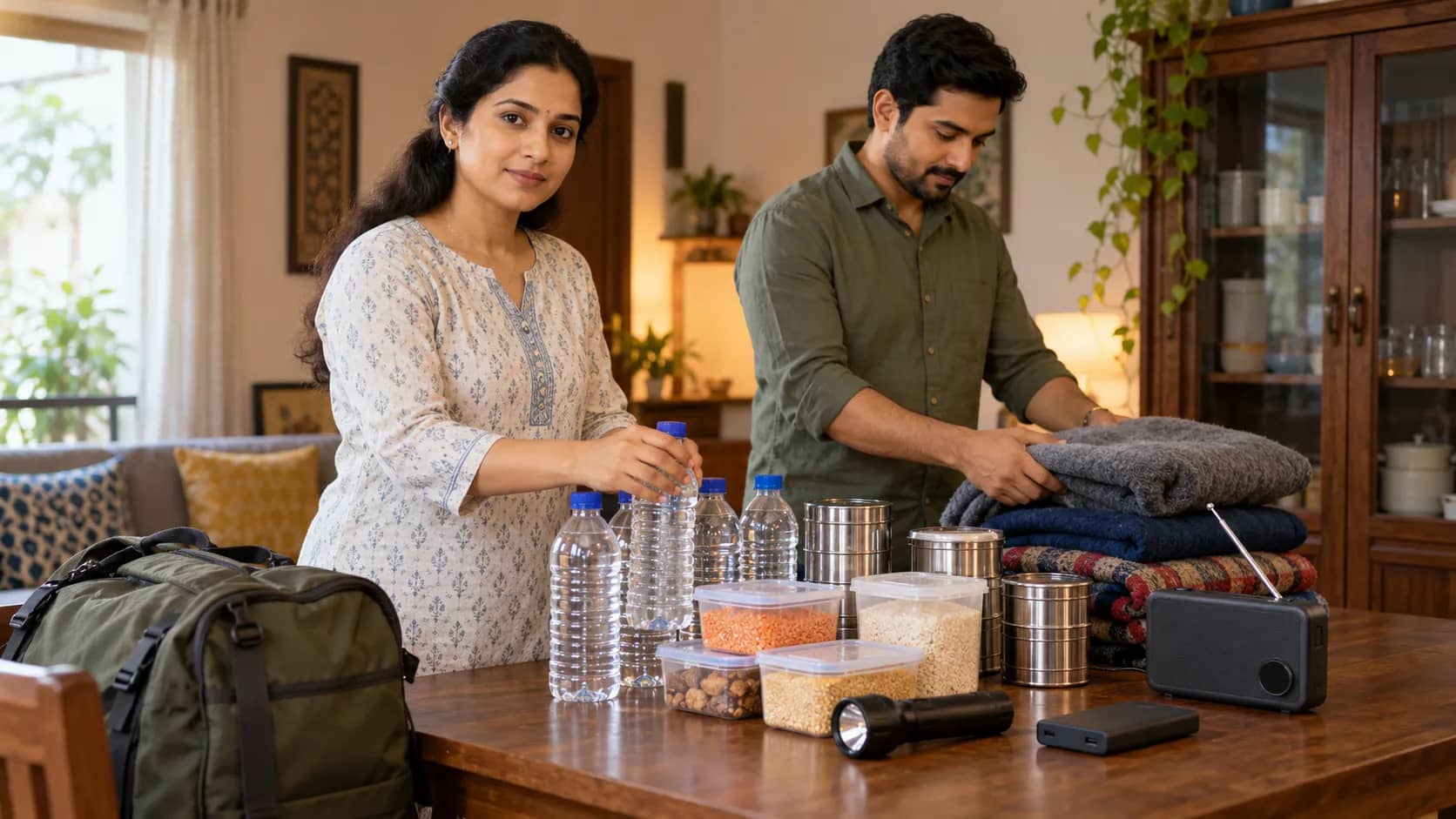
The UK government has launched a three-year Be Ready campaign asking households to prepare for three days of disruption to everyday services, with a practical checklist covering water, food, communications and help for people who need extra support. The Cabinet Office announcement on October 22 focuses on events such as severe weather that can interrupt electricity, water, phone and internet services.
The campaign is being introduced gradually, rather than as a single nationwide exercise. More than 500 organisations, including businesses and charities, have signed up to share its messages. Social-media and radio advertising over the coming weeks and months will target audiences including older people and families with young children.
This is a new public-information campaign, not a claim that every item of advice is new. The government says it has published household resilience guidance since May 2024 and that much of the earlier Prepare website's advice remains unchanged. Be Ready updates the presentation and messaging while keeping those practical precautions.
The Cabinet Office says the campaign was developed with local resilience forums and organisations working with groups including people in insecure housing and people using foodbanks. Its stated aim is to help households that can prepare do so, allowing emergency services to concentrate on those needing greater support when disruption occurs.
What the three-day checklist covers
The official household checklist starts with checking existing cupboards, identifying a household's particular needs and adding missing items gradually during ordinary shopping. It does not ask everyone to buy a complete kit at once. It recommends checking expiry dates and changing household needs every six months.
For drinking water, the guidance specifies three litres per person per day for three days. That allowance does not cover everything: cooking and washing would require more. Food should have a long shelf life and be usable without refrigeration or cooking. The checklist recommends choosing food the household would normally eat.
A torch and spare batteries appear alongside blankets, sleeping bags and warm clothing. The guidance says torches are safer than candles and notes that a home can become cold quickly without heating. A charged power bank and a battery-powered or wind-up FM radio can help maintain communications and access to information.
The checklist also includes cash in a mixture of notes and coins, as electronic payments and cash machines may be disrupted. It does not prescribe a universal cash sum: the amount depends on a family's essential needs. Printed copies of important documents and written contact numbers are included so they remain accessible without a working phone.
Extra support and a household contact plan
One cost-free step highlighted in the launch is checking eligibility for the Priority Services Register. The campaign says this lets electricity, gas and water providers know that a customer may need additional support, including during an interruption. Eligible households can include those with children under five; the website directs users to the registration service.
The geographical distinction matters. The Priority Services Register route described in the guidance covers England, Scotland and Wales. In Northern Ireland, the equivalent arrangements are called Customer Care Registers. The campaign homepage also directs Scottish and Northern Irish residents to their respective government websites for locally tailored advice.
Households are encouraged to agree where to meet if they cannot return home or contact each other, and to arrange a backup check-in with trusted people who might need help. Written information can include emergency contacts, insurance details and the frequencies of radio stations used for news, rather than relying entirely on internet access.
For reporting a power cut, the checklist lists 105 in England, Scotland and Wales, and 03457 643643 in Northern Ireland. It also recommends checking workplace contingency plans and making sure children's schools hold up-to-date contact numbers. Immediate danger is different from a routine outage: the campaign directs people to call 999.
Where to find information during an emergency
The Be Ready website explicitly says it will not carry live updates during an emergency. Its role is preparation. For instructions during an incident, the campaign points readers towards local radio, councils and trusted emergency-service sources, including police, fire and rescue services and the coastguard.
Its community guidance also warns volunteers not to arrive uninvited at an emergency scene or travel to another affected area to help. Instead, people should look for organised requests from councils, community groups or recognised voluntary organisations, so that support does not add pressure or expose helpers to danger.
For separate UK developments, Dalimss News has reported on Storm Boelo's weekend rail disruption and the government's wildfire-response plans.
Contains public-sector information licensed under the Open Government Licence v3.0. The official material has been summarised by Dalimss News; no official endorsement is implied.