
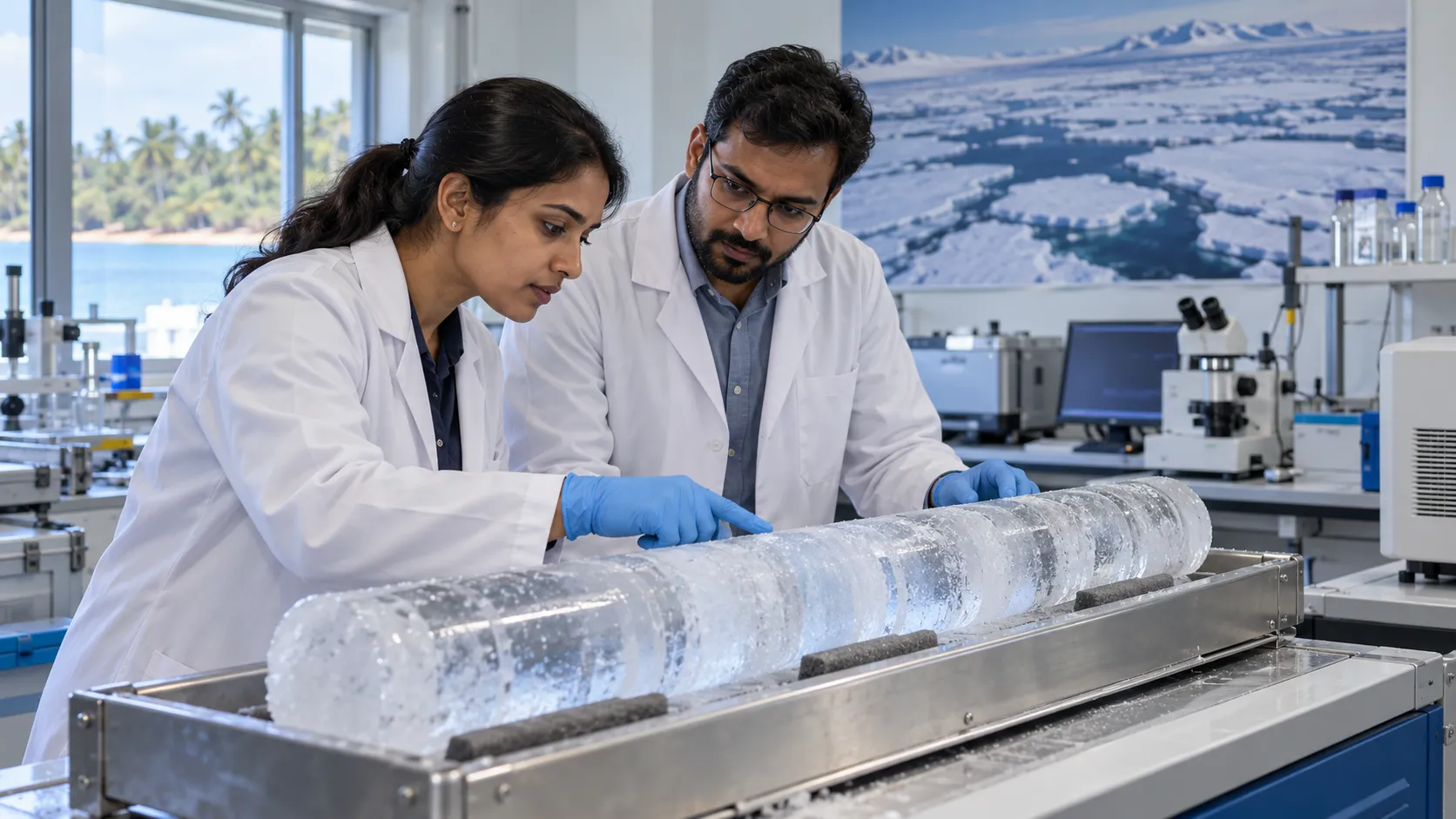
Britain has updated its Arctic policy with an initial £13 million research investment alongside Norway and a further commitment of more than £4 million for research partnerships over three years. Polar Regions Minister Uma Kumaran launched the framework on 15 October, linking scientific work with security and economic policy.
The 24-page framework combines scientific cooperation with a defence contribution in the High North. Its five priorities also cover governance, responsible trade and resilience, with conditions on how commercial opportunities should be developed.
Research commitments and shipping safeguards
In her launch speech, Kumaran said the investment with the Research Council of Norway would improve understanding of a changing Arctic Ocean. The separate partnership funding includes cooperation with the Arctic Council and support for the next generation of researchers. Preparations for the 2032-33 International Polar Year are another focus.
Kumaran linked Arctic changes to food supply, weather and national security. She warned that greater access for tourism and commercial shipping also creates safety and environmental challenges.
On defence, the document says Britain will double the number of personnel deployed to Norway for extreme cold-weather training from 1,000 to 2,000 over the next three years. It places this work within a NATO-first approach and cooperation with northern European partners.
For shipping, the framework recognises interest in the Northern Sea Route between Asia and Europe while noting that many operators regard it as operationally risky and environmentally precarious. Britain says economic development should follow environmental and social standards and benefit Indigenous communities and other Arctic residents.
The document also supports the Central Arctic Ocean commercial fishing moratorium, which it says runs until 2037. Britain is an observer to that fisheries agreement and intends to seek membership. That stated ambition does not itself make Britain a party to the agreement.
The update follows Looking North, published in February 2023. That earlier framework already joined scientific research, environmental protection and defence policy in a single programme. It organised activity under four priority areas, including collaboration and shared prosperity. The latest document therefore revises an existing approach, rather than marking Britain’s first Arctic strategy or its first commitment to scientific partnerships in the region.
Why Indian researchers have a stake
India’s interest in these decisions has an established scientific basis. Its Arctic policy, announced in March 2022, calls for better understanding of how changes in the region affect India’s climate, economic security and energy security. It also identifies the need to study connections between the polar regions and the Himalayas, bringing a distant region into research questions relevant to India.
The Indian policy announcement described researchers monitoring Arctic glacier mass balance and comparing it with Himalayan glaciers. It also identified oceanography, atmospheric research, pollution and microbiology as areas of work. The National Centre for Polar and Ocean Research in Goa is the nodal institution for India’s polar research programme, including Arctic studies.
India’s policy also calls for analysis of how melting ice could affect global shipping routes and strategic interests. It seeks cooperation with Arctic countries using scientific and traditional knowledge. These objectives explain the Indian relevance of changes in research access, environmental safeguards and regional governance.
Both India and Britain are Arctic Council observers, rather than Arctic member states. The Council lists India’s admission in 2013 and Britain’s in 1998. Decisions remain the responsibility of the eight Arctic states, with the involvement of the Indigenous organisations recognised as Permanent Participants.
Observer participation is nevertheless practical. The Council says observers should contribute mainly through working groups and can propose projects through an Arctic state or a Permanent Participant. They can also supply documents and views in subsidiary meetings when the chair permits. Observer status is therefore a route into cooperative work, without control over Council decisions.
The Council’s admission criteria require recognition of Arctic states’ sovereignty and jurisdiction, respect for Indigenous peoples, and acceptance of the region’s international legal framework. Those conditions help explain why outside countries’ research and commercial interests operate through partnerships and established rules rather than unilateral access to Arctic resources.
Related Dalimss News coverage examines India’s high-seas fisheries accession and India-UK trade and science cooperation.