Two-Acre Settlement Inside Mangar Bani Buffer Triggers Three-Day Eviction Warning
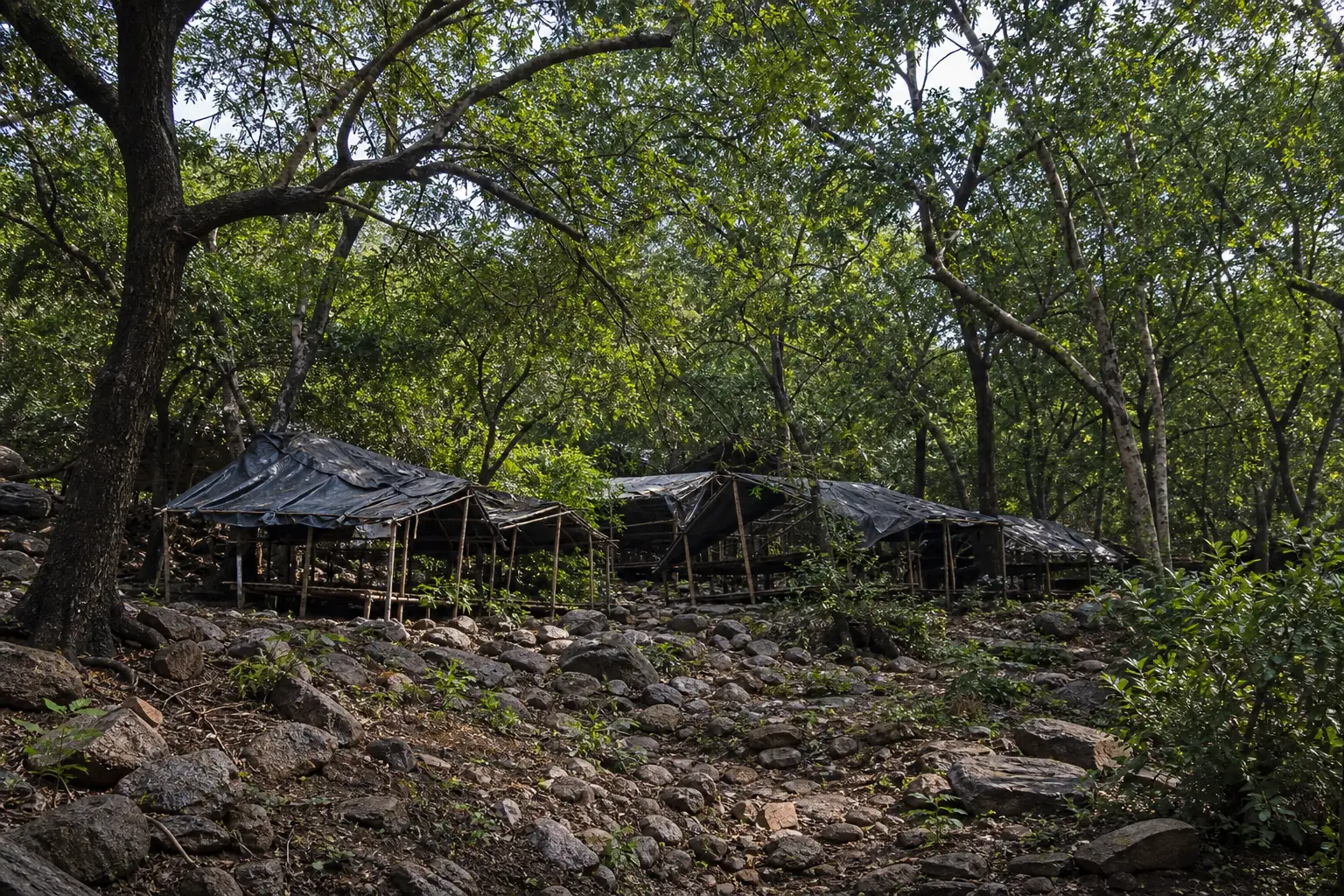
GURUGRAM: A cluster of makeshift shelters spread across roughly two acres has been detected inside the Mangar Bani buffer, adding a new encroachment concern to one of the most sensitive surviving Aravalli landscapes in the Gurugram-Faridabad region. The forest department has given the occupants three days to vacate and warned that enforcement action will follow if the land is not cleared.
The settlement is not described as a handful of isolated tents. Temporary structures made from tarpaulin, plastic, cloth and bamboo are arranged beneath the tree canopy, with ropes and sheets tied to trunks and branches. Household items, containers, clotheslines and compacted ground indicate regular habitation, while plastic waste is visible at parts of the site.
A protected landscape under multiple safeguards
Mangar Bani and its buffer are covered by restrictions under Sections 4 and 5 of the Punjab Land Preservation Act, which regulate activity that can damage protected land. The landscape is also treated as a no-construction zone. Haryana demarcated about 677 acres of Mangar Bani forest and a surrounding 500-metre buffer of roughly 1,267 acres in 2016, creating a combined protected and no-construction area of nearly 1,944 acres.
The protection is rooted in ecological value, not simply a line on a planning map. Mangar Bani contains around 30 native Aravalli tree species, supports shrubs, herbs and birdlife, helps recharge groundwater and forms part of a wider wildlife corridor. Disturbance beneath the canopy can compact soil, remove understory growth and introduce waste even when the structures themselves are temporary.
Recent access work sharpens the concern
The discovery follows recent road work inside the same broader landscape. A roughly one-kilometre internal path had been paved with interlocking blocks before the forest department stopped work and removed labourers on July 18. Fresh paver blocks were later reported at the site. The combination of an improved access route and a sizeable settlement raises a practical question: did easier entry accelerate occupation or make expansion harder to detect?
Authorities now need to establish when the first shelters appeared, who controls the land, how the settlement grew across two acres and whether routine patrols recorded earlier signs. Removing structures without answering those questions could leave the same patch vulnerable to reoccupation once public attention moves elsewhere.
Enforcement must be lawful and followed by restoration
The three-day warning should be implemented through a documented process that identifies the affected land and gives occupants clear instructions. Any removal must protect human safety while ensuring that the buffer is not converted into a permanent habitation zone. After clearance, the department should remove waste, assess damage to trees and soil, and restore disturbed ground with native vegetation where needed.
Mangar Bani has repeatedly faced pressure from roads, walls, farmhouses and changing land use. This episode shows that temporary occupation can be ecologically consequential too. A public boundary map, regular patrol record and time-stamped restoration report would do more than one eviction drive: they would make it harder for the next intervention to grow unnoticed under the canopy.
Sources and reporting
Based on an on-ground inspection and the Faridabad divisional forest officer's response reported on 12 August 2026, along with established PLPA restrictions and the notified Mangar Bani buffer boundaries.
Related Stories

Sector 17 Food Court Fire Blasts Two LPG Cylinders

Signature Global Plans 194-Acre Farrukhnagar Villas

Malda Arrest in Chakkarpur POCSO Case

Army Officer Flags Sector 106 C&D Waste Centre

Registrar Tells Aura RWA to Open Park to EWS