
Tisora Residents Protest After Broken Road Cuts Reliable Access to Village
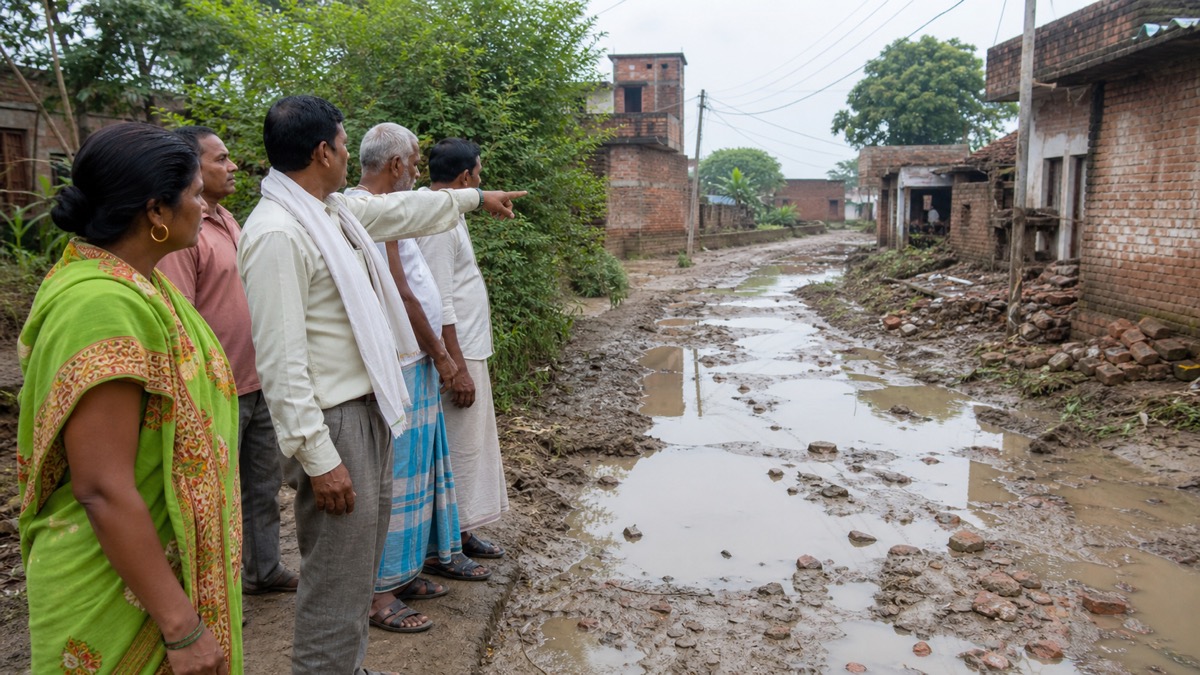
Varanasi: Residents of Tisora have protested over a badly damaged access road that becomes difficult to use in wet weather, arguing that the village’s repeated complaints have not produced a durable repair. Water-filled ruts and broken stretches are disrupting daily travel and have turned a local infrastructure issue into a public demonstration.
For a village, a road is not simply a transport line. It is the route to school, the market, a health centre and an ambulance pickup point. When it deteriorates, the cost appears in missed classes, damaged vehicles and longer journeys. People walking at night or during rain face the greatest risk because potholes disappear under muddy water.
Residents say the problem has persisted despite requests to authorities. The responsible department should clarify whether the road falls under the panchayat, block, public works system or another scheme, because blurred ownership often becomes an excuse for delay. A complaint passed between offices is not the same as a repair plan.
Emergency patching can restore movement, but loose soil or brick fragments rarely survive a monsoon. Engineers need to examine drainage, road level and the strength of the base. If water remains trapped along the surface, a fresh layer will fail quickly and public money will be spent on the same stretch again. Culverts and side drains may be as important as the carriageway.
The protest should be met with a written inspection and timeline rather than a verbal assurance. Officials can record the length, photograph damage and publish whether funds are sanctioned. If full reconstruction must wait, they should specify the temporary safety work and an accountable date for completion. Residents, in turn, should keep emergency access clear while pressing their demand peacefully.
Tisora’s road may be a small line on a district map, but its condition shapes the village’s relationship with the wider economy. Rural connectivity is often celebrated through kilometres built; maintenance receives less attention after inauguration. The current protest is a reminder that access exists only when a road remains usable. The administration’s credibility will depend on whether the next rain finds the village with a repaired route or another round of promises dissolving into mud.
The district can also use geotagged photographs before and after repair to verify the work. Such documentation is inexpensive and discourages cosmetic patching. Residents should be told whom to contact if the promised route remains blocked, ensuring that the protest leads to a traceable administrative file rather than another round of informal appeals.
Sources and reporting
Based on rural Varanasi reporting published on 14 August 2026 about residents’ protest over road access. The extent of official sanction or pending work remains subject to confirmation from the responsible department.
Related Stories

Ramnagar Day Three Follows Vishwamitra Into the Forest and Mithila
Shivpur Ramlila Stages Narad Moh and Kshirsagar Tableau Through Rain
VMC Puts City on Alert for Navratri and Durga Puja Civic Arrangements
Chowk Becomes Varanasi's First Police Station With ISO 9001 Certificate
World Tourism Day: Guides Welcome Visitors; Namami Gange Cleans Namo Ghat