Seven Gurugram Greenbelts to Become Rainwater Sinks Under Rs 8.5 Crore Plan
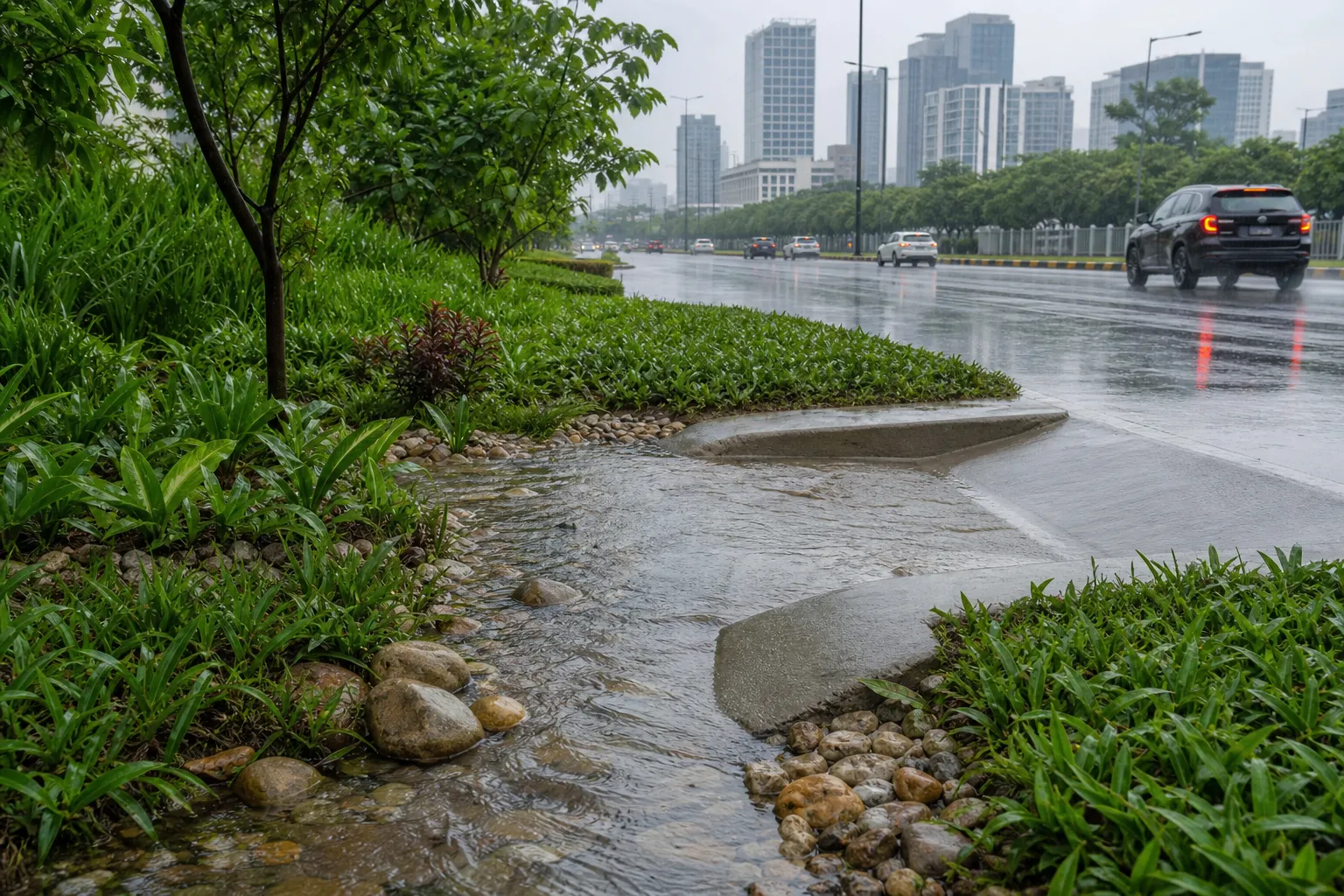
GURUGRAM: Seven roadside greenbelts are being redesigned to do a second job during the monsoon: receive runoff that would otherwise sit on the carriageway or overload nearby drains. The Gurugram Metropolitan Development Authority has floated an Rs 8.5 crore landscaping and maintenance package for green strips along master roads in sectors 43 to 53.
The idea is straightforward. Debris is being removed, hard edges are being opened and selected surfaces are being lowered so rainwater follows a gradient from the road into planted soil. Instead of treating every litre as waste that must be pushed through a pipe, the greenbelt would temporarily hold water and allow part of it to soak into the ground.
The seven corridors
The project covers master roads dividing sectors 47/49, 47/50, 43/53, 43/52A, 44/52, 45/52 and 46/51. These are busy, built-up stretches where conventional drains carry a heavy load during intense spells. Landscaping is expected to be completed within six months after work is awarded, and the selected agencies must maintain the green areas for three years.
That maintenance clause may decide whether the plan works. A lowered green strip can become a useful sponge, but it can also become a dump for construction waste, plastic and silt. Compacted soil, clogged inlets or an elevated kerb would stop runoff from entering even if the plantation looks healthy from the road.
Recharge needs clean inflow
Allowing stormwater to infiltrate can support groundwater recharge, but the first dirty flush from a road may carry oil, tyre residue, litter and fine sediment. The design should therefore include silt traps, shallow planted channels and accessible cleaning points before water reaches the main absorption bed. Without pretreatment, the soil can clog and pollutants can accumulate.
The authority should also publish basic performance indicators: how much surface area was lowered, whether inlet levels match the road, how long water remains after rain and how often sediment is removed. Photographs taken before and after major showers would show more than a landscaping completion certificate.
A useful layer, not a drainage substitute
Green absorption zones cannot replace functioning stormwater drains, particularly during cloudbursts or where groundwater is already high. Their value is in reducing the first surge, slowing runoff and giving the network more time. They should sit alongside desilting, outfall repairs and protection of natural drainage paths.
Gurugram has spent years trying to move rain away faster. This project tests a complementary approach: make room for some of it where it falls. If the gradients, soil and maintenance are handled well, seven ordinary greenbelts could become small pieces of working monsoon infrastructure rather than decoration beside a flooded road.
Sources and reporting
Based on GMDA project details released on 13 August 2026, including the seven road corridors, Rs 8.5 crore tender, six-month landscaping schedule and three-year maintenance period.
Related Stories

Sector 17 Food Court Fire Blasts Two LPG Cylinders
Signature Global Plans 194-Acre Farrukhnagar Villas

Malda Arrest in Chakkarpur POCSO Case

Army Officer Flags Sector 106 C&D Waste Centre

Registrar Tells Aura RWA to Open Park to EWS