
Seven Arrested in Gurugram as Police Trace Alleged Extortion Network to Overseas Gangsters
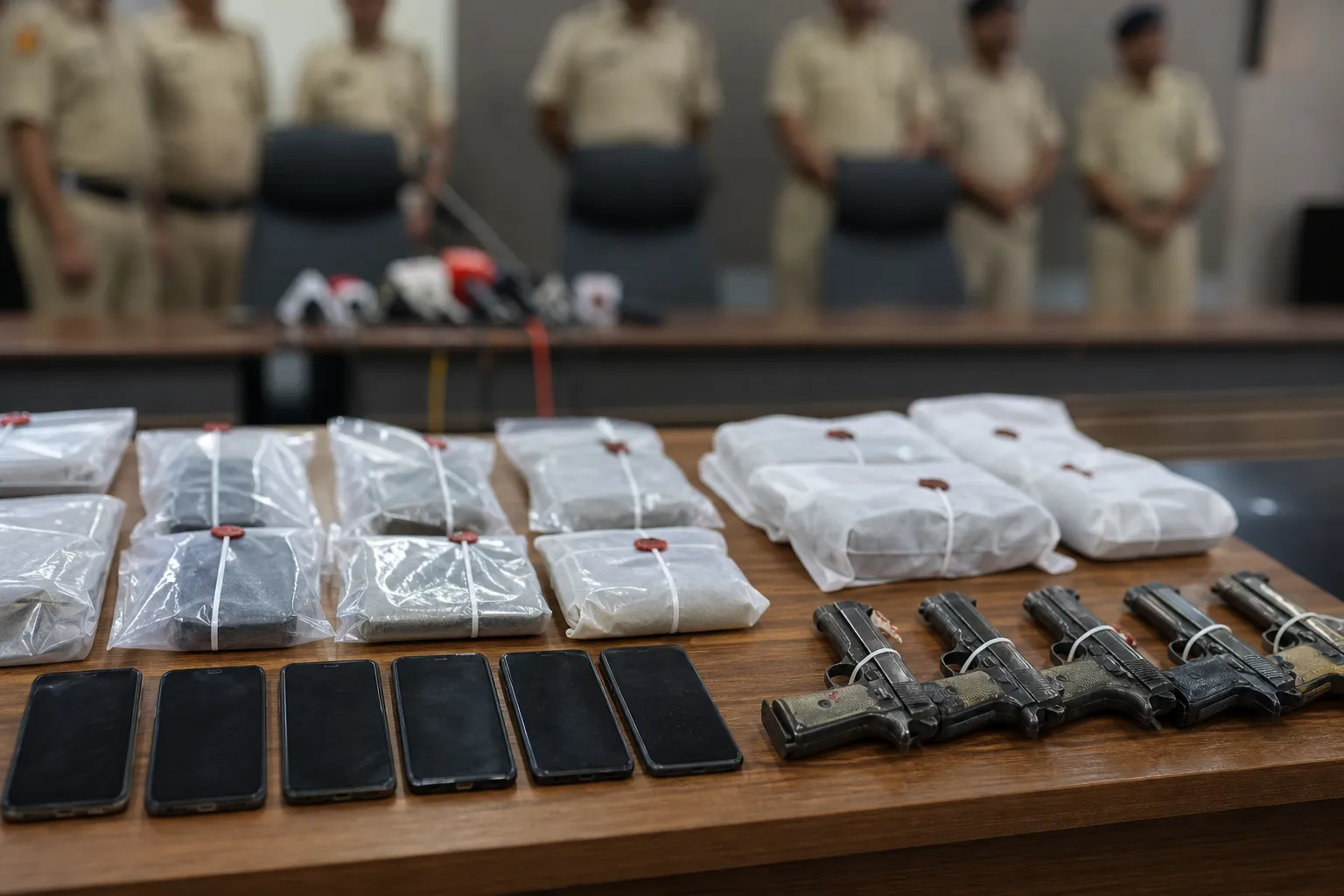
GURUGRAM: Police say they have arrested seven alleged members of an organised-crime network suspected of working for gangsters operating from outside India. Four pistols, 18 live cartridges and six mobile phones were reported recovered during the operation.
The police account links the group to absconding figures Deepak Nandal, Meenakshi and Himanshu Bhau. Those links, the alleged roles of each arrested person and the intended use of the recovered weapons remain matters for investigation and trial. An arrest establishes custody, not guilt.
Phones may be as important as the weapons
In cases involving remote handlers, investigators typically rely on communication records, financial trails and task allocation to show that individuals were part of one network rather than unconnected offenders. The six seized phones could therefore be central if lawful forensic examination recovers chats, call records, payment instructions or location history.
Police will also need to establish the source and ballistic history of the four pistols, including whether any weapon is linked to an earlier offence. Cartridge markings, fingerprints and movement of the firearms through suppliers can reveal a chain wider than the seven arrests.
Overseas direction changes the policing problem
A handler outside India can use encrypted calls, disposable numbers and local intermediaries to separate an extortion threat from the person who collects money or carries a weapon. That structure makes the visible street-level arrest only one layer of the case. Evidence must connect communication, intent and action across several people.
For businesses and residents, the practical response to an extortion demand is to preserve the message, number, payment request and call timing, then report it without confronting the sender. Deleting a threatening chat or negotiating across multiple accounts can erase evidence investigators need.
The case now moves from briefing to proof
Police briefings often focus on recoveries and named gang links. Court scrutiny will ask more specific questions: who possessed each item, what independent witness or digital record supports the alleged association, and whether seizure and forensic procedures were documented correctly.
The remand and charge-sheet stages should also clarify whether police allege completed extortion offences, preparations for a specific attack or membership of a wider conspiracy. Keeping those categories separate prevents a dramatic gang label from outrunning the evidence actually collected.
The arrests may disrupt one local unit, but durable prevention requires tracing recruitment, weapons supply and money movement. Gurugram's mix of affluent businesses, rental mobility and digital payments makes it a target for remotely managed intimidation. The strongest outcome will be a case built on verifiable records, not only the reputation of names attached to it.
Sources and reporting
Based on a Gurugram police briefing issued on 13 August 2026 concerning seven arrests, alleged overseas links and reported recoveries. All accused are entitled to the presumption of innocence.
Related Stories

Sector 17 Food Court Fire Blasts Two LPG Cylinders

Signature Global Plans 194-Acre Farrukhnagar Villas

Malda Arrest in Chakkarpur POCSO Case

Army Officer Flags Sector 106 C&D Waste Centre

Registrar Tells Aura RWA to Open Park to EWS