Rs 500 Crore in Flood Fixes Leaves Old Gurugram Waiting for Drainage Overhaul
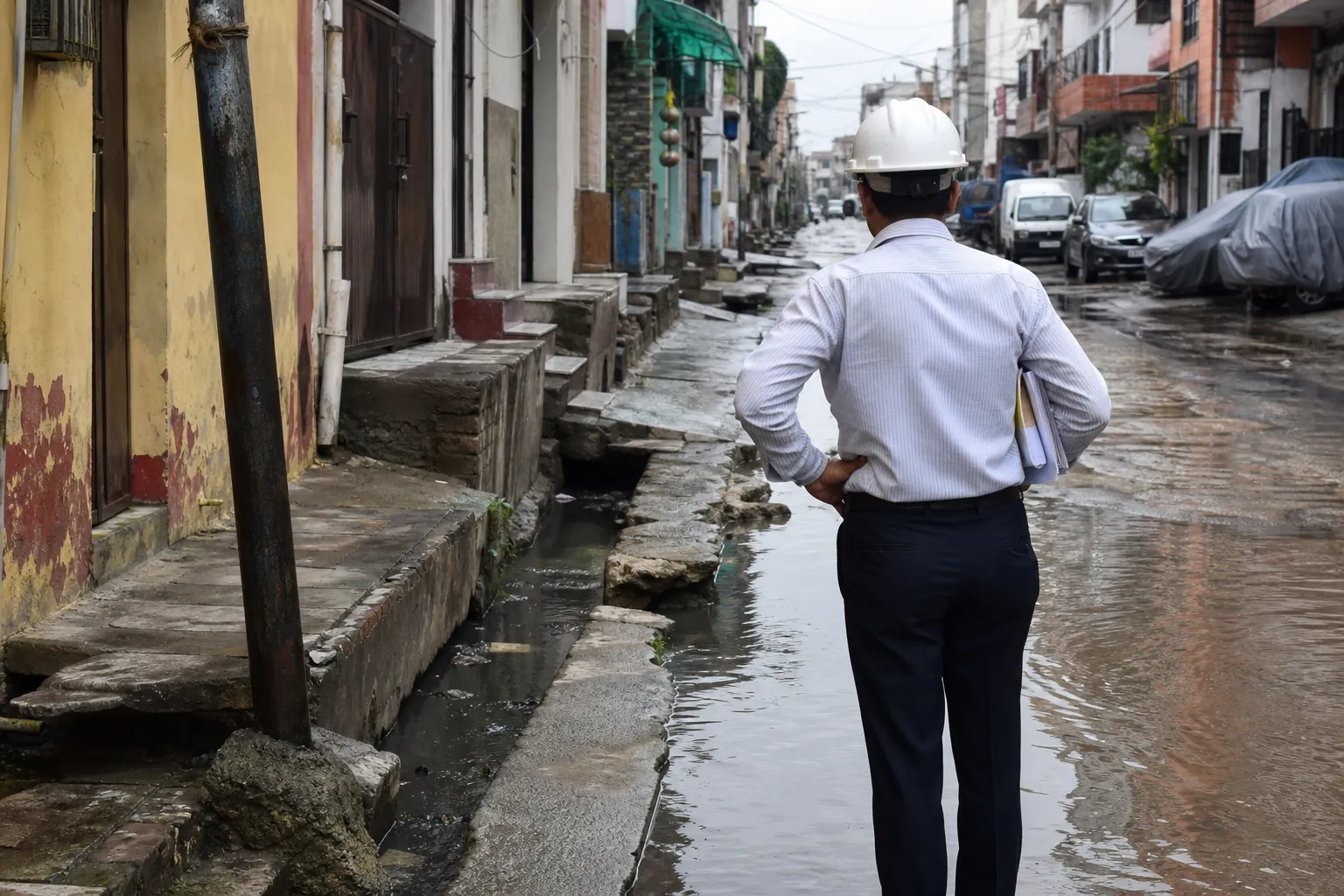
GURUGRAM: More than Rs 500 crore has been spent on waterlogging-related work in the city since 2016, yet large parts of old Gurugram still depend on a drainage network whose capacity has not kept pace with two decades of population and construction growth. The latest flooding has sharpened a basic question: how much of that money created lasting capacity, and how much paid for recurring seasonal response?
Gurugram's population has crossed 20 lakh and planning projections place it close to 96 lakh by 2041. In older neighbourhoods, however, spending has often gone towards individual drains, desilting and emergency pumps rather than a connected redesign based on present runoff and sewage loads.
A restricted zone blocks part of the network
Civic planners point to the 900-metre restricted belt around the Air Force ammunition depot in Sector 17 as a structural constraint. The restriction, linked to a 1983 declaration under the Works of Defence Act, has limited municipal work across sectors 14, 17 and 18 and parts of Sector 5, Sector 12A, Dharam Colony, Carterpuri, Rajiv Nagar, Sukhrali and the Sheetla Mata belt.
Construction density nevertheless increased around the restricted area. Stilt-plus-four and stilt-plus-five buildings placed more residents, paved surfaces and wastewater into narrow lanes without a matching increase in drain width, slope or outfall capacity. The result is not one blocked inlet but a network-level mismatch.
Annual work can hide the capital gap
Desilting, pump deployment and local drain construction are necessary maintenance measures. They become expensive repetition when the trunk system remains undersized or disconnected. A cleaned drain cannot carry water if its downstream link is full, and a pump only moves flooding from one point to another if the receiving channel has no spare capacity.
Regional planning documents have repeatedly flagged Gurugram's growth trajectory and called for infrastructure expansion tied to density. What remains missing is a publicly tracked, citywide drainage programme for old Gurugram with catchment maps, design capacities, land constraints, project sequencing and a funding schedule.
Planned corridors performed differently
Newer stretches around the Southern Peripheral Road and Dwarka Expressway, where drainage was incorporated into the original layout, avoided some of the severe disruption seen around Sheetla Mata Road. That does not make the new city flood-proof, but it illustrates the advantage of reserving drainage corridors before land is fully built over.
GMDA says it is now focusing on structural issues and has placed the Sheetla Mata Road drainage revamp among its priorities. Residents will need more than a broad assurance. A useful plan should state what will be built, which restriction requires state or defence coordination, how temporary drainage will work during construction and what rainfall standard the finished system is designed to handle.
The Rs 500 crore figure should trigger an outcome audit rather than a spending argument alone. Gurugram needs to know which hotspots were permanently resolved, which continue to require pumps and which projects failed to connect to an outfall. Without that ledger, the city risks entering every monsoon with fresh contracts, familiar photographs and the same undersized drains.
Sources and reporting
Original Dalimss News analysis based on verified civic spending, planning projections and agency statements available on 9 August 2026.
Related Stories
Festive Special to Gorakhpur Gets Gurugram Halt
Fifth Accused Held in Rs 25 Lakh Sector 47 Robbery

Courier Staffer Booked Over 105 Missing One8 Returns

HC Sets Rs 50 Lakh Costs for Accused's Return to India

Gurugram Swimmer, 20, Crosses English Channel