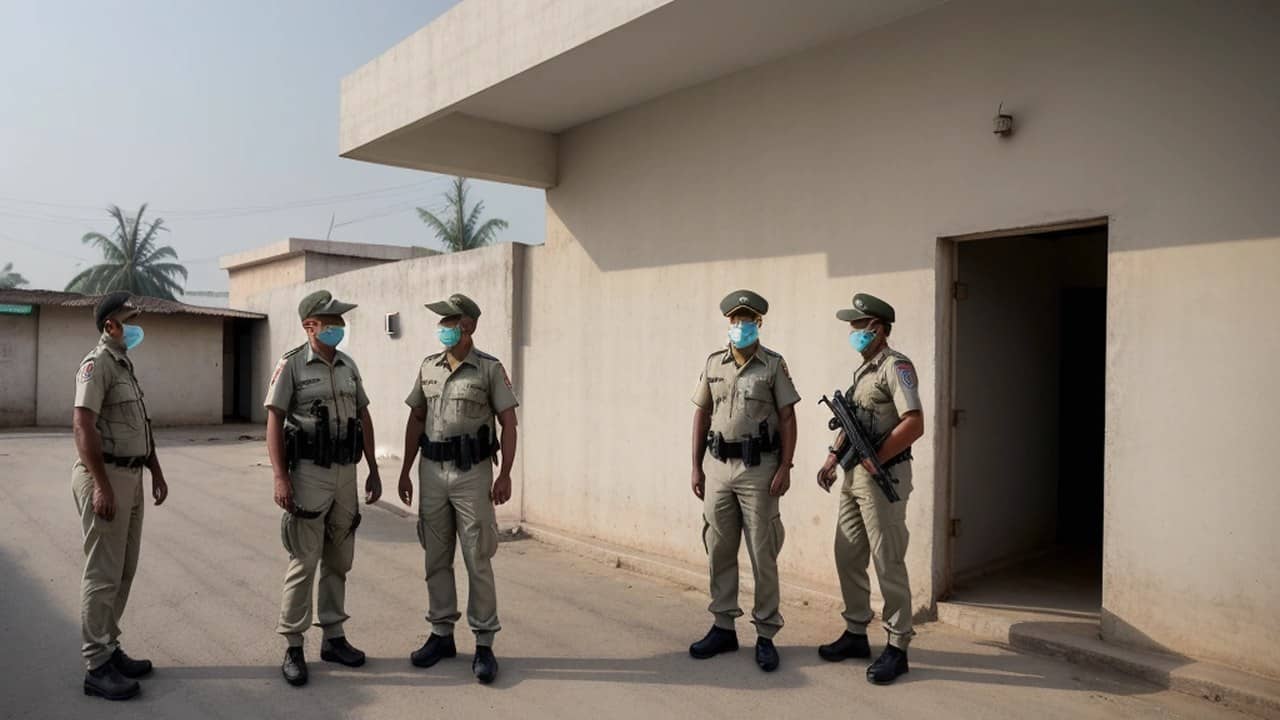
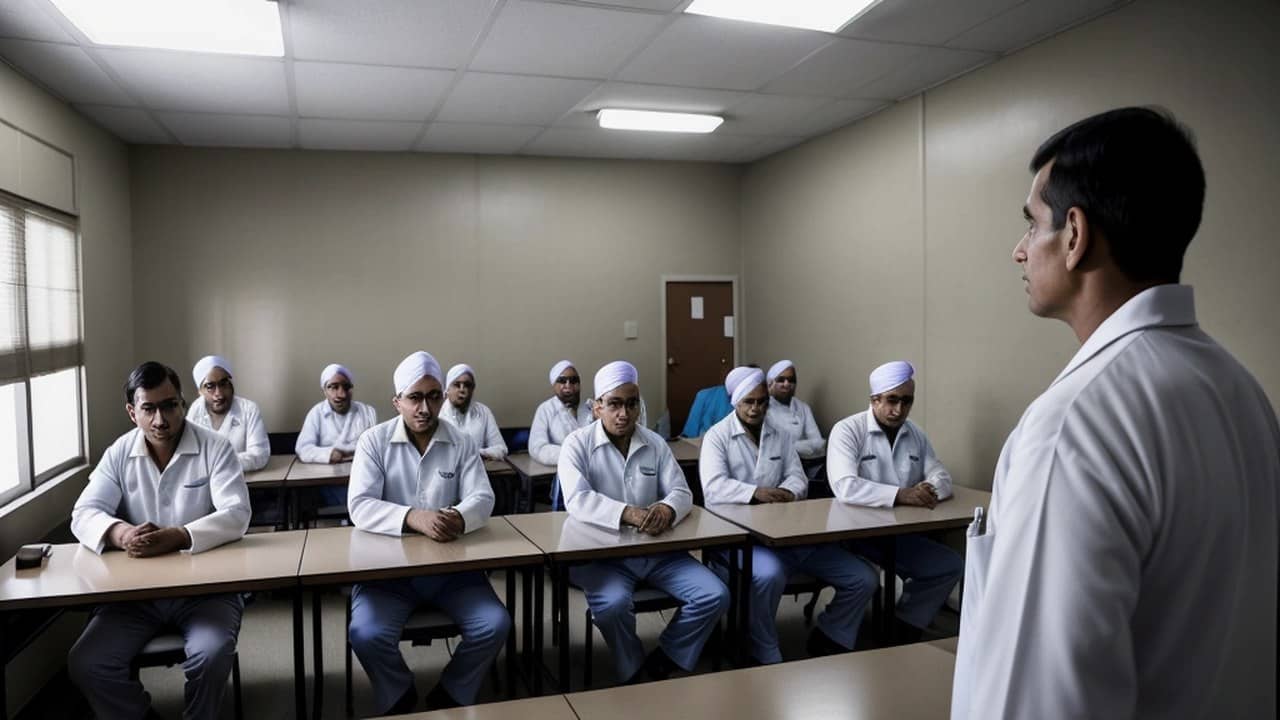
Purvanchal Vidyut Vitran Nigam and Medanta Hospital held a free health camp on Saturday at the ETI training centre in Bhikharipur Hydel Colony, screening 81 officers and employees, utility officials said.
A Medanta specialist team provided counselling and preventive advice after the checks. Present on the occasion were Chief Engineer (Administration) Ashok Kumar, Superintending Engineer (Administration) Shubham Khadayat and Chief Administrative Officer Ajatshatru, among others.
Workplace screening of this kind is narrower than a city-wide public camp, yet it matters inside a distribution utility whose staff spend long hours on lines, substations and complaint desks. Eighty-one checked employees is a defined cohort: people who keep Varanasi's feeders staffed while theft drives and outage calls continue elsewhere in the same organisation.
PVVNL's field pressure has been visible in recent enforcement stories, including power teams booking sixteen theft cases across Varanasi and neighbouring districts. A health camp does not cancel that enforcement calendar; it simply records that the same employer also scheduled preventive care for its own roster on Saturday.
Medanta's involvement brings private tertiary expertise into a training-centre setting rather than a hospital ward. Employees heard specialist advice on prevention, according to the organisers. Individual clinical findings were not released, correctly, because those belong in personal medical files.
For families of linemen and office staff, the practical value is early flags for blood pressure, sugar and other routine markers that busy shift patterns often postpone. The camp does not replace annual checks at a regular clinician. It lowers the activation energy for getting a first reading on a workday.
Bhikharipur's hydel colony and training campus sit on the city's edge geography where utility housing and technical education share fences. Holding the camp there reduced travel time for staff who might skip a city-centre hospital slot between duties. That logistics choice is why workplace camps often outperform open invitations for the same demographic.
Readers outside the utility should not arrive expecting walk-in public slots; this event was described as screening for officers and employees. Public free camps, such as the Hindu Seva Sadan drive that counselled 115 patients around the same weekend, serve a different audience.
What happens next inside PVVNL is follow-up. Employees flagged for further tests will need roster flexibility to complete them. Managers who stood for photographs at the opening will be judged, quietly, by whether those referrals are honoured without docking leave unfairly.
Varanasi's power story is usually told through outages, bills and theft FIRs. Saturday's Bhikharipur camp added a quieter line: eighty-one workers told to look after their own health while they keep other people's lights on.
Residents following the story should stick to named officials and dated briefings rather than forwarded rumours, and check dalimss.news for verified updates from the Varanasi desk as facts develop through the week.
Practical takeaway for readers: note the date, the place, and the office that spoke on record, then decide travel or household plans only after those points are clear.
Families tracking the developing facts should keep screenshots of official notices and avoid sharing unverified forwards that invent quotes or timings.
Commuters and residents affected by the underlying issue can use municipal or police helplines already published by the district, and should record complaint numbers for follow-up.
Context from earlier Dalimss Varanasi reporting shows how civic, cultural and enforcement stories often overlap in the same wards across a single festival month.
Any medical or travel decision tied to this report should rest on a clinician's advice or an official circular, not on a news summary alone.
The Varanasi desk will update only when a named office confirms a fresh figure, arrest, schedule change or completed civic work on the ground.
Families tracking the developing facts should keep screenshots of official notices and avoid sharing unverified forwards that invent quotes or timings.
Commuters and residents affected by the underlying issue can use municipal or police helplines already published by the district, and should record complaint numbers for follow-up. Public charitable camps the same weekend, and earlier municipal worker screening such as VMC safai mitra health camps, show a city habit of short free-check drives across institutions.
Context from earlier Dalimss Varanasi reporting shows how civic, cultural and enforcement stories often overlap in the same wards across a single festival month.