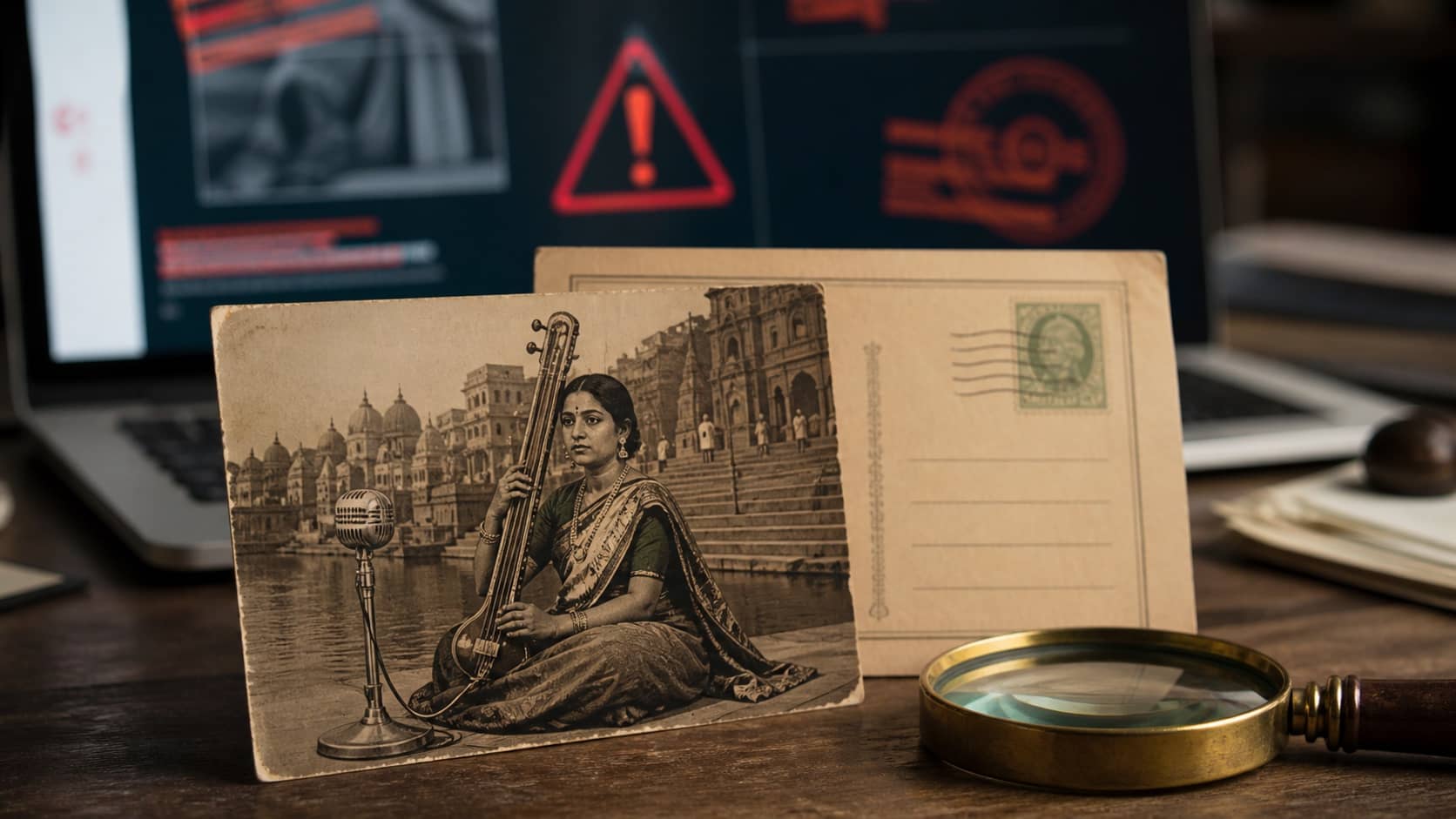
VARANASI: The postal department has clarified that it did not issue postage stamps honouring musicians of Kashi, saying the authorised items were picture postcards and that stamp-like images circulating online did not originate from the department.
Officials said the postcards were produced after a registered organisation led by a retired IPS officer made a formal request and paid the prescribed fee. One card carried an image of the celebrated singer Siddheshwari Devi. The requesting organisation told officials that the image had been checked with her family before it was supplied for use.
That legitimate postcard appears to have become mixed up with a different claim online: that official postage stamps had been issued. The department has started an internal inquiry to determine where the stamp-like pictures came from and who generated them. Officials said digital-forensics expertise could be sought if necessary.
The distinction matters. A picture postcard is commemorative postal stationery that can carry an image selected through an approved process. A postage stamp is a payment instrument with security characteristics, denomination and formal release procedure. Officials noted that Indian stamps are printed in Nashik on specialised paper containing security fibres. A social-media graphic, however polished, does not acquire official status because it resembles one.
For collectors and families of honoured artists, false announcements can be more than a harmless design experiment. They may create expectations of an official recognition, distort the public record and encourage purchases of unauthorised material. If an image includes a denomination, government emblem or other feature likely to mislead, its source and intended use deserve scrutiny.
Users can verify a commemorative issue by checking India Post’s official channels, philatelic bureaus and release information rather than relying on a forwarded picture. Reverse-image searches and examination of typography can help, but they are not a substitute for confirmation from the issuing authority. The safest question is simple: where is the official notification or sale listing?
The episode also demonstrates how quickly two related facts can be collapsed into one false claim. It is true that postcards featuring Kashi musicians were produced. It is not true, according to the department, that those cards amounted to newly issued postage stamps. Misinformation often succeeds by attaching an invented conclusion to an authentic photograph.
Postal officials should publish the outcome of the inquiry and, if possible, show the authorised postcards beside the misleading images. A visual comparison would help the public understand the difference and protect the reputations of the artists whose names became part of the confusion.
Kashi’s musical heritage is worthy of careful commemoration. Siddheshwari Devi and other masters do not benefit when recognition is exaggerated or fabricated. The department’s clarification restores the immediate record: picture postcards were authorised; official stamps were not. The remaining question is who created the viral versions and whether they were shared carelessly or designed to deceive.