
Pebbles and FOD Force Temporary Halt to Varanasi Airport Runway Operations
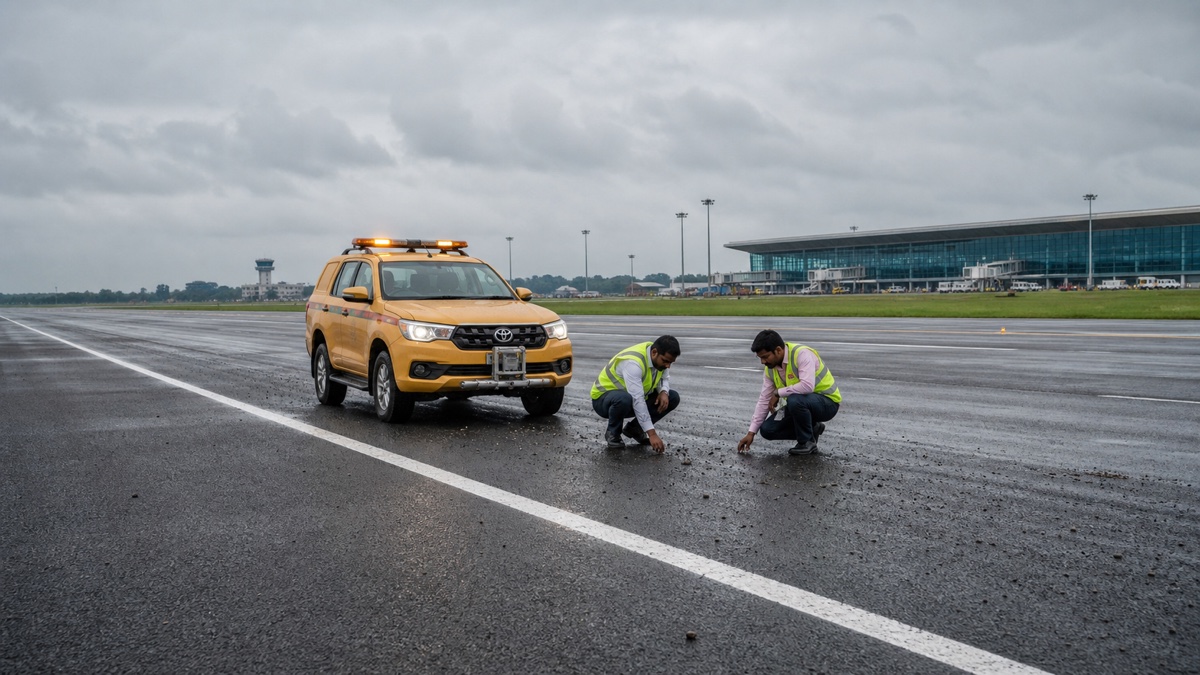
VARANASI: Flight operations at Lal Bahadur Shastri International Airport were temporarily stopped after loose pebbles and other foreign-object debris were detected on the runway, triggering an inspection and clean-up of a surface that had recently undergone work.
The interruption lasted roughly one to two hours according to reports published over the past day. Airport teams restricted runway use while the material was removed and the affected stretch examined. Operations resumed after the immediate safety checks were completed, but the episode has focused attention on the quality and monitoring of critical airside work.
Why small debris is a serious issue
In aviation, foreign-object debris—commonly called FOD—can include stones, metal fragments, loose construction material or any object that does not belong on a taxiway, apron or runway. Even a small piece can damage an aircraft tyre, strike the fuselage or be drawn into an engine. Closing the runway for inspection is therefore a precaution, not an overreaction.
The verified Dalimss News Banaras report referred to pebbles on the runway and raised questions about recarpeting and expansion-related work. PNC Infratech has been associated with the wider runway project, but responsibility for this particular incident cannot be assigned without the airport authority’s technical assessment. The location from which the debris came, the condition of the surface and recent work logs must all be examined.
Passenger impact and accountability
A temporary halt at a single-runway airport can quickly affect arrivals, departures, aircraft rotations and onward connections. Travellers should rely on their airline’s updated schedule rather than assume that a short closure has no knock-on effect.
For the airport, the next step should extend beyond sweeping the surface. Investigators need to determine whether the pebbles were construction residue, surface breakup, material carried by a vehicle or debris introduced in another way. Inspection frequency, contractor handover records and runway friction or pavement tests may help answer that question.
Varanasi is expanding its aviation capacity to handle rising passenger and cargo demand. That growth makes quality control more—not less—important. The runway has returned to service, and no accident was reported. The public-interest issue now is whether the underlying cause is documented and corrected before loose material can reappear. Until the formal assessment is released, claims against any particular company should be treated as questions for inquiry rather than established blame.
The Directorate General of Civil Aviation and Airports Authority should be informed of any pavement defect that meets mandatory reporting thresholds. A short public note on the inspection would reassure passengers without compromising technical work. Aviation safety improves when minor events are treated as evidence to learn from, not reputational problems to minimise.
Sources and reporting
Based on Dalimss News Banaras coverage and contemporaneous local reports dated August 11–12, 2026. The cause of the surface damage and any contractor responsibility remained under assessment.
Related Stories

Kashi Marks Baba Lat Bhairav’s Wedding Day After Tilak and Haldi Rituals

Over 800 Doctors Converge as API UP Chapter Conference Opens in Rohania

Chitaipur Arrests Two After Homeguard Anuradha Tiwari’s Alleged Suicide

Lanka Registers Assault Case After Narottampur Youth Dies During Treatment

Storm Uproots Electric Pole in Cholapur’s Jagdishpur; Local Supply Cut