Over 1.7 Tonnes of Banned Single-Use Plastic Seized in Gurugram Drive
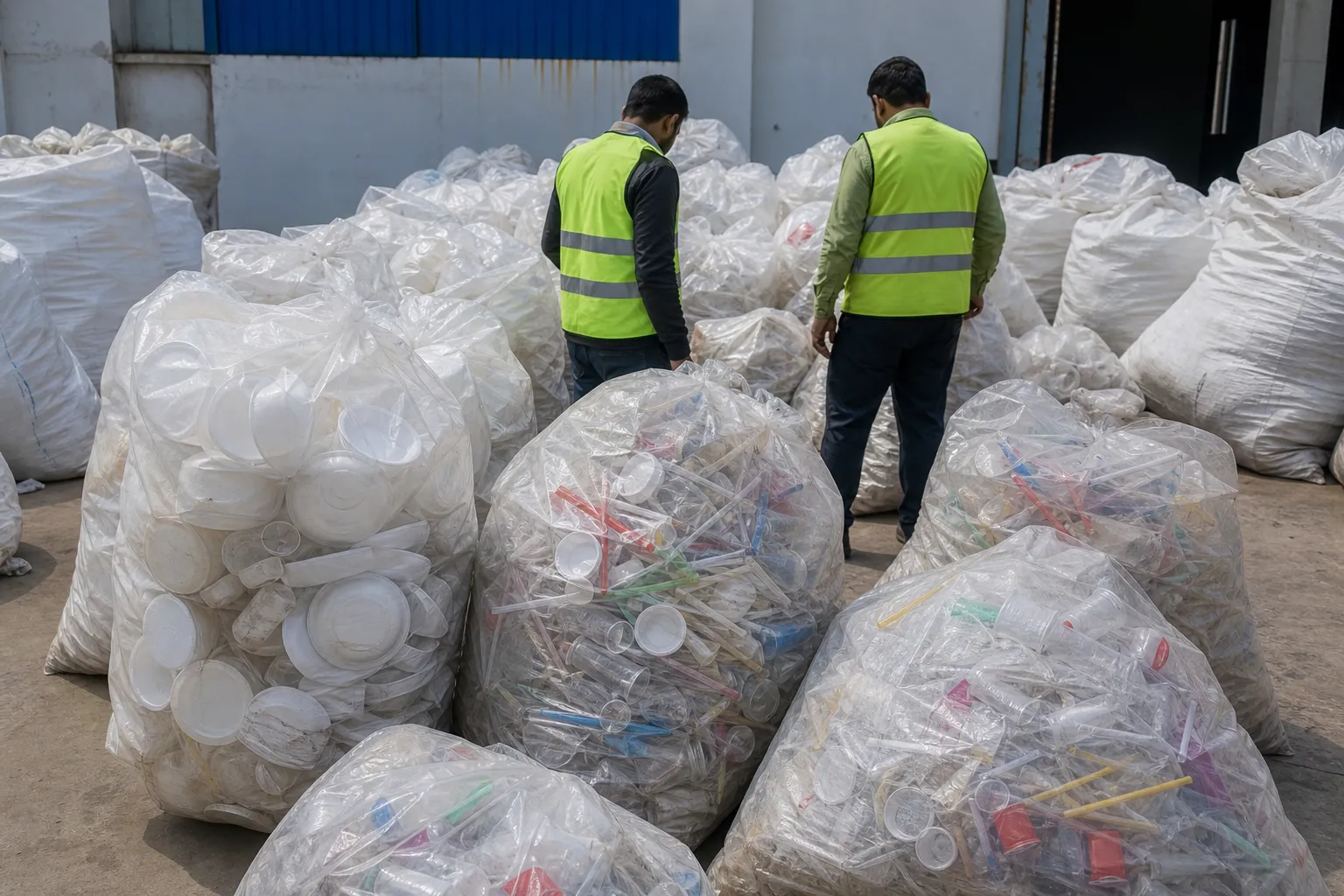
GURUGRAM: Pollution-control teams have seized more than 1,700 kilograms of banned single-use plastic during a two-day enforcement drive in Gurugram, with inspections reaching both a busy market and a storage operation. Officials said the action was aimed at the manufacture, stocking, distribution and sale of prohibited plastic items.
The first round was carried out in Badshahpur market, where teams inspected shops, vendors and storage points. Officials reported recovering 154kg of banned material from two violators. The following day, an inspection at Tek Chand Nagar in Dhanwapur led to the recovery of another 1,550kg from a business premises.
Large seizure points upstream
The difference between the two recoveries matters. Small quantities found at retail counters show that prohibited items remain in everyday circulation, while a stock exceeding 1.5 tonnes points further up the supply chain. Removing bulk inventory before it is split among vendors can have a greater immediate effect than collecting thin bags and disposable items one shop at a time.
Officials said the seized material was transported to an authorised waste-to-energy facility in Sonipat for disposal. A transparent chain of custody is important in such drives: enforcement teams need to record the type and weight of material, where it was found, how it was sealed and where it ultimately went. Otherwise, confiscation shifts plastic from one store room to another without proving safe disposal.
More inspections planned
The Haryana State Pollution Control Board said enforcement teams will continue inspections across wholesale markets, commercial centres and industrial areas where violations are suspected. The prohibited list targets disposable products that are difficult to collect and recycle, including several low-utility items that are quickly discarded after a single use.
Enforcement alone will not end demand. Retailers need reliable alternatives at workable prices, customers must accept reusable options, and manufacturers require clarity on permitted materials. A shopkeeper switching from one banned product to a lookalike plastic item does not solve the waste problem.
Follow-up will decide the impact
The next useful step is to trace invoices and suppliers connected with bulk recoveries. If a distributor is replenished immediately after a raid, the market-level seizure becomes temporary. Repeated inspection of the same supply chain, combined with penalties permitted under environmental rules, can make non-compliance more expensive than switching products.
Gurugram's drains, vacant plots and landfill-bound waste stream all carry the cost of disposable plastic. A 1.7-tonne seizure is a significant enforcement result, but its real value will lie in whether it interrupts supply, produces documented action and reduces the same material at the next inspection.
Sources and reporting
Based on enforcement details released by the Haryana State Pollution Control Board on 14 August 2026 covering inspections in Badshahpur market and Tek Chand Nagar, Dhanwapur.
Related Stories

Two Held for Alleged Bid to Run Over Men

Retired HSVP Officer Surrenders in SCO Plot Case
Cops Warn Weekend Bikers After Recent Crashes
HT Pole Still Blocks Road Between Sectors 102, 102A
HSVP Plans Single City Office in Sector 16