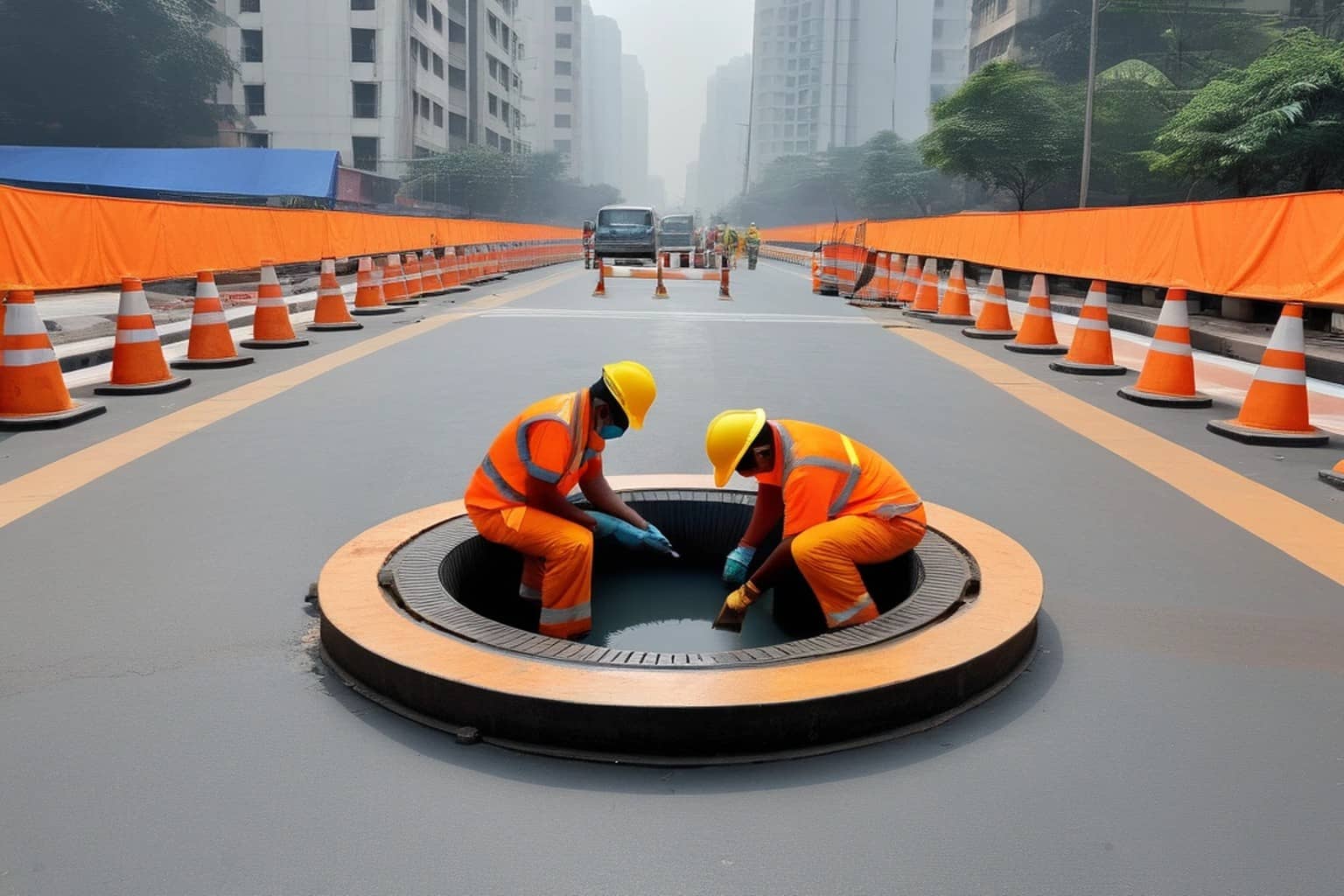
GURUGRAM: The National Highways Authority of India has awarded the tender to rebuild the ageing sewer line that runs under Sohna Road between Rajiv Chowk and Sheeshpal Vihar, with work expected to begin by the end of this month and finish within three months, officials said on Sunday.
A senior NHAI official put the cost of the job at Rs 58 crore. The highway authority has sent the technical design to the Gurugram Metropolitan Development Authority for approval, since the line carries city sewage even though it lies beneath a national highway corridor. Sohna Road forms part of national highway 248A, which is why NHAI rather than a civic body is executing the work.
The pipe is about three decades old. It sits roughly 20 feet below the road and carries sewage from Sectors 45 to 51 to the sewage treatment plant at Behrampur. Officials have described it as dilapidated, and the stretch near Sheeshpal Vihar has caved in six times in the last three years.
The most recent failures are still fresh for daily commuters. On 6 May, a section of Sohna Road near Subhash Chowk, opposite SD Adarsh Vidyalaya, collapsed after the master sewer gave way, and one lane of the main carriageway had to be barricaded. In August, the same damaged patch gave way again and trapped a dumper, as Dalimss reported in its account of the repeated Sohna Road cave-ins over the old sewer.
Back then the Rs 58 crore repair was a proposal. The award of the tender moves it to the execution stage, which is the first time residents of the Sohna Road sectors have a start month to plan around.
What relining means for the road above
NHAI officials said the repair will use cured-in-place pipe technology. In this method a flexible liner soaked in resin is pulled or pushed into the existing pipe through access points and then hardened, usually with hot water, steam or ultraviolet light, so that it forms a new pipe inside the old one.
The main attraction for a road like Sohna Road is that it avoids digging up the full length of the carriageway. Crews still need pits at manholes and access points, so motorists should expect short lane closures and barricading near those spots rather than a continuous trench.
A GMDA official said the authority has asked the highway agency to use the highest quality liner for the work. That request matters because a liner is only as good as its fit and curing; a poor job on a line this deep would leave the road above exposed to the same kind of washout that has caused the earlier collapses.
The design still has to be cleared by GMDA, and a traffic diversion plan will be needed before crews move in. Neither the exact start date nor the order in which stretches will be taken up has been announced.
Sohna Road has been a recurring problem spot through this year's monsoon. Gaps in drain gates and outfalls were flagged when the road flooded, as covered in Dalimss's report on drain gate gaps behind Sohna Road flooding, and failures in old trunk sewers have also forced repairs elsewhere in the city, including the master sewer repair at IFFCO Chowk.
For residents of Sectors 45 to 51, the sewer is not an abstract highway asset. When it chokes or breaks, sewage backs up into internal lines and the road above becomes unsafe. A relined pipe should cut both risks if the work is done to the standard GMDA has asked for.
The next steps to watch are GMDA's approval of the design, the traffic police clearance for diversions and the contractor mobilising at Rajiv Chowk. If the three-month timeline holds from a late-October start, the work would be done by around the end of January. That window also overlaps with winter pollution curbs under the Graded Response Action Plan, though essential public works such as sewer repairs have usually been allowed to continue under those orders.