
NER Varanasi Division Runs 2,915 Chlorine Tests on Station and Colony Water
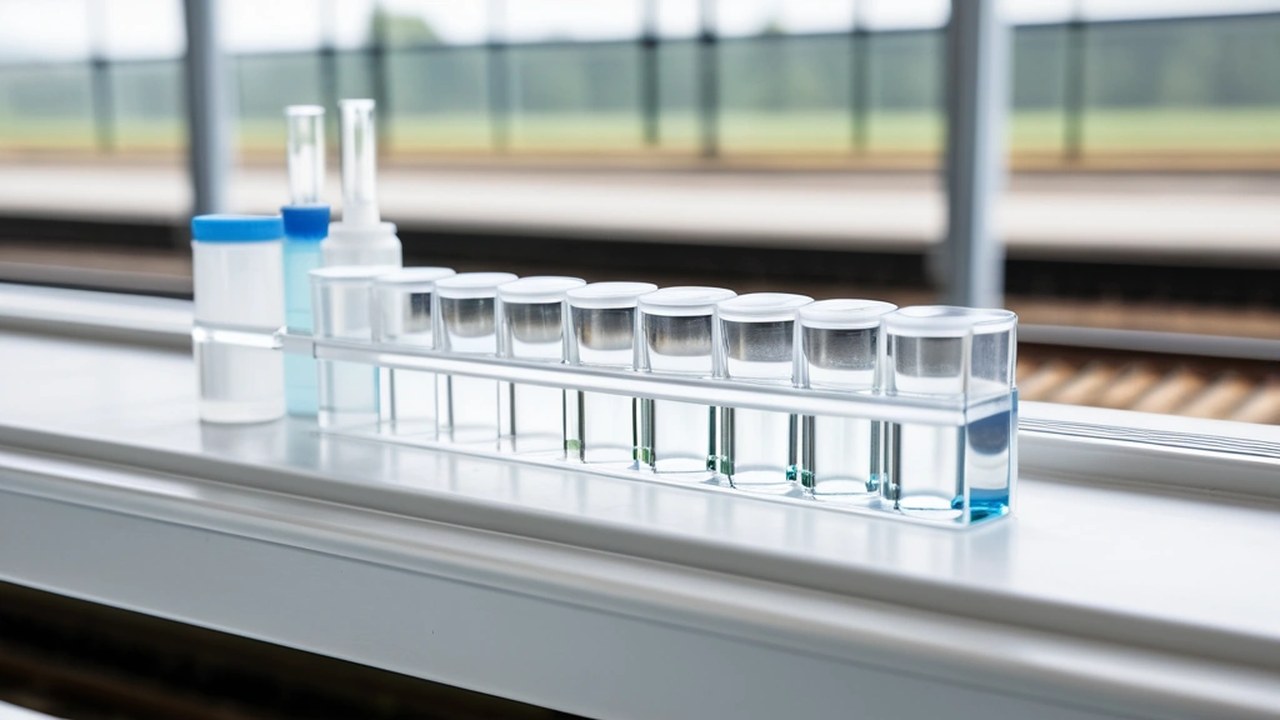
The Varanasi division of North Eastern Railway ran 2,915 residual chlorine tests on drinking water between 18 August and 20 September, and sent 415 samples for bacteriological testing and 46 for chemical analysis, according to figures released by the railway.
The checks covered 204 stations and 115 railway colonies in the division, along with depots, railway hospitals, running rooms, crew lobbies and offices. A team was also out on Friday taking samples at the station and in railway colonies as part of a special drive.
The chemical analysis of the 46 samples was done at a state government laboratory.
The railway says drinking water in its system is checked at the source and along the supply chain, not only at the tap. Staff inspect overhead tanks, water coolers, filters, pipelines and pumping systems. At stations, the checks cover water booths, hand pumps, water vending machines, tanks, coolers and pipelines.
Chlorine is the first line of defence. The railway health department's team uses a chloroscope to measure residual chlorine, a test that is done daily. Bacteriological tests are done every week, using H2S vials and HiMedia kits. Where a more detailed check is needed, samples go to an authorised laboratory for chemical testing, which is done every six months at the state government lab.
Samples are being taken under the supervision of chief health inspectors, following a set sampling protocol, according to the railway.
The railway says overhead tanks, water coolers, UV-RO systems, filters, taps and pipelines are regularly cleaned and disinfected. It is also carrying out preventive maintenance, servicing the systems before they break down rather than after.
"Keeping in mind the health of passengers and railway families, continuous monitoring is being done from the water source to the distribution system," the railway administration said. Health and engineering teams are carrying out inspections and maintenance according to a fixed schedule, it said.
The numbers are large because the division is large. Its 204 stations range from big terminals such as Banaras and Varanasi City to small wayside halts.
Drinking water at stations has drawn complaints in the past. In August, questions were raised over algae in water at some railway stations in Varanasi. The latest figures are the railway's own account of how it is checking the water supplied at its stations and in the colonies where its staff live.
The railway has not released the results of the 415 bacteriological or 46 chemical tests, and has not said whether any samples failed. Passengers who find a problem with water at a station can report it through the RailMadad helpline 139 or the RailMadad app.
Sources and reporting
North Eastern Railway Varanasi division information on water-quality monitoring, 18 Aug–20 Sep 2026: 2,915 residual chlorine tests, 415 bacteriological, 46 chemical (state lab), across 204 stations and 115 colonies; chloroscope, H2S vials, HiMedia kits.
Related Stories
VMC Launches Doorstep E-Waste Pickup With On-the-Spot Payment

Family Alleges Youths Chased Car, Assaulted Women and Children Near V-2 Mall in Lanka

Sigra-Trained Shooter Kamaljeet Wins Asian Games Gold in Mixed Air Pistol
Sarnath Police Arrest Three Over Locked-House Burglaries, Claim ₹7 Lakh Recovery

Varanasi POCSO Court Sentences Coaching Teacher to 10 Years for 2018 Attempted Abuse