
Multi-State Distillery Disputes Reach Supreme Court; Centre Clarifies Stance on National E20 Fuel Policy
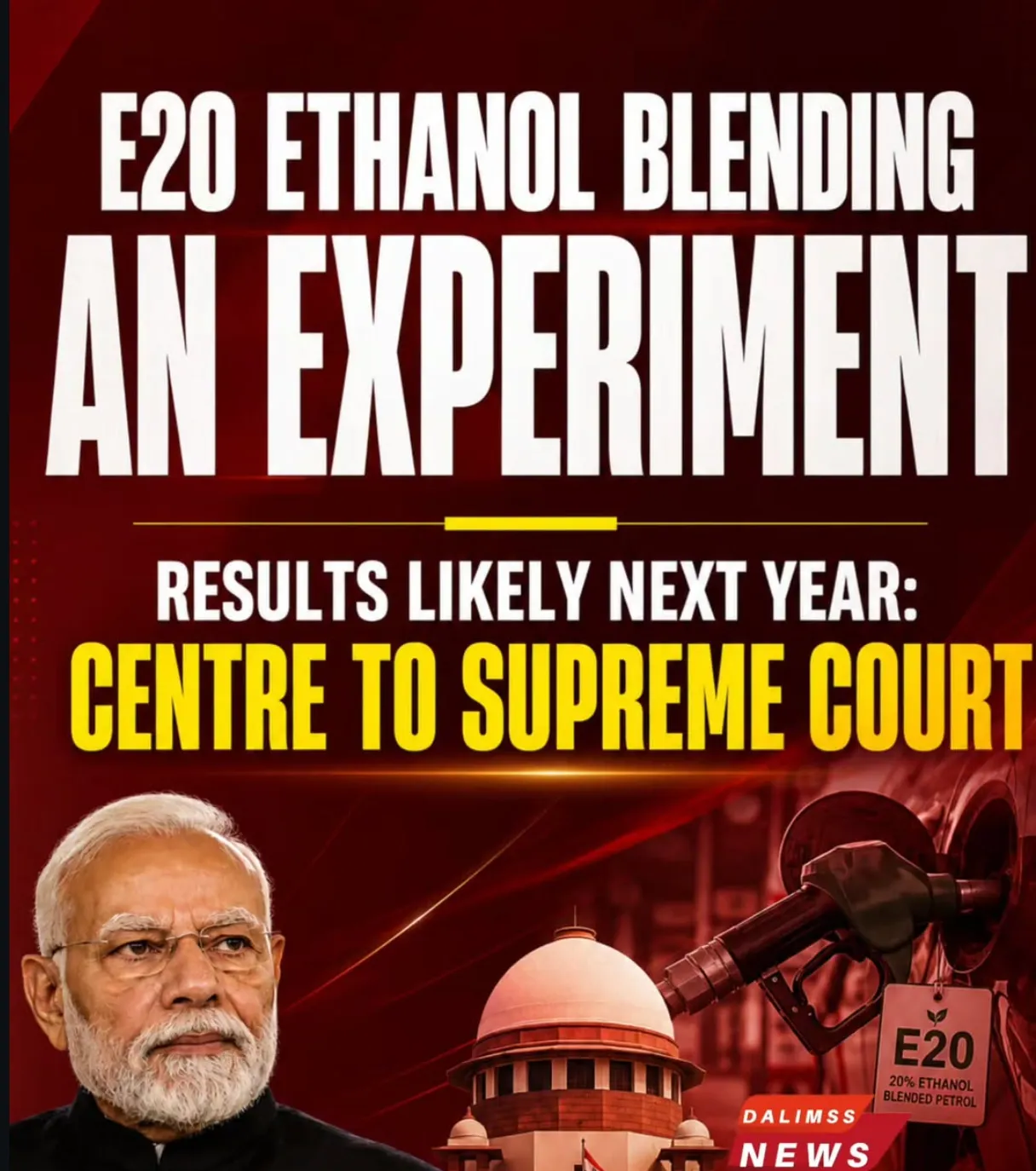
NEW DELHI — India’s high-stakes push toward green mobility has taken center stage at the apex court. The Supreme Court has ordered a strict status quo on nationwide ethanol supply allocations for the 2025–26 supply year, stepping directly into an escalating legal battle between state-owned Oil Marketing Companies (OMCs) and private distilleries.
The legal intervention comes amid intense public debate surrounding vehicle compatibility, mileage, and the long-term impact of the country's E20 (20% ethanol-blended petrol) rollout.
The Allocation Row That Sparked the Apex Appeal
The matter reached the Supreme Court via a Special Leave Petition filed by Bharat Petroleum Corporation Limited (BPCL). BPCL challenged a controversial Karnataka High Court order that directed OMCs—including Indian Oil (IOCL) and Hindustan Petroleum (HPCL)—to re-evaluate and potentially enhance the supply quotas of a dedicated private distillery.
Representing the OMCs and the central government, Attorney General R. Venkataramani argued that individual high court interventions risk completely destabilizing the country's structured green energy framework. The government informed the court that procurement contracts for the 1,050 crore liters required annually had already been finalized and locked in back in October 2025.
Because an oversupply of ethanol has triggered parallel lawsuits by distilleries across multiple states, the Centre announced it will file a formal transfer petition to consolidate all provincial cases directly under the Supreme Court to avoid conflicting judicial mandates.
Debate Over the "Experiment" Tag
The courtroom proceedings triggered widespread public attention following initial media reports claiming the Attorney General had characterized the E20 blending mandate as an "ongoing experiment" whose definitive impacts would only be clear next year.
Responding swiftly to correct the narrative, the Ministry of Law and Justice and the Office of the Attorney General issued an official clarification completely denying the use of the word "experiment" in relation to national policy.
"At no stage was any submission made that the Government's Ethanol Blended Petrol (EBP) Programme or the E20 blending programme is an 'experiment,'" the Ministry statement clarified. "It is a binding, heavily tested national policy initiative."
The government emphasized that while ongoing research and technical assessments continue dynamically on the ground for even higher future blends (such as E22, E30, and E85), the foundational E20 standard is a finalized, secure, and permanent fixture across Indian fuel stations.
Macro Benefits vs. Consumer Concerns
The legal tussle unfolds against a backdrop of deep consumer curiosity and skepticism regarding the nationwide fuel shift. While automotive forums and social media channels are filled with debates over fuel efficiency drops and material degradation in older vehicle engines, the Ministry of Petroleum and Natural Gas has aggressively defended the safety of the rollout.
Key IndicatorReported Impact / StanceForeign Exchange SavingsOver ₹1.4 lakh crore saved by curbing crude oil imports.Vehicle Insurance ImpactExplicitly ruled safe; E20 fuel usage does not invalidate vehicle insurance policies.Consumer Mileage ClaimsTesting continues to optimize engine calibrations for minor energy-density variances.Future RoadmapTargets are already shifting past E20, aiming for a 30% blending benchmark by 2030.
Related Stories
Biker Dies After Thar Hit on Golf Course Road

Court Orders Probe Into Body Handling Lapses
Two Held After Rs 54,000 Robbery Near Rampura
DTCP Notices 30+ Buildings Over PGs in SL-3

Thar Driver Held After Dwarka Expressway Crash