To apply for a Kisan Credit Card, obtain the application from your bank's official website or branch, provide details of cultivation and the required records, and submit it to the lending bank. A Common Service Centre can also help transmit the simplified application. KCC is a repayable agricultural credit facility: receiving PM Kisan assistance does not by itself sanction a loan.
The practical questions are whether your activity qualifies, which documents establish it, and how the bank calculates your drawing limit. Check the lender's current terms before submitting an application. This guide reflects official pages checked on 14 November 2026 at 21:55 IST.
| Question | What to check |
|---|---|
| Who can apply? | Owner cultivators, eligible tenants, sharecroppers and farmer groups |
| Where to apply? | The participating bank's official application channel or branch |
| Is the loan amount fixed? | No. Cultivation needs and the bank's assessment determine it |
| Upcoming change | RBI's June 2026 commercial bank directions apply from 1 January 2027 |
Kisan Credit Card eligibility: who can apply?
The RBI's KCC master circular includes individual and joint borrowers who cultivate their own land. Tenant farmers, oral lessees and sharecroppers are also included, along with Self Help Groups and Joint Liability Groups of farmers. Applicants should ask how their bank documents their particular cultivation arrangement.
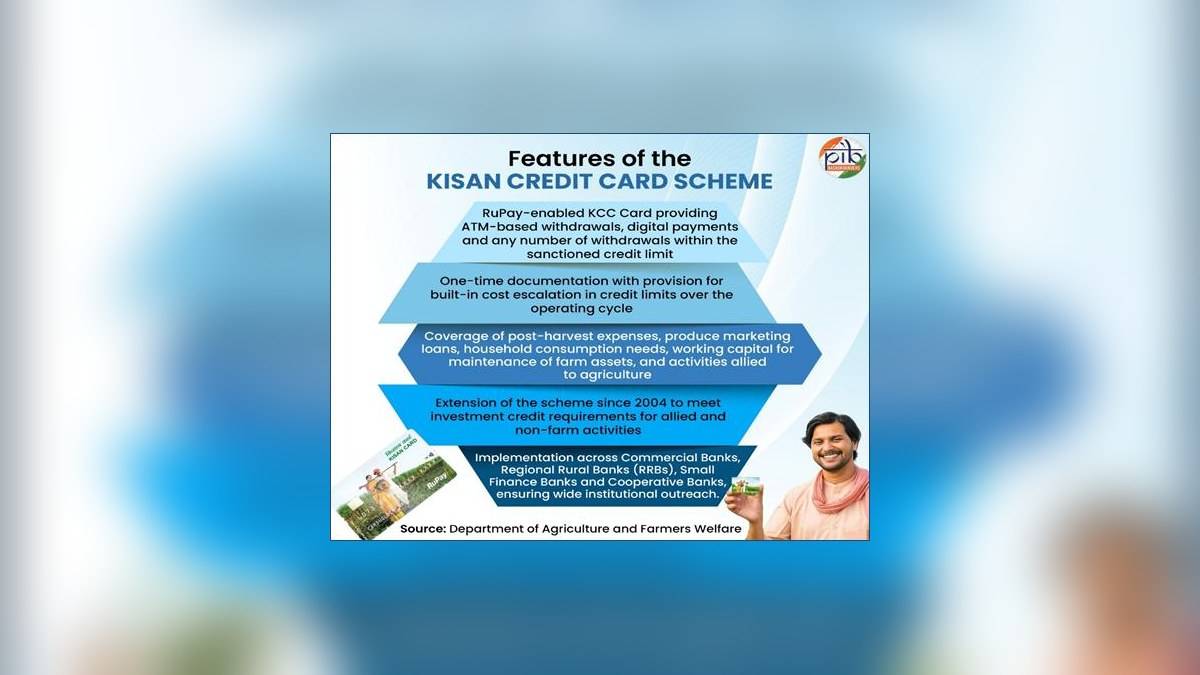
KCC combines several farming needs. The framework covers crop production, post harvest expenditure and household consumption needs, as well as maintenance and agricultural investment requirements. Short term borrowing and investment borrowing have different repayment patterns. A farmer should identify the purpose of each component instead of treating the entire sanctioned limit as one undifferentiated loan.
The RBI circular links the crop limit to the district's scale of finance and cultivated area, with specified additions for related needs. Changes in cropping pattern can require a revised calculation. A headline scheme ceiling therefore cannot tell an individual applicant how much the branch will sanction.
Kisan Credit Card online apply: documents and steps
The government's 11 March 2026 KCC backgrounder describes a simplified one page form using basic information from banks' PM Kisan records. Applicants supply land records and details of crops grown. Forms are available through scheduled commercial banks, the Agriculture Department and the PM Kisan portal. Authorised Common Service Centres can help complete and transmit them to the relevant branch.
- Open your bank's official KCC page and obtain its application form.
- Enter the applicant details and describe the land, acreage and proposed crops accurately.
- Attach the records requested for your borrower category.
- Submit through the bank's stated channel, or take the completed papers to the branch.
- Keep the submission acknowledgement and ask the branch how to follow the application.
Do not assume that downloading a form completes an online loan application. The bank must receive it and assess the request. Ask the receiving branch whether any papers remain outstanding and retain the reference it provides. Use that reference when checking progress.
As a lender specific example, SBI's KCC page lists an application, two passport photographs, revenue certified landholding proof and the cropping pattern with acreage. Security documents can be required above the applicable threshold, alongside other documents specified in the sanction. Applicants with tenancy arrangements should confirm the records the branch accepts before collecting papers.
KCC interest rate, collateral and repayment
SBI describes its facility as revolving cash credit and lists a five year tenure subject to annual review. It states that collateral is waived up to Rs 2 lakh, with a higher threshold of Rs 3 lakh in specified tie up arrangements. These are lender terms, and the branch should confirm their application to your case.
For loans up to Rs 3 lakh, SBI lists 7% annual interest subject to government interest subvention, and a 3% prompt repayment incentive. The effective cost depends on meeting the conditions. Ask for the applicable rate, due date, incentive requirements and charges in the sanction letter. Borrowing remains repayable even when a subsidy or incentive applies.
What changes under RBI's 2026 KCC directions?
The commercial bank directions issued on 19 June 2026 introduce a six year composite facility for loans sanctioned from 1 January 2027. Earlier loans continue under the existing guidelines until maturity or their next renewal. Applicants in November 2026 should distinguish an announced future framework from the terms of a loan being sanctioned now.
The directions also set out one time documentation and provisions for establishing tenancy or cultivation by sharecroppers and oral lessees. Confirm the applicable framework with the lender when applying or renewing. The cited application guidance does not establish a nationwide closing date or a single application status portal for every bank. Your lending branch is the first contact for documents, deadlines and application assistance.
For related scheme checks, read our guides to PM Fasal Bima Yojana, PM Kisan Maandhan and e-Shram registration. Their benefits and application processes are separate from a KCC loan.