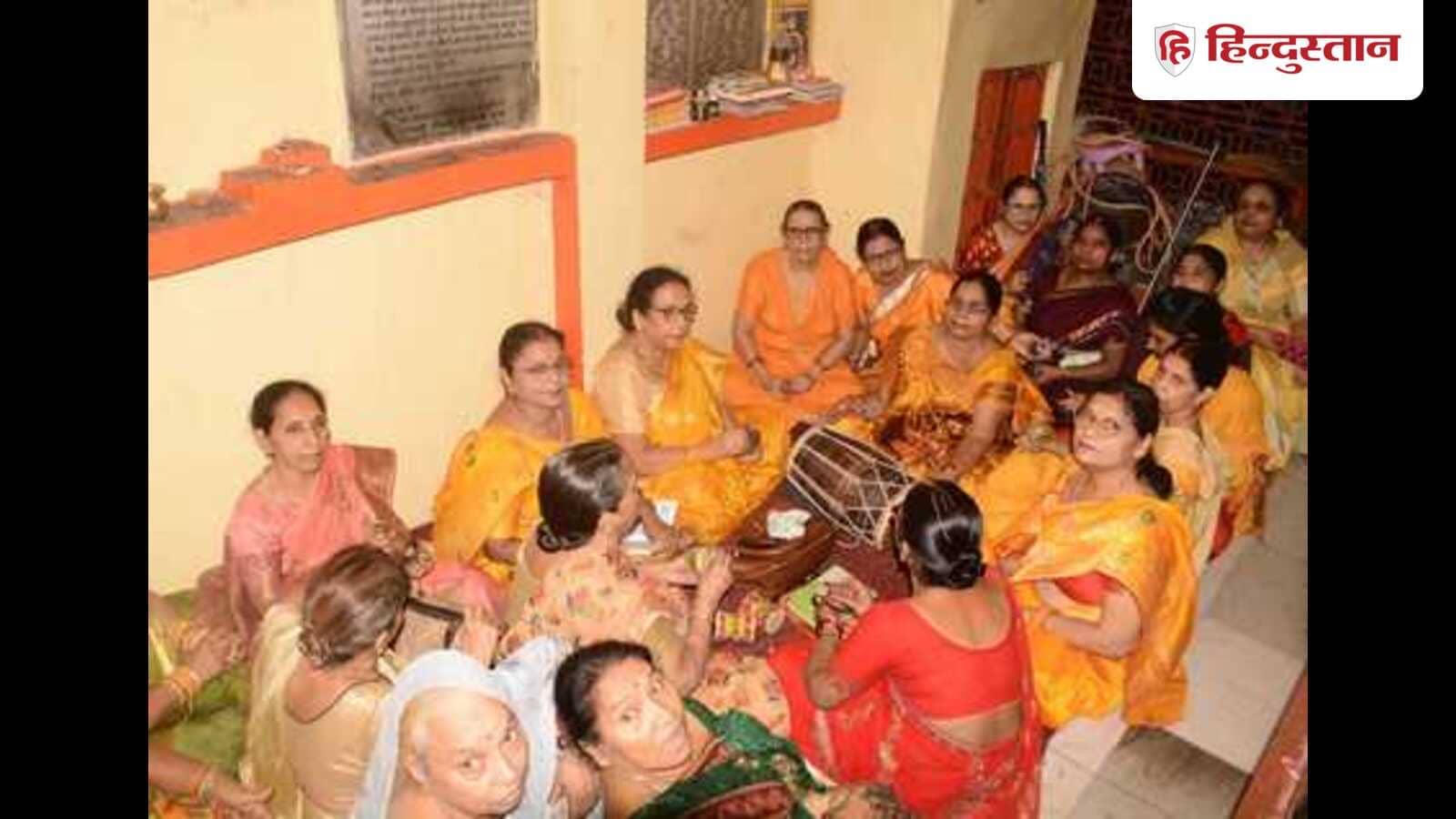
VARANASI: The sixth day of the Janmashtami observance at Nitya Naya Hanuman Temple in Nati Imli sounded less like a formal stage programme and more like a family courtyard on Wednesday, as women sang Sohar songs for Kanha Chhathi and shared a traditional post-birth preparation as prasad.
Members of the temple's women's group decorated Laddu Gopal with bela, rose and other fragrant flowers. Perfume was used across the temple, and the women arrived in coordinated clothing for the ceremony. Their songs drew on the Sohar tradition usually associated with the arrival of a child, placing Krishna's divine childhood within a recognisable domestic celebration.
Offerings included a variety of dishes, sweets, butter and Sothaura. Organisers said roughly 25 kilograms of Sothaura were offered before being distributed among visitors. In Purvanchal households, the preparation is associated with the period after childbirth and commonly uses dry ginger and other warming ingredients. Its presence made the ritual local in taste as well as music.
The group also performed gestures familiar from a newborn's sixth-day celebration, including applying kajal and offering nyochhavar. Members named in the organisation of the programme included Prabha, Shiv Rani, Munni, Sushma, Suman, Seema, Rekha, Vidya, Pratibha and Anita. The collective nature of the event was important: the worship was carried not by a celebrity guest but by women who gather at the temple for regular bhajan and kirtan.
Kanha Chhathi sits in the quieter stretch of the religious calendar after the midnight crowds of Janmashtami. It extends the festival by changing its scale. Instead of focusing only on Krishna's birth, it allows devotees to inhabit the days that follow, using household customs to express affection and care.
For neighbourhood temples, these observances also preserve forms that can otherwise shrink to brief social-media clips. A complete Sohar sequence, the preparation of community prasad and the shared work of decoration require rehearsal, memory and time. Younger participants learn the tradition by being present for that work, not by reading a programme note.
Food distribution at any crowded religious gathering needs clean serving vessels, protected ingredients and orderly queues, particularly during humid weather. Organisers should also label preparations containing nuts or strong spices where possible, since not every visitor will know what is in a traditional recipe.
Wednesday's celebration did not compete with Varanasi's larger temple festivals. Its charm came from doing something more intimate: treating the deity as the youngest member of the neighbourhood, welcoming him through the songs, scents and tastes with which Banarasi families have long marked a child's first days.