
Kaal Bhairav Ward Inspection Puts Drains, Cleanliness and Temple Route Under Review
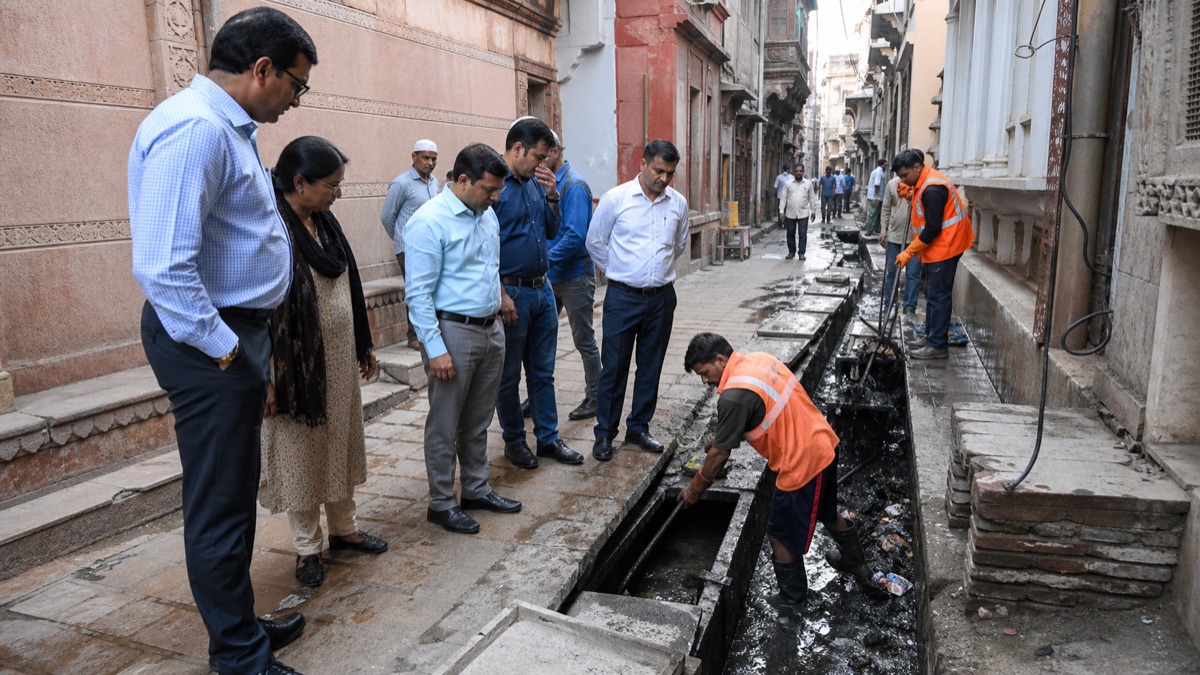
Varanasi Mayor Ashok Kumar Tiwari and Municipal Commissioner Himanshu Nagpal have inspected ongoing development and sanitation work in Kaal Bhairav ward, focusing on cleanliness, drain conditions and the route leading to the temple. The visit places a tightly packed old-city neighbourhood—where worship, residence and commerce overlap—under renewed civic scrutiny.
The temple approach is especially sensitive to small service failures. A blocked drain can spread wastewater across a lane used by barefoot devotees; poorly timed waste collection can obstruct shopfronts; and beautification work can narrow movement if materials are left unmanaged. Residents need maintenance that respects daily routines, while visitors need clear access and basic hygiene.
Inspection photographs can demonstrate presence, but ward performance requires a work list. Officials should identify which drains need desilting or repair, how often sweeping and collection will occur, and whether beautification involves surface treatment, lighting, signage or structural work. Heritage language should not become a substitute for engineering detail, particularly in lanes where old buildings and underground utilities create genuine constraints.
Local shopkeepers, priests, sanitation workers and households all see different parts of the problem. A short ward-level consultation can prevent a design that looks polished but fails during rain or festival crowds. The administration should also make sure workers have protective equipment and that debris is removed promptly rather than shifted to the next corner.
Civic announcements are ultimately judged street by street. A direction issued from the municipal headquarters becomes meaningful only when a resident can see a repaired surface, a working light, a resolved tax record or a cleaner public space. That is why the measurable details in this update matter: they create a baseline against which ward officials, contractors and citizens can assess whether the promised action has moved beyond the meeting room.
Varanasi presents an unusually demanding operating environment. Dense neighbourhoods, pilgrim traffic, monsoon stress and overlapping responsibilities among the municipal corporation, public works, utilities and police can turn a small maintenance delay into a serious mobility or sanitation problem. Clear ownership, realistic deadlines and publicly accessible complaint channels are therefore as important as the announcement itself. Residents should also receive advance notice whenever work disrupts access or traffic.
The immediate follow-up is documentation: completion dates, ward-level progress and a record of complaints closed rather than merely forwarded. Public money and staff time are involved, so the corporation should communicate results in plain language and correct the record if targets change. This report will treat the latest official update as the starting point, not the end of accountability, and will avoid claiming outcomes that have not yet been independently visible on the ground.
Sources and reporting
Reported on 9 August 2026 from the latest official Varanasi Municipal Corporation ward-inspection update.
Related Stories
VMC Launches Doorstep E-Waste Pickup With On-the-Spot Payment
Family Alleges Youths Chased Car, Assaulted Women and Children Near V-2 Mall in Lanka

Sigra-Trained Shooter Kamaljeet Wins Asian Games Gold in Mixed Air Pistol
Sarnath Police Arrest Three Over Locked-House Burglaries, Claim ₹7 Lakh Recovery

NER Varanasi Division Runs 2,915 Chlorine Tests on Station and Colony Water