
Harahua–Puari Kala Road Turns Into Mud Track, Disrupting Daily Travel
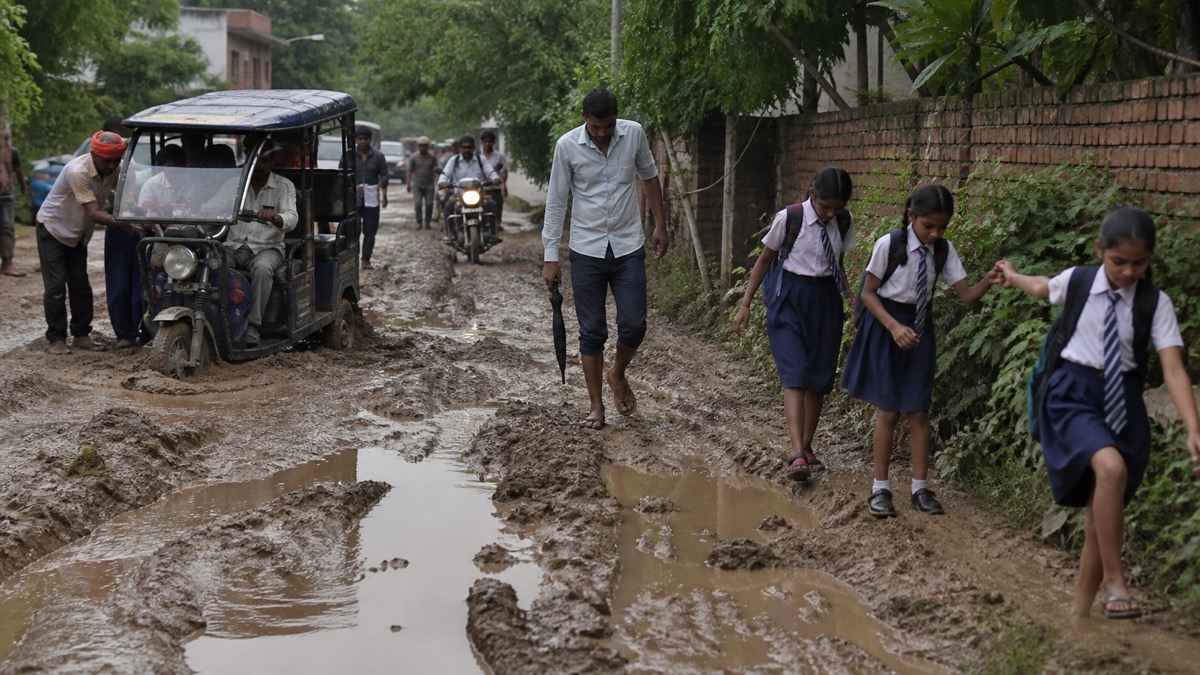
Varanasi: The road linking Harahua with Bhopapur and Puari Kala has turned into a muddy, rutted track in the rain, making routine travel difficult for villagers, schoolchildren and e-rickshaw drivers. Vehicles are getting stuck or forced to crawl, while pedestrians pick their way along the narrowest dry edge.
Monsoon damage is often described as temporary, but its consequences accumulate. A child reaching school with wet shoes, a patient delayed on the way to a clinic and a trader unable to move goods all pay for the same missing all-weather surface. Two-wheelers face the added risk of slipping into deep ruts hidden by brown water.
The affected route serves several settlements, which means the disruption cannot be dismissed as an internal village lane. It connects people to the wider Harahua area and onward transport. When e-rickshaws refuse the stretch or charge more because of damage, households without private vehicles become particularly isolated.
A durable repair must begin with drainage. Simply spreading soil or broken brick can create a brief improvement before the next shower mixes it back into mud. Engineers should identify where runoff crosses the road, whether side drains have an outlet and whether the base can carry present traffic. Raising the surface without providing water a route away may flood adjoining homes or fields.
Authorities should also clarify the status of any planned construction. Residents need to know the responsible agency, sanctioned length, contractor if appointed and expected start date. Until permanent work begins, dangerous pits can be marked, the worst points compacted with suitable material and emergency passage maintained. Such steps are not a substitute for paving, but they can reduce immediate risk.
The Harahua–Puari Kala road illustrates a wider rural maintenance problem: connectivity is counted when a route is first built, while usability is rarely measured through the rainy season. A road that exists on paper but cannot reliably carry a school van or ambulance is not complete infrastructure. The current condition calls for a site inspection and a public timeline before another spell of rain deepens the ruts and the frustration of the communities along them.
School authorities should monitor attendance from the affected settlements while the road remains damaged. A transport barrier can quietly become an education barrier when repeated lateness or absence is recorded as a family failure. Coordination between the road agency and local schools would ensure the human cost is documented while engineers plan the physical repair.
Sources and reporting
Based on local reporting published on 14 August 2026 about monsoon conditions on the Harahua–Bhopapur–Puari Kala route. The article describes visible and reported access problems without asserting an unconfirmed contractor or budget.
Related Stories

Ramnagar Day Three Follows Vishwamitra Into the Forest and Mithila
Shivpur Ramlila Stages Narad Moh and Kshirsagar Tableau Through Rain
VMC Puts City on Alert for Navratri and Durga Puja Civic Arrangements
Chowk Becomes Varanasi's First Police Station With ISO 9001 Certificate
World Tourism Day: Guides Welcome Visitors; Namami Gange Cleans Namo Ghat