
Half-Hour Rain Floods Varanasi Highway Service Lane as Drain Overflows
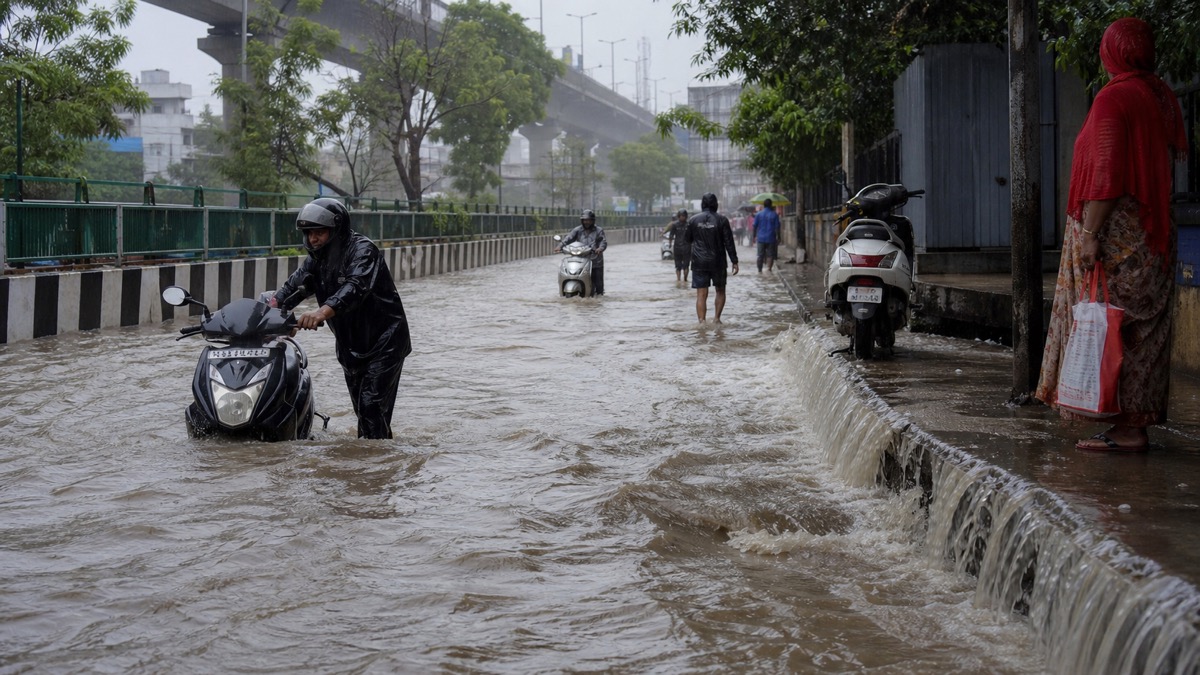
VARANASI: Barely half an hour of rain was enough to submerge a highway service lane in Varanasi after water from an overflowing drain spread across the road, slowing vehicles and forcing pedestrians to navigate along the edge.
Short, intense monsoon spells are not unusual. What turns them into a street emergency is a drainage system unable to carry the first surge. Silt, construction debris, undersized outlets or a blocked downstream channel can all push water back onto a service road.
The initial report establishes the visible problem but not its precise engineering cause. The highway authority, municipal team and contractor—where maintenance is outsourced—should inspect the full drainage line before assigning responsibility.
Why service lanes flood quickly
Service roads often sit below the main carriageway and collect runoff from a wider paved area. If an inlet is covered by litter or the outlet level is too high, water has nowhere to go. Ramps and informal crossings can also interrupt the drain, creating pockets where water remains after the rain stops.
For two-wheelers, the danger is not only skidding. Floodwater hides potholes, open covers and broken shoulders. Drivers should reduce speed and avoid following larger vehicles whose wake can destabilise a motorcycle. Pedestrians should not step into moving water when the road edge is invisible.
An inspection that produces a fix
Crews should first clear the visible choke point, then use levels or camera inspection to check the downstream section. Simply pumping the road dry treats the symptom. Desilting records and pre-monsoon completion photographs can show whether routine maintenance was actually carried out.
Officials should mark any open manhole and deploy traffic control until the water recedes. If sewage is mixed with runoff, sanitation staff need protective equipment and nearby residents should be warned against contact.
The authority can make the repair auditable by naming the affected stretch, the cause found and the date for permanent work. Residents’ videos are useful evidence of depth and duration, but inspection should not depend on a clip going viral each time it rains.
A half-hour shower is a practical stress test. This service lane failed it. Before the next spell, Varanasi’s road and drainage agencies have a narrow window to clear the line, correct the level problem if one exists and demonstrate that water can move through the system instead of across the path of traffic.
The next rainfall will show whether the intervention worked. Officials should photograph fixed points before and after cleaning and record how long water takes to drain. A measurable result would allow residents to distinguish a permanent repair from another short-lived response to public anger.
Sources and reporting
Based on a Dainik Bhaskar report published August 13, 2026. The report documents immediate waterlogging; the engineering cause and responsibility require inspection by the road and drainage authorities.
Related Stories

Dextr AI raises $6.7 million seed led by Elevation Capital

Beats 360 headphones land in India at Rs 42,900

vivo V80 confirmed for India launch on October 6

OPPO K14 Plus set for India launch on September 29 via Flipkart

SEBI clears Rs 25 lakh PRIM route for mutual-fund portfolios