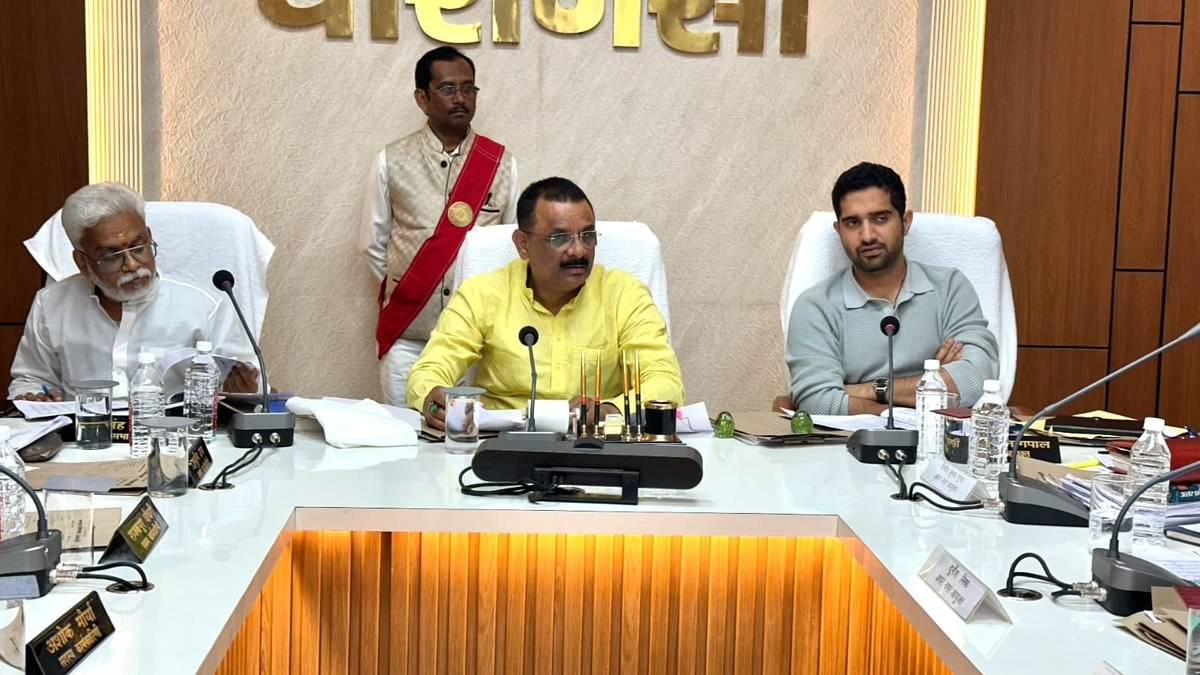

GURUGRAM: A committee led by the Additional Deputy Commissioner will identify government land for dedicated ready mix concrete zones outside the city's municipal limits, following a decision discussed on Thursday, November 5, 2026. The proposal affects concrete plant operators and residents exposed to dust and heavy construction traffic. The discussion took place at the Mini Secretariat near Rajeev Chowk, and GMDA published its account on Friday, November 6.
The land search will examine sites belonging to the Haryana State Industrial and Infrastructure Development Corporation and village panchayats. More than one zone could be developed if the assessment establishes a need for separate locations. The administration has begun identifying suitable land, with recommendations still to come from the committee.
Who will identify the sites
GMDA chief executive P.C. Meena outlined the arrangement at the 14th District Coordination Committee meeting, chaired by D.S. Dhesi, the Haryana government's principal adviser on urban development. The official release published on November 6 identifies the Additional Deputy Commissioner as committee chair and GMDA's District Town Planner for Enforcement, R.S. Batth, as member secretary.
Representatives of the district administration, Municipal Corporation of Gurugram, Municipal Corporation of Manesar and HSIIDC will serve on the committee. That brings the two municipal bodies and the state industrial land agency into the same site identification exercise. The priority is available government land beyond municipal limits, assessed for whether it is suitable for the proposed use.
Dhesi asked the committee to complete its examination within a stipulated timeframe and submit recommendations promptly. The release does not specify a calendar deadline, identify a selected village or announce a land allotment. Its next identifiable step is the committee's recommendation of potential locations. A final zone boundary or relocation date cannot yet be drawn from the announcement.
The proposal had also been discussed earlier in November at a meeting chaired by Chief Minister Nayab Singh Saini, according to GMDA. Thursday's account adds a defined committee and the categories of public land it will examine. The possibility of several zones remains part of the assessment rather than a confirmed number of facilities.
Dust, plant operations and road damage
GMDA gives two linked reasons for creating the zones: pollution from unregulated concrete plant operations and damage to city roads associated with heavy vehicle movement. The authority expects planned locations to reduce the movement of these vehicles within the city and ease the traffic burden connected with concrete production and delivery.
Those are the administration's intended outcomes. The release supplies no traffic reduction estimate, pollution measurement, project cost or count of plants that would move. It describes a framework for organising the activity, with the land exercise needed before the locations can be settled. Existing operators therefore have a planning announcement to follow, rather than an individual relocation instruction in this document.
The city's earlier enforcement drive provides relevant background. Previous coverage recorded the demolition of eight concrete plants in October. The November proposal addresses where regulated operations could be accommodated. It introduces a land identification process, while the earlier action concerned particular plants.
What pollution control involves at a concrete plant
A separate pollution board procedure from December 2013 explains the environmental issues associated with these facilities. This is background to the new location proposal. The document calls for controls on emissions from cement and fly ash storage silos and feeding sections, alongside stacks with sampling arrangements.
It also describes paved internal surfaces and sprinklers to suppress dust from movement within a plant. Aggregate storage areas need wetting, while conveyors and feeding hoppers should be covered. For wastewater, the procedure discusses treatment, sludge separation and arrangements connecting washing platforms to settling and recirculation tanks. It says settling tanks alone do not provide complete treatment of the effluent described.
The document connects these measures with applications for consent to establish and operate. Those details explain why a planned production location and pollution control arrangements address different parts of the problem. The zoning release itself sets out the land search and its objectives, without replacing that separate consent procedure.
- Decision discussed: November 5, 2026; official account published November 6.
- Land options: suitable HSIIDC and panchayat land outside municipal limits.
- Next step: committee recommendations on potential locations.
Residents can also read the city's earlier directions for night checks of road sweeping and pothole repair instructions for dust control for context on the separate road maintenance work.