
GMDA Removes 425 Sheds and 225 Ramps in 15-Kilometre Gurugram Drive
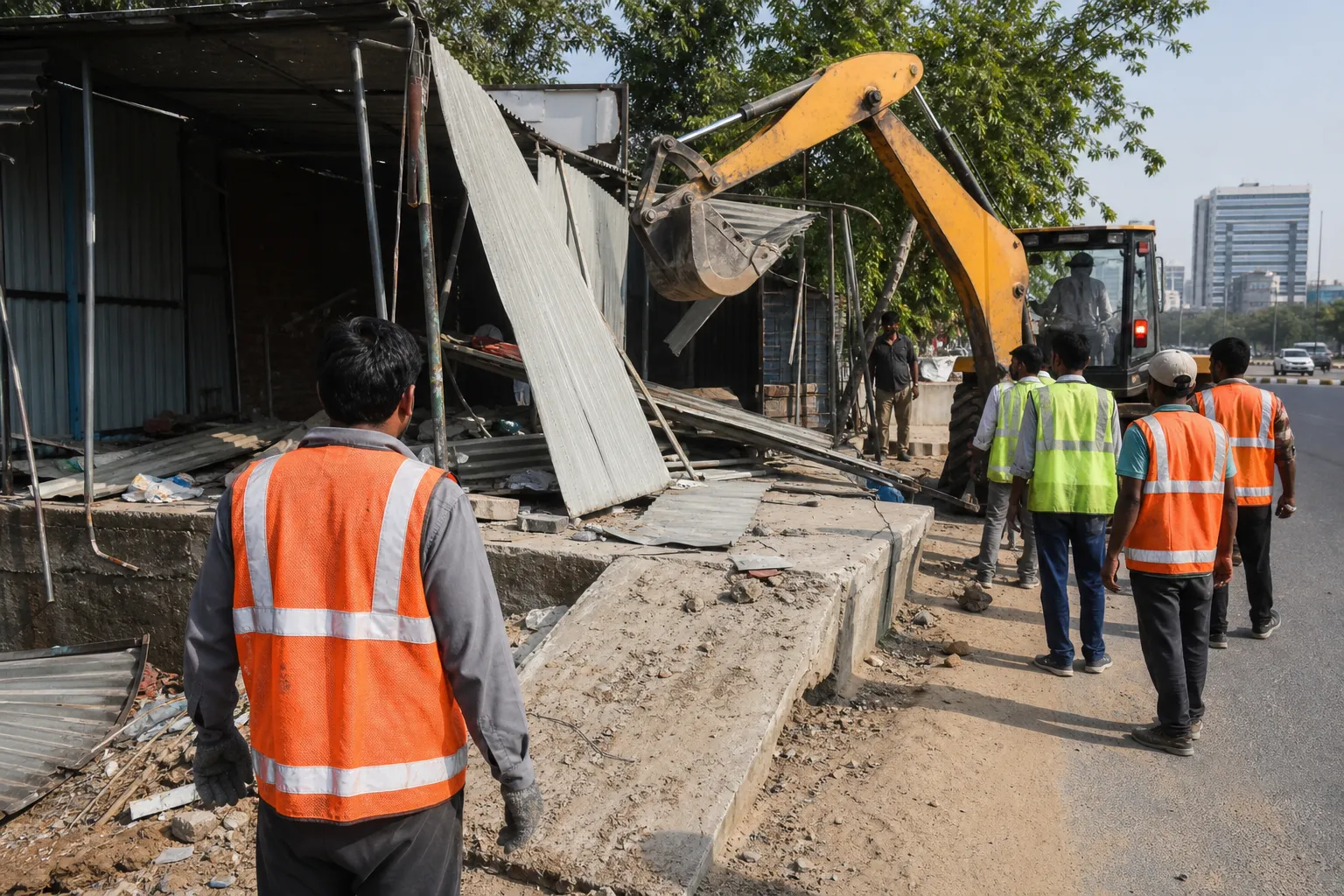
GURUGRAM: The Gurugram Metropolitan Development Authority says its enforcement teams removed about 425 illegal sheds, 225 ramps and 50 carts during a drive across nearly 15 kilometres of city roads on Tuesday. The operation covered older sectors, busy market corridors and parts of New Gurugram, turning a broad anti-encroachment order into one of the month's largest physical clearance exercises.
The main corridor ran from Atul Kataria Chowk towards Sheetla Mata Road and Rezangla Chowk, including sectors 7, 9 and 9A and parts of Railway Road. Teams also acted in sectors 81, 86, 90 and 93, where officials said unauthorised boundary walls and access arrangements were removed or closed.
Ramps had pushed deep into public space
Officials said some shop and residential sheds extended beyond private plots, while several ramps on Sheetla Mata Road projected 10 to 15 feet into public land. High ramps are not a minor design issue. They can block footpaths, narrow usable carriageways, interfere with drainage and force pedestrians into moving traffic.
The action followed Supreme Court directions issued on August 4 asking civic agencies to clear encroachments from roads and public spaces. GMDA deployed 12 field teams, 36 officials and 14 earthmovers. Officials said resistance was reported at some locations, but owners generally complied after the basis of the drive was explained.
Clearance is only the first half of enforcement
The authority has promised monitoring to prevent the cleared stretches from being occupied again and said demolition debris would be lifted promptly. Both commitments are essential. Rubble left on a shoulder can reproduce the obstruction in another form, while a vacant strip without barriers or regular inspection is often reclaimed within days.
A useful follow-up would publish corridor photographs, measurements and a date for debris removal. That record would show whether a pedestrian path, drain or road shoulder was actually restored. It would also make enforcement more defensible by demonstrating the public-space boundary used in each action.
Consistency will decide public support
Residents often support clearer footpaths but question why enforcement appears concentrated in some neighbourhoods while longstanding commercial encroachments survive elsewhere. A citywide schedule, notice protocol and appeal channel can reduce the sense that demolition is arbitrary. Emergency access and serious pedestrian obstruction should receive priority wherever they occur.
Tuesday's figures show the scale of occupation that can accumulate along a road network. The durable outcome will not be measured by the number of structures demolished in one day. It will be measured by whether people can walk safely, drains remain open, vehicles turn without blind spots and the same sheds and ramps do not return after enforcement teams leave.
Sources and reporting
Based on GMDA enforcement figures and official statements from the 11 August 2026 anti-encroachment drive across multiple Gurugram corridors.
Related Stories

Dextr AI raises $6.7 million seed led by Elevation Capital

Beats 360 headphones land in India at Rs 42,900

vivo V80 confirmed for India launch on October 6

OPPO K14 Plus set for India launch on September 29 via Flipkart

SEBI clears Rs 25 lakh PRIM route for mutual-fund portfolios