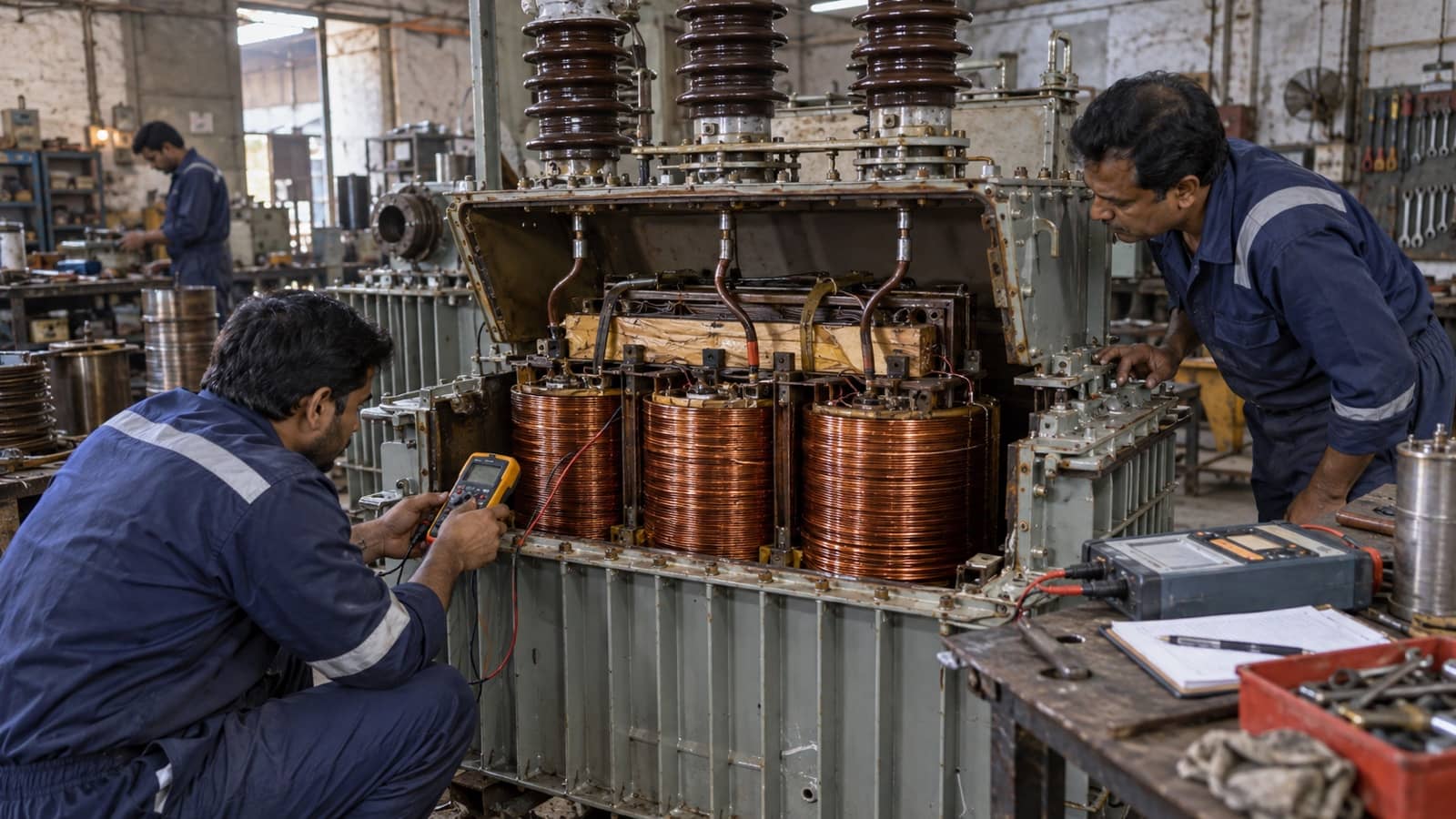
VARANASI: A distribution transformer sent from the major repair workshop at Bhikharipur has come under scrutiny after it failed to operate near Sanskrit University and was found with damaged winding when opened in front of a junior engineer.
The unit had reportedly been repaired before being sent to the site. Its drop-out fuse operated during two attempts to energise it, preventing normal supply. When the transformer was returned and opened at the workshop in the presence of Chowkaghat junior engineer Amit Kushwaha, the winding was found damaged, according to the local report.
The incident has raised questions about whether the unit was fully tested before dispatch. Workshop engineers also examined the distribution line near Sanskrit University to determine whether an external fault had damaged the transformer. That is a necessary check: a failed unit can be caused by poor repair, a network fault, overload or damage during transport. The evidence should establish the sequence before responsibility is assigned.
A proper quality-control record can answer most of the dispute. It should show the transformer's serial number, fault reported on arrival, parts replaced, insulation and ratio test results, oil condition, load test where applicable, dispatch date and the team signing off the work. Line-protection records can show what happened during the two energisation attempts.
For consumers, a transformer that fails immediately is more than a technical embarrassment. It extends an outage, forces crews to repeat transport and installation, and consumes another unit from the spare pool. During periods of high demand, one unreliable repair can delay restoration in several neighbourhoods.
The power utility should preserve the opened unit and issue an internal failure report. If workmanship or skipped testing is confirmed, the workshop needs a corrective audit across other recently repaired transformers. If a line fault caused the damage, that fault must be removed before another unit is connected, or the replacement may fail in the same way.
Safety is central during these tests. Repeated energisation should occur only under authorised procedure with the area isolated and staff at a safe distance. Residents must not approach a transformer emitting smoke, oil or unusual noise and should report the equipment number and location.
The source report presents serious concerns about the Bhikharipur workshop but not a completed departmental finding. The distinction matters. An independent technical record, not speculation, should determine whether this was defective repair or external damage.
Either result requires action. A repair workshop earns trust when every dispatched unit carries evidence that it passed, and when a failure returns as data for improvement rather than disappearing into another round of informal repairs.