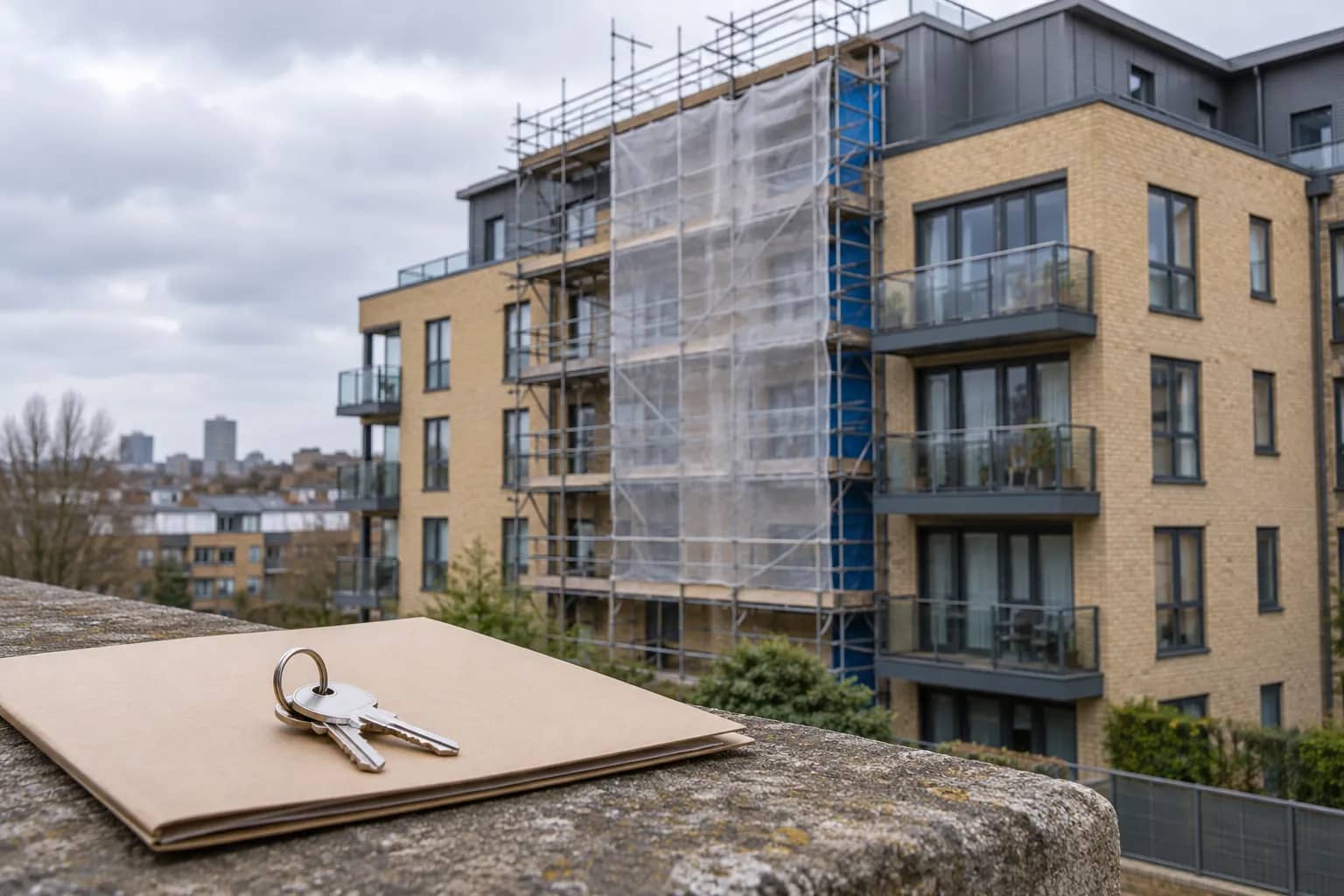
More flat owners in England could receive protection from historic building-safety repair bills under proposals announced by the UK government on 27 October. The package would widen support for some owners currently outside the Building Safety Act protections, including people in collectively owned buildings and those who held four to six properties at the relevant date.
The Ministry of Housing, Communities and Local Government announced the changes during the second reading of the Remediation of Unsafe Cladding Bill. These are proposed changes, not newly available entitlements. The department said further eligibility and funding details would be introduced as the Bill progresses through Parliament or published alongside it.
A separate part of the package concerns buyers whose flat is their only or main home but whose protection depends on a previous owner's circumstances. The government is examining how to narrow that gap. It has not announced a completed eligibility test or an application opening date for that proposed change.
Why a previous owner can determine protection
Under the existing framework, a lease's protected status is generally assessed using circumstances on 14 February 2022. That status passes to later buyers. A subsequent purchaser can therefore acquire a flat as their only home yet remain outside the protections because the lease did not qualify when the original test was applied.
The department's existing guidance makes clear that the protections cover relevant buildings in England, not leasehold homes in Wales, Scotland or Northern Ireland. Its current qualifying-lease test includes a long lease of more than 21 years, responsibility for a service charge, and a lease granted before 14 February 2022.
The present ownership test allows a lease to qualify where the dwelling was the owner's only or main home on that date, or where the owner held no more than three UK dwellings in total. Ownership elsewhere in the UK counts towards that total even though the building-safety protections themselves apply only in England.
Who the proposed support would reach
For owners affected by non-cladding building-safety problems, ministers propose increasing the property limit from three to six. The announced change is aimed at people who owned four to six properties on the qualifying date and did not then qualify. It should not be read as removing every other condition in the current framework.
Another proposed intervention would support residents in collectively owned and enfranchised buildings. The department says the absence of a separate freeholder leaves these residents outside the existing leaseholder protections. New government funding would contribute towards work on internal fire-safety defects that are both high risk and costly to fix.
The announcement does not specify a funding allocation for that intervention or a final set of qualifying costs. Residents therefore do not yet have enough information from this release to calculate an individual award. The promised detail on eligibility and funding remains part of the next stage of the policy process.
Ministers also plan a scheme requiring construction-product manufacturers connected to historic unsafe cladding and insulation products to contribute to remediation costs. The government says it intends to obtain powers to recover those contributions at scale. Details of how that scheme would operate are also due later, rather than being settled in this announcement.
The Bill and the timetable are separate
The Bill was introduced on 14 October. In its explanation at that time, the department said it would impose a duty on responsible building owners to identify, assess and fix safety issues without delay. Obstructing that work could attract criminal penalties, while failure to comply with a remediation order could lead to financial penalties of up to £500,000.
That earlier announcement also described a backstop allowing bodies such as Homes England or local authorities to carry out remediation where those responsible repeatedly fail to act. Buildings without an effective owner would have clearer routes for leaseholders to take over management so essential work can continue. These measures remain part of the Bill, rather than evidence that a particular building has already been taken over.
The government separately expects buildings over 11 metres with unsafe cladding to have been repaired, or to have a clear completion date, by the end of 2029. That is not a promise that every repair will finish by then. For affected leaseholders, the next information to watch is the published eligibility detail and the Bill's progress, not an assumption that the 27 October proposals already cancel existing bills.
Related coverage
Read Dalimss News coverage of the land-record access consultation in England and Wales and the UK household-cost and parental-pay package.