Sewage-Like Drain Water Enters Homes in Lohta’s Kotwa, Residents Seek Action
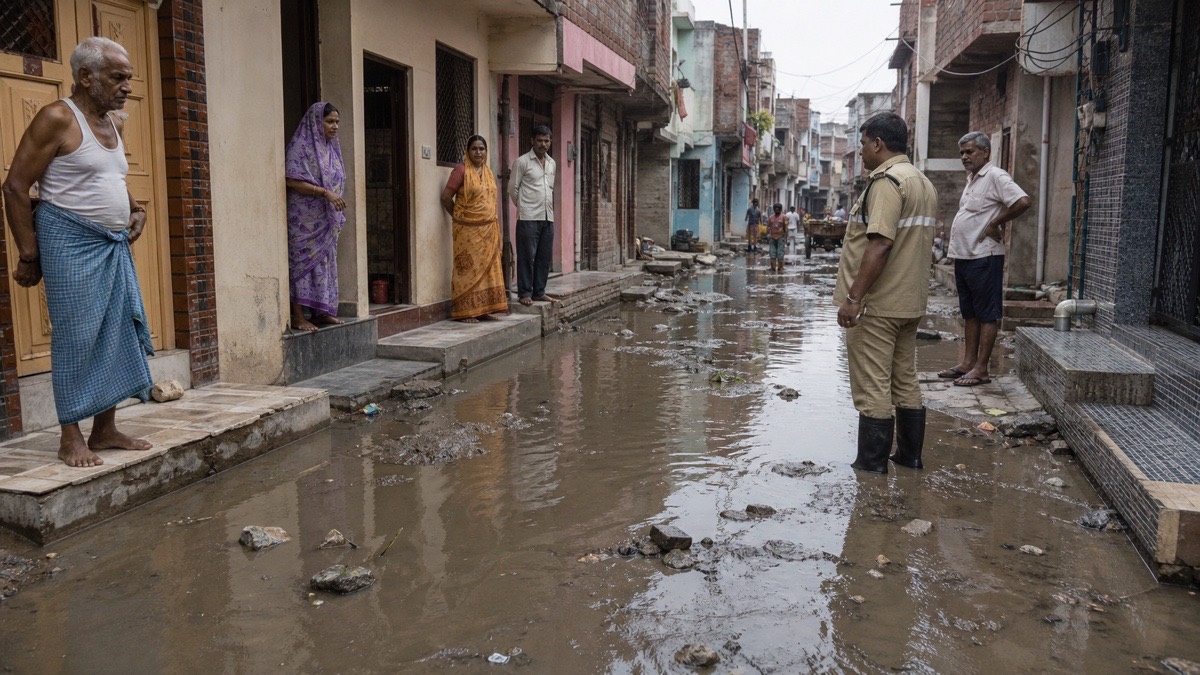
VARANASI: Residents of Kotwa in the Lohta area say dirty drain water is entering their homes and remaining in residential lanes, creating a sanitation problem that has worsened during the monsoon and left families worried about illness.
The complaint is not simply about an unpleasant street. Wastewater crossing doorsteps can contaminate utensils, stored food, hand pumps and the surfaces on which children play. Residents have asked for cleaning and a durable drainage solution rather than another short visit that moves the blockage a few metres.
What needs immediate attention
Municipal or panchayat teams should first identify whether the water comes from a blocked drain, a damaged sewer, insufficient outfall capacity or rainwater mixing with household discharge. The correct response depends on that diagnosis. Desilting will not fix a collapsed pipe; pumping alone will not help if the outlet immediately returns water to the lane.
Health workers should assess homes reporting fever, diarrhoea, skin infection or mosquito breeding. Residents’ statements that people are falling ill require verification, but the exposure risk is credible enough to justify preventive action before laboratory results arrive.
Short-term measures include clearing solid waste, pumping stagnant stretches, disinfecting affected public areas and covering dangerous openings. The administration should also provide a contact for households whose drinking-water source may have been contaminated.
Why the problem persists
Kotwa’s experience reflects a common failure in fast-growing settlements around Varanasi: roads and houses rise, while drainage remains narrow, discontinuous or without a dependable outfall. Encroachment and indiscriminate dumping can worsen the situation, but residents cannot solve a network-level design problem with private cleaning.
Officials should publish the route of the drain and identify the agency responsible for each section. When responsibility is split among local bodies, development authorities and public works units, complaints are easily passed from one office to another.
The community can help by keeping plastic and construction debris out of drains, reporting illegal discharge and allowing access for cleaning. That cooperation must be matched by scheduled maintenance and engineering work.
Kotwa residents are asking for a basic threshold of urban life: wastewater should leave a neighbourhood without entering homes. A joint inspection, health survey and time-bound repair plan would show that the complaint is being treated as a public-health issue, not only as a seasonal inconvenience to be forgotten when the lane dries.
The response should include a follow-up date after the first cleaning. Drains often appear clear on inspection day and fail again with the next rain because the downstream choke point remains. Residents can photograph water levels at fixed locations, giving engineers a simple record against which to test whether the intervention actually improved flow.
Sources and reporting
Based on a Dainik Bhaskar report published on August 12, 2026. Illness and duration are residents’ accounts; municipal inspection and water-quality findings were not available.
Related Stories

Kashi Marks Baba Lat Bhairav’s Wedding Day After Tilak and Haldi Rituals

Over 800 Doctors Converge as API UP Chapter Conference Opens in Rohania
Chitaipur Arrests Two After Homeguard Anuradha Tiwari’s Alleged Suicide
Lanka Registers Assault Case After Narottampur Youth Dies During Treatment
Storm Uproots Electric Pole in Cholapur’s Jagdishpur; Local Supply Cut